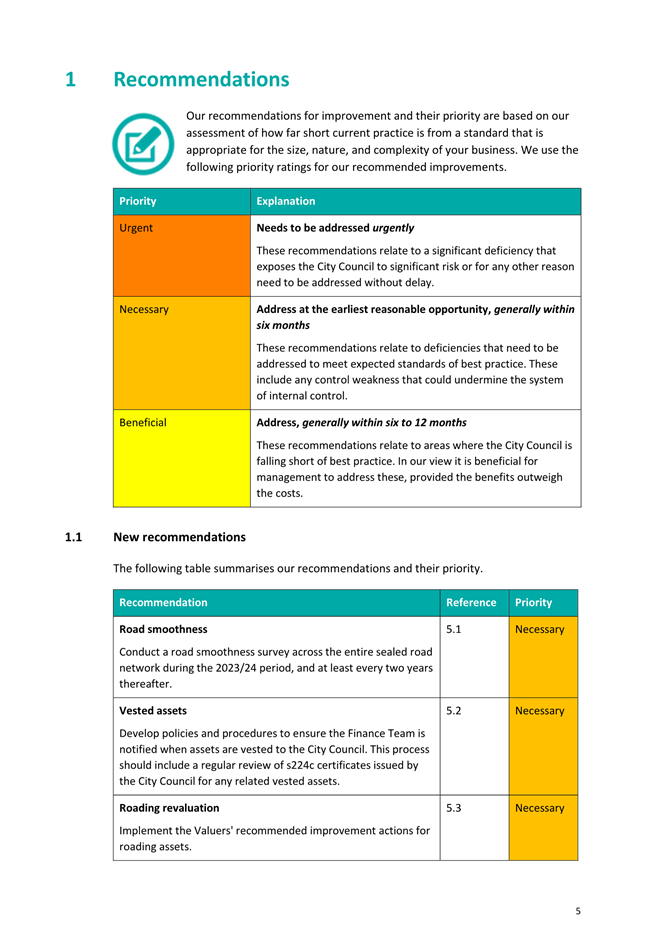
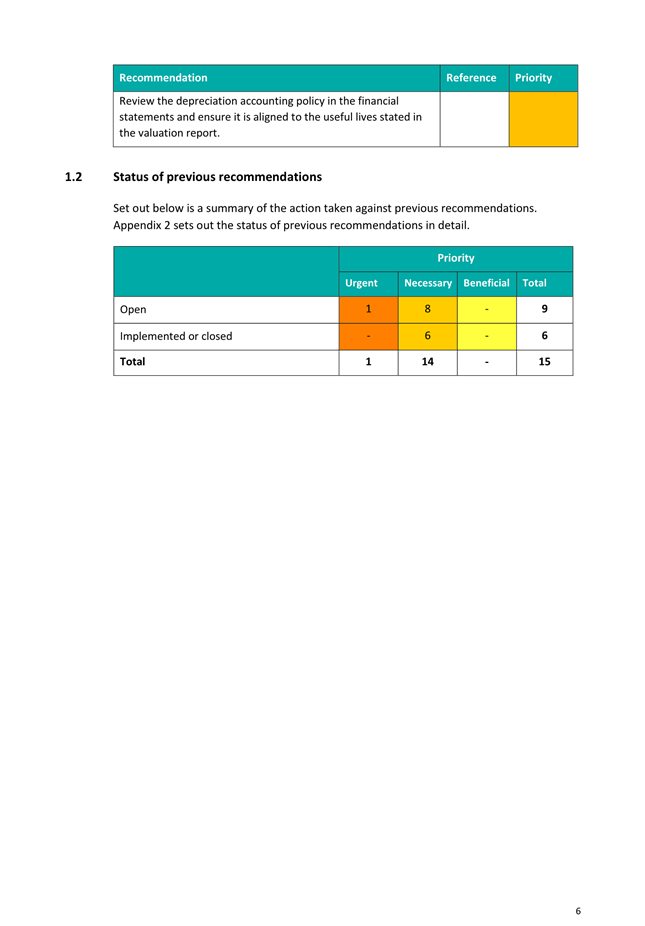
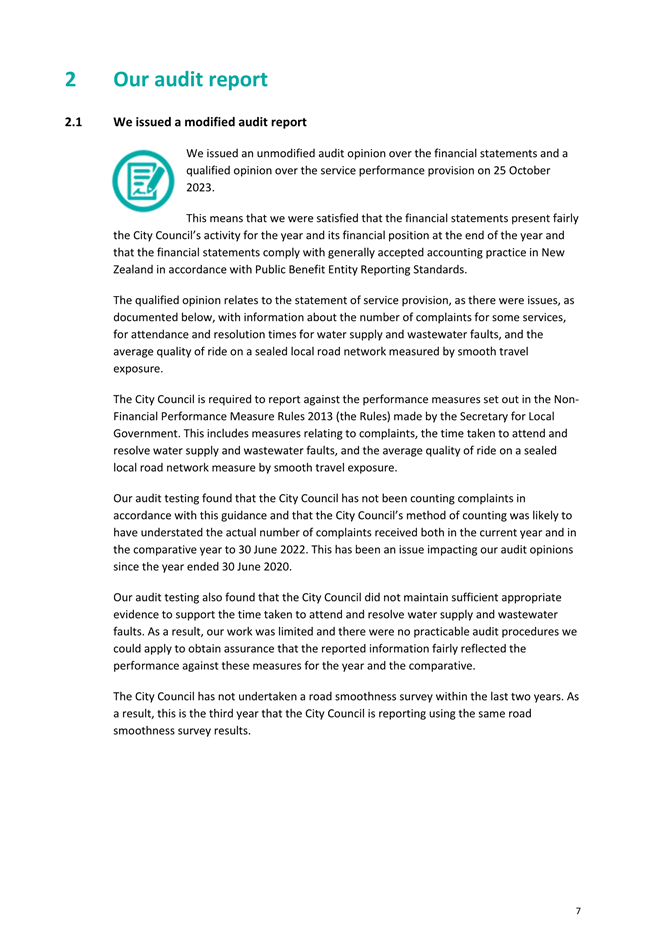
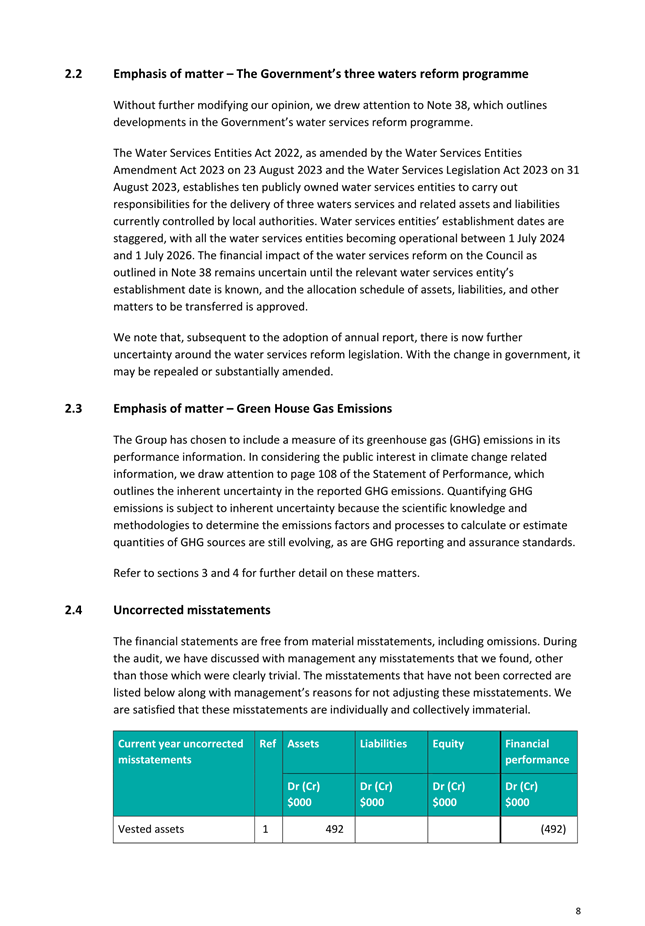
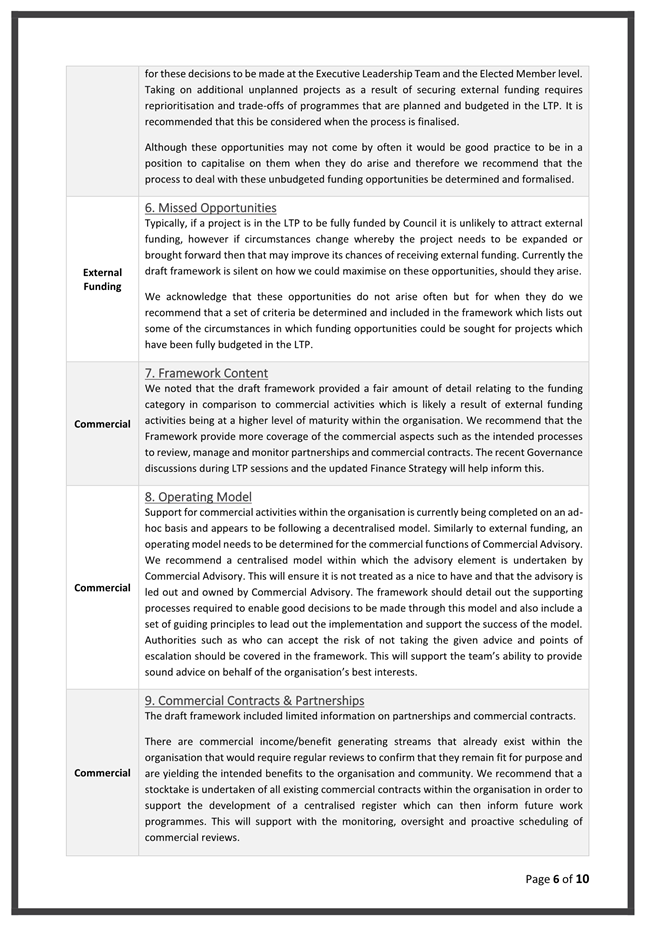
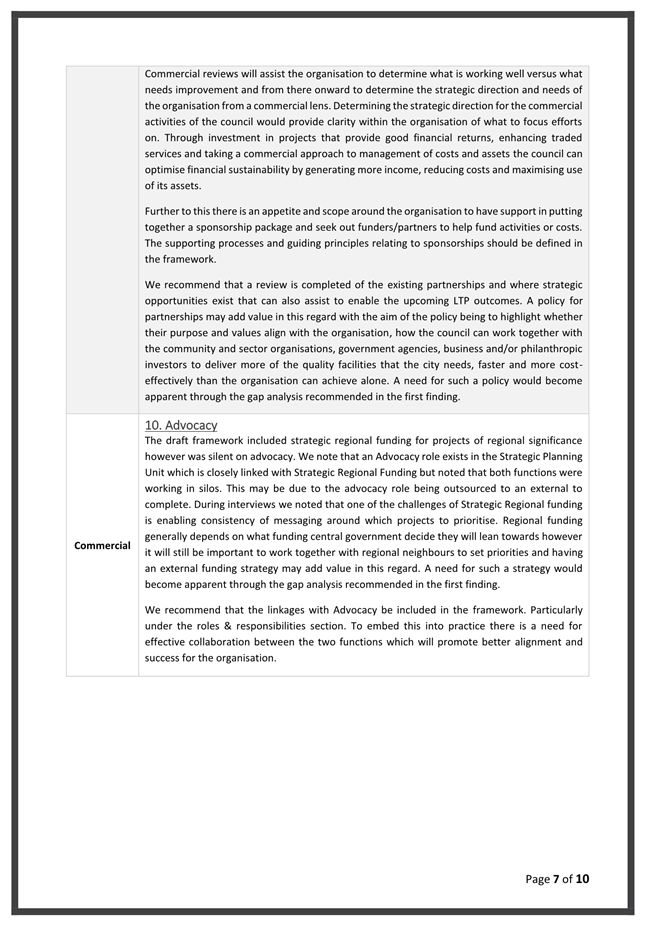
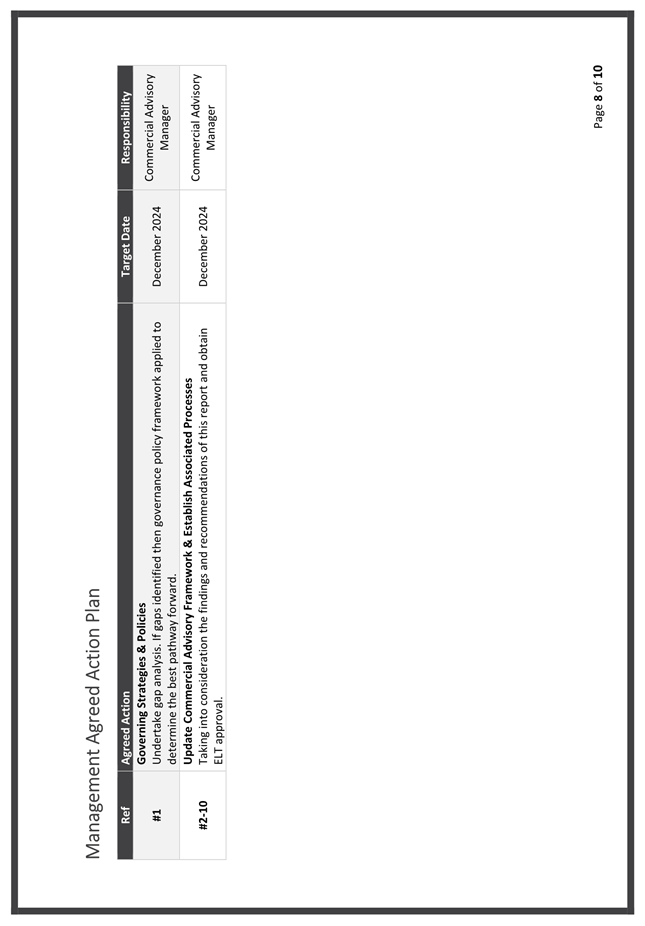
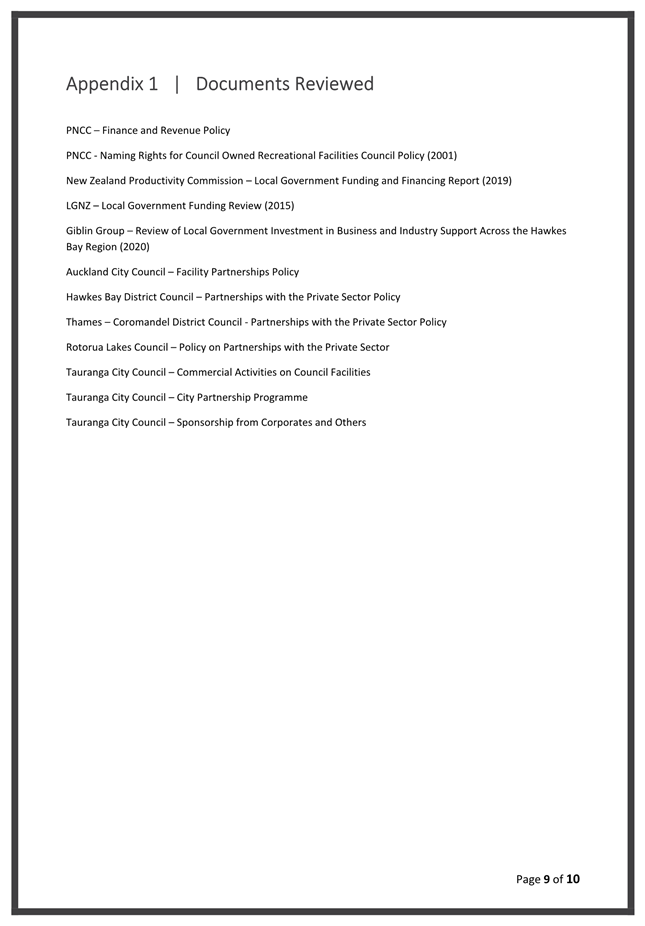
Risk & Assurance Committee
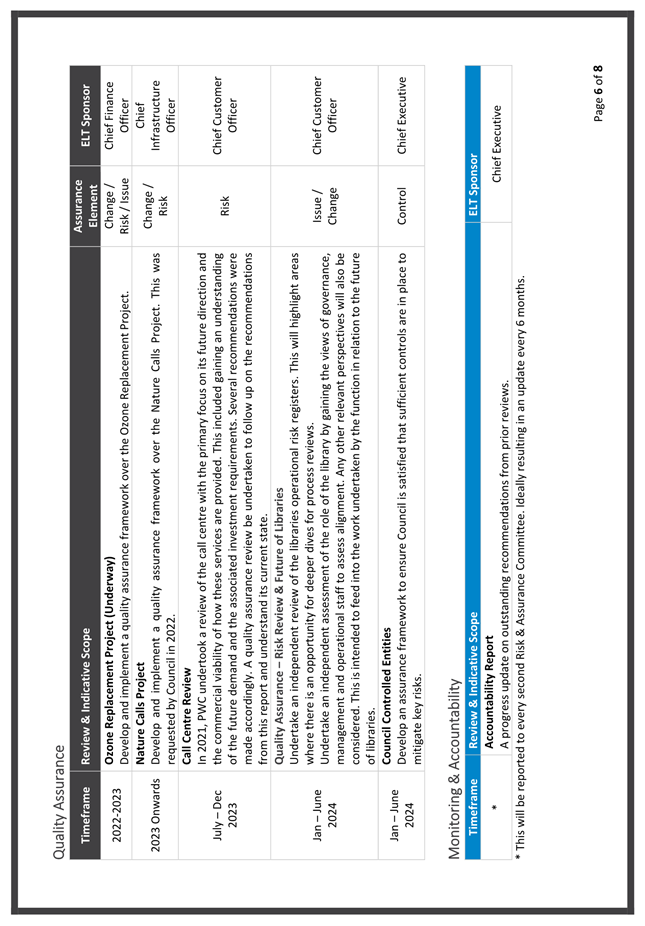
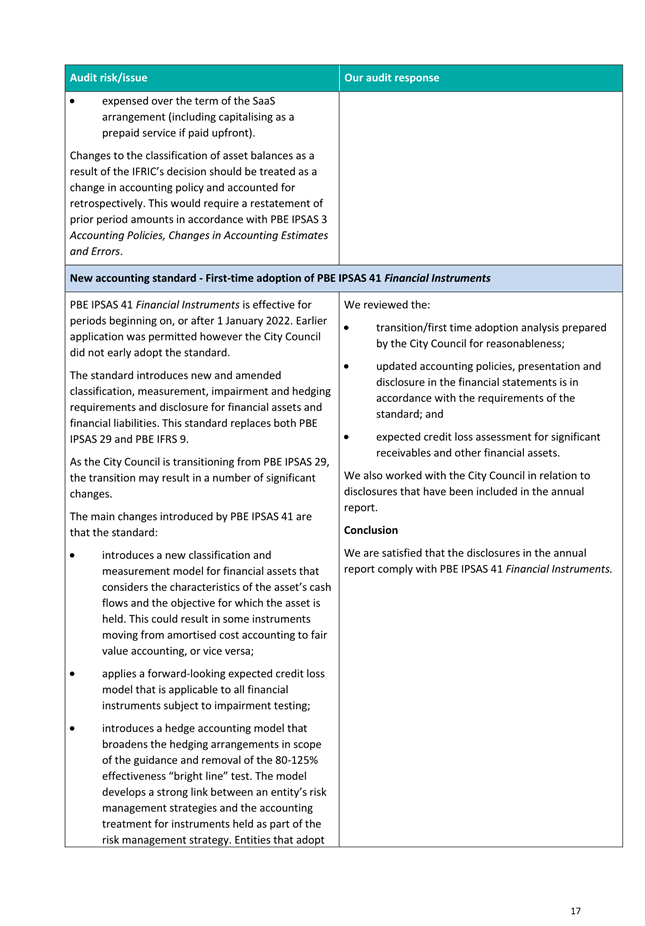
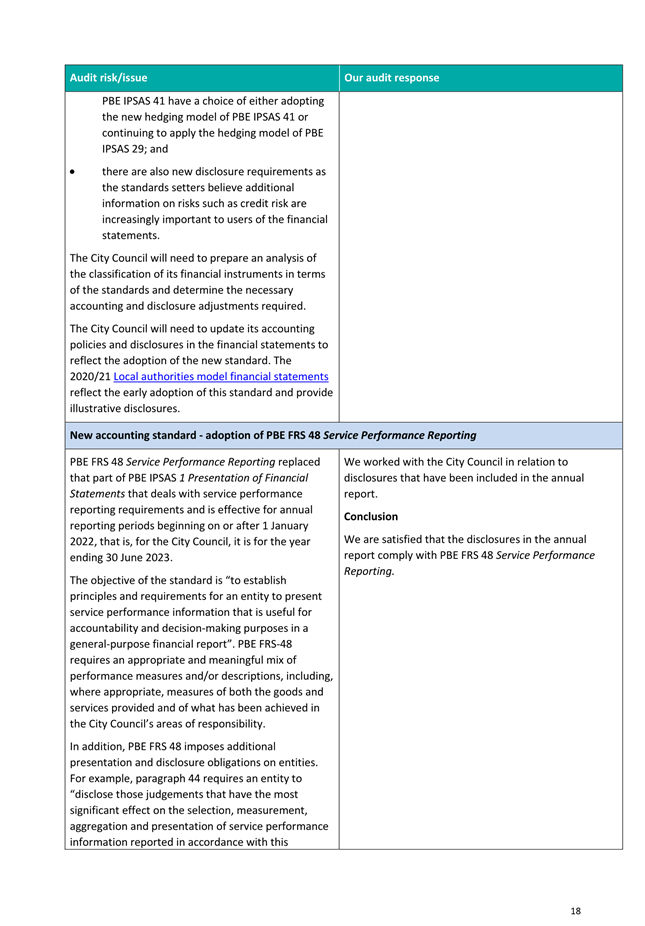
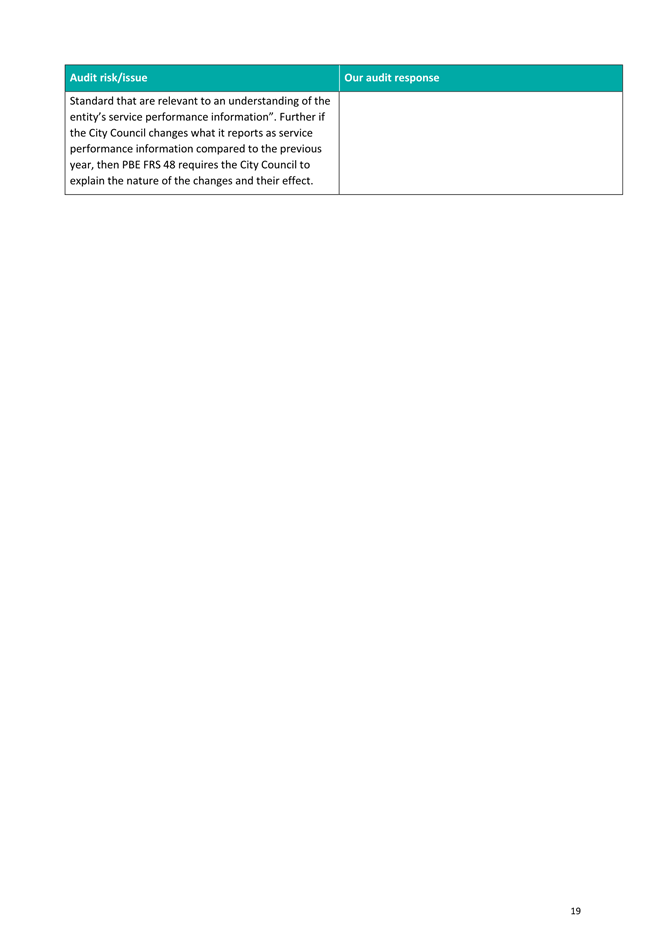
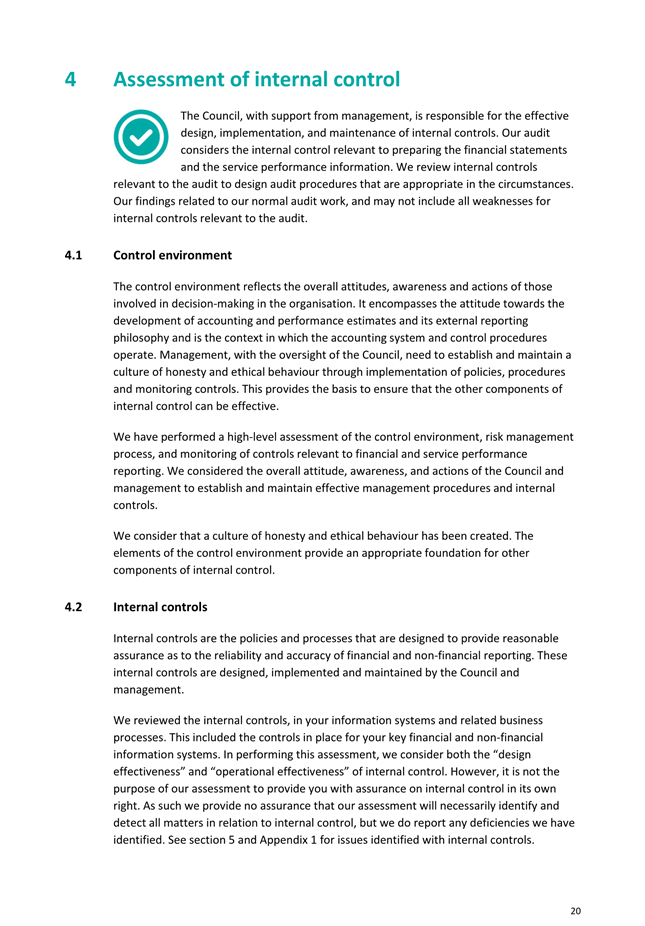
|
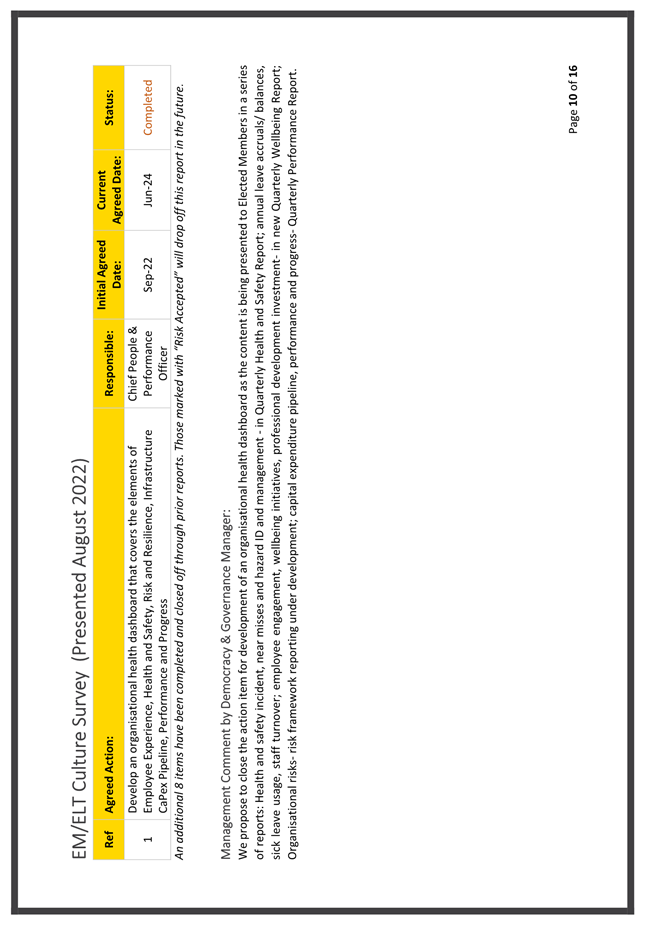
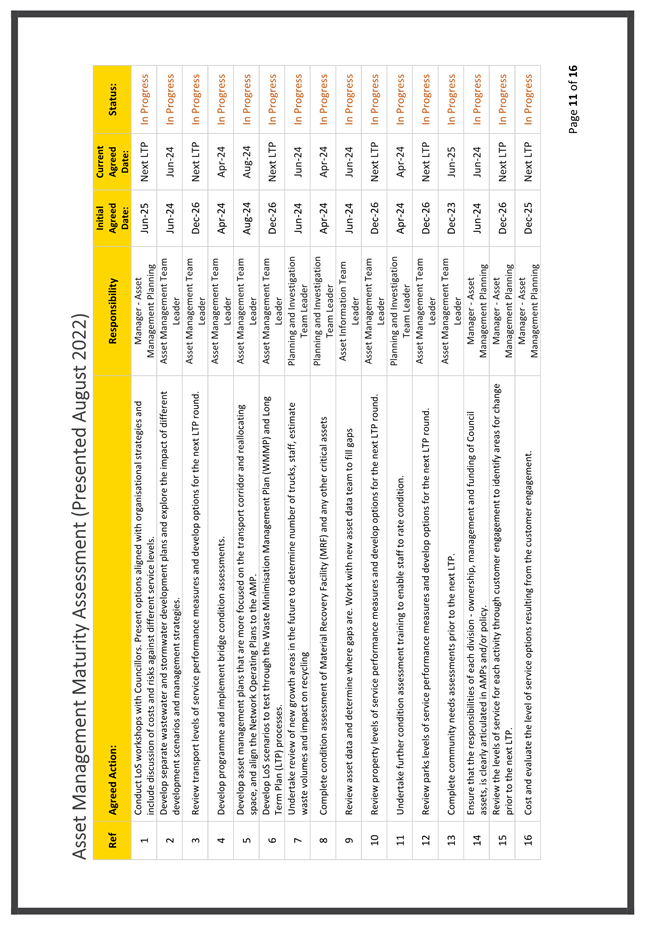
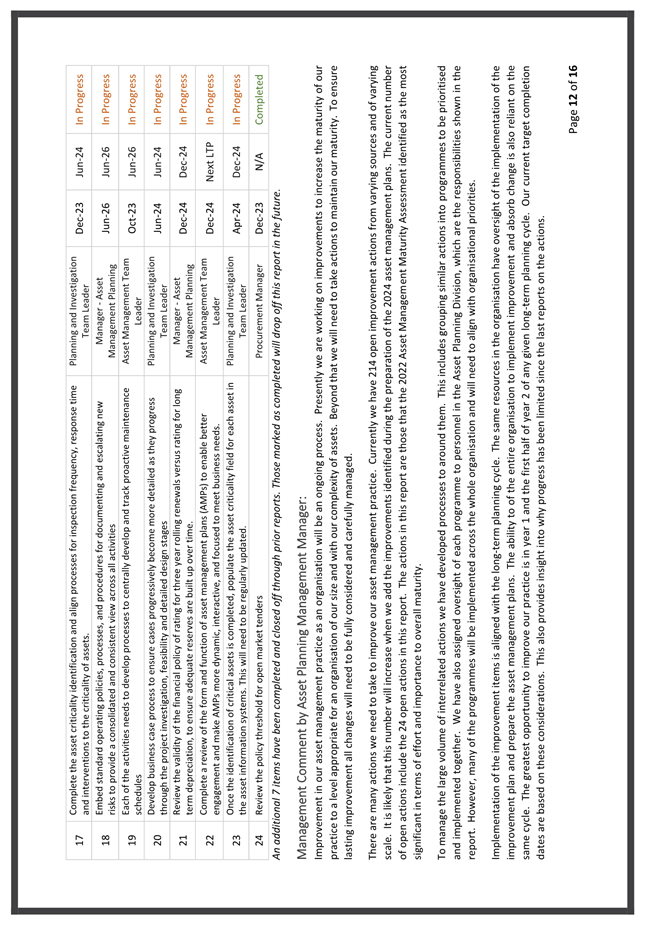
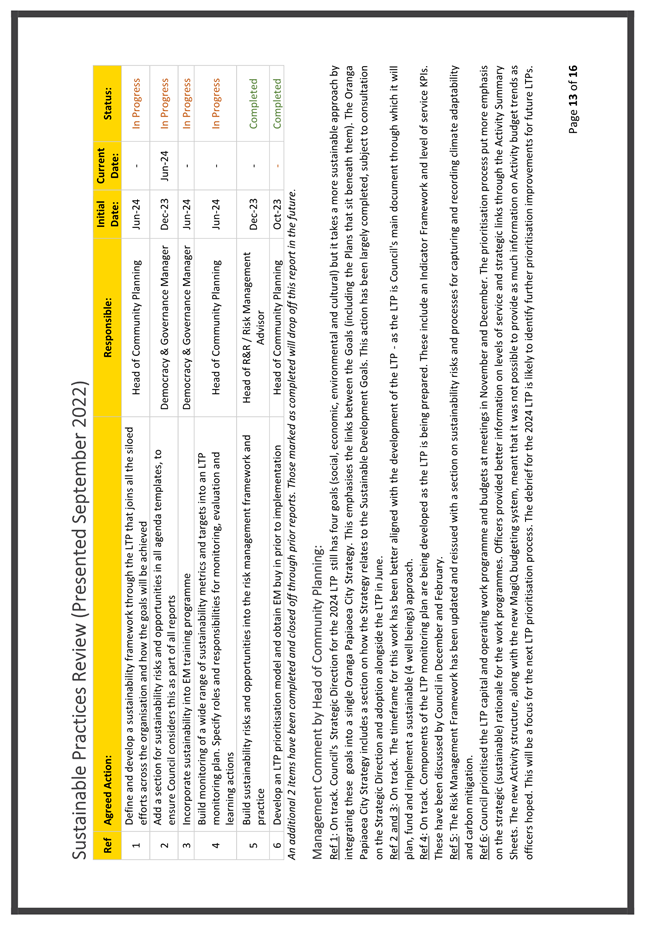
Stephen
Armstrong (Chair)
|
|
Karen
Naylor (Deputy Chair)
|
|
Grant
Smith (The Mayor)
|
|
Mark
Arnott
|
Lorna
Johnson
|
|
Brent
Barrett
|
Orphée
Mickalad
|
|
Vaughan
Dennison
|
William
Wood
|
|
Leonie
Hapeta
|
Kaydee
Zabelin
|
Risk & Assurance
Committee MEETING
6 March 2024
Order of Business
1. Karakia Timatanga
2. Apologies
3. Notification
of Additional Items
Pursuant to Sections 46A(7) and
46A(7A) of the Local Government Official Information and Meetings Act 1987, to
receive the Chairperson’s explanation that specified item(s), which do
not appear on the Agenda of this meeting and/or the meeting to be held with the
public excluded, will be discussed.
Any additions in accordance with Section
46A(7) must be approved by resolution with an explanation as to why they cannot
be delayed until a future meeting.
Any additions in accordance with
Section 46A(7A) may be received or referred to a subsequent meeting for further
discussion. No resolution, decision or recommendation can be made in
respect of a minor item.
4. Declarations
of Interest (if any)
Members are reminded of their duty
to give a general notice of any interest of items to be considered on this agenda
and the need to declare these interests.
5. Public
Comment
To receive comments from members of
the public on matters specified on this Agenda or, if time permits, on other
Committee matters.
(NOTE: If
the Committee wishes to consider or discuss any issue raised that is not
specified on the Agenda, other than to receive the comment made or refer it to
the Chief Executive, then a resolution will need to be made.)
6. Confirmation
of Minutes Page 7
“That the minutes of the Risk & Assurance
Committee meeting of 18 October 2023 Part I Public be confirmed as a true and
correct record.”
7. Setting
Council's Risk Management Appetite and Tolerance Levels Page 13
Memorandum, presented by Stephen Minton, Risk
Management Advisor and Jason McDowell, Head of Risk and Resilience.
8. Setting
Council's Strategic Risks Page 27
Memorandum, presented by Stephen Minton, Risk Management
Advisor and Jason McDowell, Head of Risk & Resilience.
9. Business
Assurance Work Programme - Update Page 37
Memorandum, presented by Masooma Akhter, Business
Assurance Manager.
10. Business Assurance
Accountability Report Page 49
Memorandum, presented by Masooma Akhter, Business
Assurance Manager.
11. Audit NZ 2023
Management Report with Action Plan Page 67
Memorandum, presented by Masooma Akhter, Business
Assurance Manager and Cameron McKay, Chief Financial Officer.
12. External Funding
& Commercial Revenue - Business Assurance Review Page 111
Memorandum, presented by Masooma Akhter, Business
Assurance Manager and Fiona Dredge, Commercial Advisory Manager.
13. Wellbeing Report,
October to December 2023 (Quarter 2) Page 127
Memorandum, presented by Connie Roos, Employee
Experience Manager and Wayne Wilson, People Operations Manager.
14. Health and Safety
Report, October to December 2023 (Quarter 2) Page 133
Memorandum, presented by Selwyn Ponga-Davis, Health and
Safety Manager.
15. Committee Work
Schedule Page 149
16. Exclusion of Public
|
|
To be
moved:
“That the
public be excluded from the following parts of the proceedings of this
meeting listed in the table below.
The general
subject of each matter to be considered while the public is excluded, the
reason for passing this resolution in relation to each matter, and the
specific grounds under Section 48(1) of the Local Government Official
Information and Meetings Act 1987 for the passing of this resolution are as
follows:
|
General subject of each matter to be
considered
|
Reason for passing this resolution in
relation to each matter
|
Ground(s) under Section 48(1) for
passing this resolution
|
|
17.
|
Minutes of the Risk & Assurance Committee
meeting - Part II Confidential - 18 October 2023
|
For the reasons set out in the Risk &
Assurance Committee minutes of 18 October 2023, held in public present.
|
|
18.
|
Health and Safety Report, October to December 2023
(Quarter 2)
Confidential Attachment 2
|
PREJUDICE THE SUPPLY OF SIMILAR INFORMATION:
Releasing this information could negatively effect similar confidential
information or discourage people from sharing such information and ENDANGER
THE SAFETY OF A PERSON: Sharing this information could put someone’s
health and safety at risk
|
s7(2)(c)(i) and s6(d)
|
|
19.
|
Contact Centre Progress Review - Quality Assurance
Report
|
COMMERCIAL ACTIVITIES: This information needs to
be kept confidential to allow Council to engage in commercial activities
without prejudice or disadvantage
|
s7(2)(h)
|
|
20.
|
Employee Life Cycle - Business Assurance Review
|
THIRD PARTY COMMERCIAL: Disclosing the information
could harm a company's commercial position and NEGOTIATIONS: This
information needs to be kept confidential to ensure that Council can
negotiate effectively, especially in business dealings
|
s7(2)(b)(ii) and s7(2)(i)
|
This
resolution is made in reliance on Section 48(1)(a) of the Local Government
Official Information and Meetings Act 1987 and the particular interest or
interests protected by Section 6 or Section 7 of that Act which would be
prejudiced by the holding of the whole or the relevant part of the
proceedings of the meeting in public as stated in the above table.
Also that the
persons listed below be permitted to remain after the public has been
excluded for the reasons stated.
[Add Third
Parties], because of their knowledge and ability to assist the
meeting in speaking to their report/s [or other matters as specified] and
answering questions, noting that such person/s will be present at the meeting
only for the items that relate to their respective report/s [or matters as
specified].
|
23. Karakia
Whakamutunga
Palmerston North City Council
Minutes of
the Risk & Assurance Committee Meeting Part I Public, held in the Council
Chamber, First Floor, Civic Administration Building, 32 The Square, Palmerston
North on 18 October 2023, commencing at 9.01am
|
Members
Present:
|
Stephen Armstrong (in the Chair), The
Mayor (Grant Smith) and Councillors Karen Naylor, Mark Arnott, Brent Barrett,
Vaughan Dennison, Leonie Hapeta, Lorna Johnson, Orphée Mickalad,
William Wood and Kaydee Zabelin.
|
|
Non Members:
|
Councillors Rachel Bowen, Lew Findlay,
Patrick Handcock, Debi Marshall-Lobb and Billy Meehan.
|
|
|
Karakia Timatanga
|
|
|
Councillor Debi Marshall-Lobb
opened the meeting with karakia.
|
|
21-23
|
Confirmation of Minutes
|
|
|
Moved
Stephen Armstrong, seconded Karen Naylor.
The COMMITTEE RESOLVED
1. That the
minutes of the Risk & Assurance Committee meeting of 23 August 2023
Part I Public be confirmed as a true and correct record.
|
|
|
Clause 21-23 above was
carried 15 votes to 0, with 1 abstention, the voting being as follows:
For:
The Mayor (Grant Smith) and
Councillors Stephen Armstrong, Karen Naylor, Mark Arnott, Brent Barrett, Vaughan
Dennison, Lorna Johnson, Orphée Mickalad, William Wood, Kaydee
Zabelin, Rachel Bowen, Lew Findlay, Patrick Handcock, Debi Marshall-Lobb and
Billy Meehan.
Abstained:
Councillor Leonie Hapeta.
|
|
22-23
|
Adoption
of Annual Report 2022/23
Memorandum, presented by
Scott Mancer, Finance Manager and Debbie Perera, Audit Director.
|
|
|
Moved
Stephen Armstrong, seconded Karen Naylor.
The COMMITTEE RESOLVED
1. That the
Committee note the 2022/23 financial reporting and draft auditor’s
opinion of Council’s 2022/23 Annual Report.
The COMMITTEE RECOMMENDS
2. That Council
adopt the Annual Report 2022/23 and Summary Annual Report 2022/23.
3. That Council note that, assuming Audit clearance
is given, the final Auditor’s ‘opinion’ from Audit New
Zealand will be received following expected adoption by Council on 25 October
2023 and Council signing of the reports.
4. That Council delegate authority to the Chief
Executive to make minor edits to the Annual Report 2022/23 and Summary Annual
Report 2022/23.
|
|
|
Clause 22-23 above was
carried 16 votes to 0, the voting being as follows:
For:
The Mayor (Grant Smith) and
Councillors Stephen Armstrong, Karen Naylor, Mark Arnott, Brent Barrett,
Vaughan Dennison, Leonie Hapeta, Lorna Johnson, Orphée Mickalad,
William Wood, Kaydee Zabelin, Rachel Bowen, Lew Findlay, Patrick Handcock,
Debi Marshall-Lobb and Billy Meehan.
|
|
23-23
|
Business Assurance 6 Monthly
Accountability Report
Memorandum, presented by
Masooma Akhter, Business Assurance Manager.
|
|
|
Moved
Stephen Armstrong, seconded Brent Barrett.
The COMMITTEE RESOLVED
1. That the Committee receive the memorandum titled ‘Business
Assurance 6 Monthly Accountability Report’ and its attachment,
presented to the Risk & Assurance Committee on 18 October 2023.
|
|
|
Clause 23-23 above was
carried 16 votes to 0, the voting being as follows:
For:
The Mayor (Grant Smith) and
Councillors Stephen Armstrong, Karen Naylor, Mark Arnott, Brent Barrett,
Vaughan Dennison, Leonie Hapeta, Lorna Johnson, Orphée Mickalad,
William Wood, Kaydee Zabelin, Rachel Bowen, Lew Findlay, Patrick Handcock,
Debi Marshall-Lobb and Billy Meehan.
|
|
24-23
|
Risk
Management Update
Memorandum, presented by
Stephen Minton, Risk Management Advisor and Jason McDowell, Head of Risk
& Resilience.
|
|
|
Moved
Stephen Armstrong, seconded Karen Naylor.
The COMMITTEE RESOLVED
1. That the Committee receive the Risk Management
Policy and Framework for information.
|
|
|
Clause 24-23 above was
carried 16 votes to 0, the voting being as follows:
For:
The Mayor (Grant Smith) and
Councillors Stephen Armstrong, Karen Naylor, Mark Arnott, Brent Barrett,
Vaughan Dennison, Leonie Hapeta, Lorna Johnson, Orphée Mickalad,
William Wood, Kaydee Zabelin, Rachel Bowen, Lew Findlay, Patrick Handcock,
Debi Marshall-Lobb and Billy Meehan.
|
The
meeting adjourned at 10.34am
The
meeting resumed again at 10.51am
|
25-23
|
Wellbeing Report, July to
September 2023
Memorandum, presented by
Connie Roos - Employee Experience Manager, Wayne Wilson - People Operations
Manager.
|
|
|
Moved
Stephen Armstrong, seconded Karen Naylor.
The COMMITTEE RESOLVED
1. That the
Committee receive the memorandum titled ‘Wellbeing Report, July to
September 2023’ presented to the Risk and Assurance Committee on
18 October 2023.
|
|
|
Clause 25-23 above was
carried 16 votes to 0, the voting being as follows:
For:
The Mayor (Grant Smith) and
Councillors Stephen Armstrong, Karen Naylor, Mark Arnott, Brent Barrett,
Vaughan Dennison, Leonie Hapeta, Lorna Johnson, Orphée Mickalad,
William Wood, Kaydee Zabelin, Rachel Bowen, Lew Findlay, Patrick Handcock,
Debi Marshall-Lobb and Billy Meehan.
|
|
26-23
|
Committee
Work Schedule
|
|
|
Moved
Stephen Armstrong, seconded Karen Naylor.
The COMMITTEE RESOLVED
1. That the Risk & Assurance Committee receive
its Work Schedule dated October 2023.
|
|
|
Clause 26-23 above was
carried 16 votes to 0, the voting being as follows:
For:
The Mayor (Grant Smith) and
Councillors Stephen Armstrong, Karen Naylor, Mark Arnott, Brent Barrett,
Vaughan Dennison, Leonie Hapeta, Lorna Johnson, Orphée Mickalad,
William Wood, Kaydee Zabelin, Rachel Bowen, Lew Findlay, Patrick Handcock,
Debi Marshall-Lobb and Billy Meehan.
|
Exclusion
of Public
|
27-23
|
Recommendation to Exclude Public
Officers noted Item 15, Assurance Report – Animal
Shelter Review, referred to s7(s)(f)(i) in the agenda in error. Elected
Members did not consider this as part of the resolution below.
|
|
|
Moved
Stephen Armstrong, seconded Karen Naylor.
The COMMITTEE RESOLVED
“That the
public be excluded from the following parts of the proceedings of this
meeting listed in the table below.
The general
subject of each matter to be considered while the public is excluded, the
reason for passing this resolution in relation to each matter, and the
specific grounds under Section 48(1) of the Local Government Official
Information and Meetings Act 1987 for the passing of this resolution are as
follows:
|
General subject of each matter to be
considered
|
Reason for passing this resolution in
relation to each matter
|
Ground(s) under Section 48(1) for
passing this resolution
|
|
13.
|
Health and Safety Report, July to September 2023
(Quarter 1)
|
PREJUDICE THE SUPPLY OF SIMILAR INFORMATION:
Releasing this information could negatively affect similar confidential
information or discourage people from sharing such information and ENDANGER
THE SAFETY OF A PERSON: Sharing this information could put someone's health
and safety at risk
|
s7(2)(c)(i) and s6(d)
|
|
14.
|
Post Implementation Review - Kotuia (Ozone
Replacement) Project
|
THIRD PARTY COMMERCIAL: Disclosing the information
could harm a company's commercial position
|
s7(2)(b)(ii)
|
|
15.
|
Assurance Report - Animal Shelter Review
|
THIRD PARTY COMMERCIAL: Disclosing the information
could harm a company's commercial position.
|
s7(2)(b)(ii)
|
This
resolution is made in reliance on Section 48(1)(a) of the Local Government
Official Information and Meetings Act 1987 and the particular interest or
interests protected by Section 6 or Section 7 of that Act which would be
prejudiced by the holding of the whole or the relevant part of the
proceedings of the meeting in public as stated in the above table.
Also that the
persons listed below be permitted to remain after the public has been
excluded for the reasons stated.
[Add Third
Parties], because of their knowledge and ability to assist the
meeting in speaking to their report/s [or other matters as specified] and
answering questions, noting that such person/s will be present at the meeting
only for the items that relate to their respective report/s [or matters as
specified].
|
|
|
Clause 27-23 above was
carried 15 votes to 1, the voting being as follows:
For:
The Mayor (Grant Smith) and
Councillors Stephen Armstrong, Karen Naylor, Mark Arnott, Brent Barrett,
Vaughan Dennison, Leonie Hapeta, Lorna Johnson, Orphée Mickalad,
Kaydee Zabelin, Rachel Bowen, Lew Findlay, Patrick Handcock, Debi
Marshall-Lobb and Billy Meehan.
Against:
Councillor William Wood.
|
The public part
of the meeting finished at 11.15am
Confirmed 6 March 2024
Chair
Memorandum
TO: Risk
& Assurance Committee
MEETING DATE: 6
March 2024
TITLE: Setting
Council's Risk Management Appetite and Tolerance Levels
Presented
By: Stephen
Minton, Risk Management Advisor and Jason McDowell, Head of Risk and Resilience
APPROVED BY: Cameron
McKay, Chief Financial Officer
RECOMMENDATION(S) TO Council
1. That Council
agree the recommended risk appetite and risk tolerance levels as noted in
section 3.1 and 3.2 of the memorandum titled ‘Setting Council’s
Risk Management Appetite and Tolerance Levels,’ presented to the Risk and
Assurance Committee on 6 March 2024.
1. ISSUE
1.1 The
Risk Management Framework requires the Council to adopt Risk Appetite and
Tolerance levels. The levels describe the amount and category of risk the
Council is willing to accept to pursue its goals and the level of risk the
Council should endure without significantly affecting its ability to achieve
its objectives.
1.2 This
paper sets out Officer recommendations to Council.
2. BACKGROUND
2.1 Effective risk management
means attempting to control, as much as possible, future outcomes by
acting proactively rather than reactively.
2.2 Council
has a Risk Management Policy that outlines its policy statement and objectives
along with the roles and responsibilities of Officers. This policy is
operationalised through the Council's Risk Management Framework, a structured approach
that Council follows to identify, assess, and manage risks that could affect
its objectives or goals.
2.3 Council’s
Risk Management Framework was developed using ISO:31000 International Risk
Management standards. It has undergone a Business Assurance review in 2023, and
the framework was updated in 2023 to reflect recommendations from the review.
2.4 The
Risk Policy and Framework were presented to the Risk & Assurance Committee
on 18 October 2023 for information.
2.5 The
Risk Management Framework describes the Council's risk appetite and tolerance,
which allows Officers to manage identified risks appropriately, escalates risks
(refer 3.5) outside of the Council's tolerance levels for approval, and assists
for good decision-making.
2.6 Officers
created risk appetite and tolerance levels based on several factors, including
legislative requirements, acceptance level of tolerance, cost of compliance
with tolerance, current maturity of risk management in the organisation and
peer review where data exists.
2.7 During
a risk management workshop held on 26 April 2023, Officers shared the Risk
Management Framework, which included risk appetite and risk tolerance. Elected
Members requested further information and analysis on the risk tolerance and
appetite, including options to adjust levels. This is described in 3.6 of this
memorandum.
2.8 The
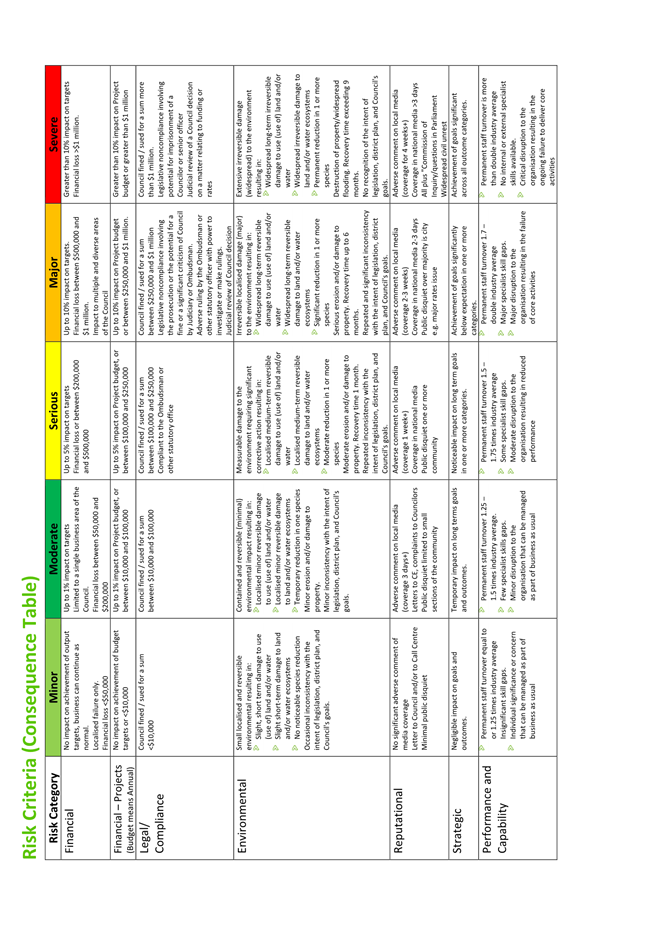
risk matrix (Figure 1) determines the Council's risk ratings and should be read
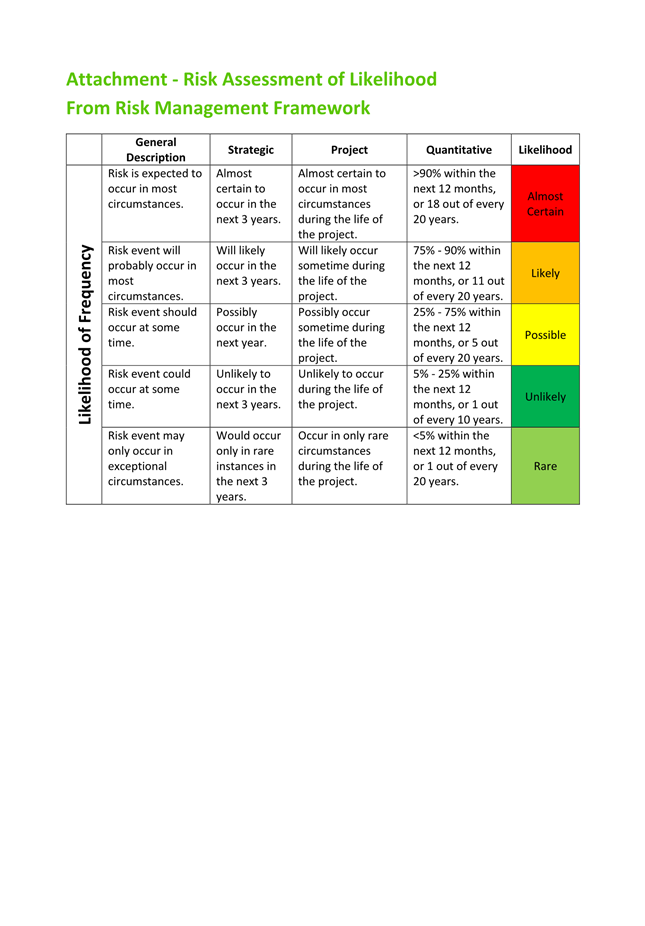
in conjunction with the likelihood and consequence tables in Attachment 1.
2.9 The
data used to determine the consequence and likelihood tables is largely
subjective and the risk ratings are therefore largely qualitative.
Figure 1: Risk Matrix
|
|
CONSEQUENCE
|
|
Minor
(1)
|
Moderate
(2)
|
Serious
(3)
|
Major
(4)
|
Severe
(5)
|
|
LIKELIHOOD
|
Almost Certain (5)
|
Medium
5
|
High
10
|
Very High
15
|
Extreme
20
|
Extreme
25
|
|
Likely (4)
|
Medium
4
|
High
8
|
Very High
12
|
Very High
16
|
Extreme
20
|
|
Possible (3)
|
Low
3
|
Medium
6
|
High
9
|
Very High
12
|
Very High
15
|
|
Unlikely (2)
|
Low
2
|
Medium
4
|
Medium
6
|
High
8
|
High
10
|
|
Rare (1)
|
Low
1
|
Low
2
|
Low
3
|
Medium
4
|
Medium
5
|
2.9 The
Council uses a five-scale risk matrix, relatively common across organisations,
which provides more insight into levels of severity. Apart from those risk
categories that are rated at the absolute lowest levels of our tolerance (e.g.
health and safety harm to our people), most tolerance levels for organisations
will be slightly higher than the absolute minimum given this five-scale
graduality. Because of this increased granularity, and in the sphere of
subjective assessments, most risk appetite and tolerance levels are above the
lowest level but still relatively conservative.
2.10 The Risk
Management Framework defines Risk Appetite as the amount of risk the
Council is willing to accept or retain, on a broad level, in order to achieve
its objectives/goals.
It also defines Risk Tolerance as the level of
risk-taking acceptable to achieve a specific objective or manage a category of
risk.
The difference between the two is that risk appetite is a
broad-based description of the desired level of risk that Council will take in
pursuit of its goals, whereas risk tolerance reflects the acceptable variation
in outcomes related to specific measures linked to objectives the Council seeks
to achieve.
2.10 The Risk
Management Framework categorises risk appetite into three broad bands: averse,
neutral, and seeking. These are defined below.
|
Averse:
|
Avoidance of risk must be the priority, with minimal risk
exposure and maximum treatment effort required.
Any uncertainty or risk that remains after treatment
efforts (controls and/or mitigation) should only be allowable where necessary
to achieve goals.
|
|
Neutral:
|
Risk exposure is not preferred but is recognised as part
of achieving objectives.
Treatments to minimise risks and uncertainties are
expected to be in place where reasonably considered necessary.
|
|
Seeking:
|
The Organisation is actively seeking to take on more of
this risk/uncertainty as it relates to and enhances the achievement of goals.
|
3. Setting
Councils risk appetite and tolerance levels
3.1 Officers
recommend the following risk appetite for Council, which broadly follows other
councils and general expectations of a public funded local government entity;
that is tending to the conservative/aversion side of the matrix.
|
Risk
Category
|
Risk
Appetite
|
|
Averse
|
Neutral
|
Seeking
|
|
1
|
2
|
3
|
4
|
5
|
6
|
7
|
8
|
9
|
|
Financial
|
|
|
|
|
|
|
|
|
|
|
Legal/Compliance
|
|
|
|
|
|
|
|
|
|
|
Environmental
|
|
|
|
|
|
|
|
|
|
|
Health,
Safety & Wellbeing
|
|
|
|
|
|
|
|
|
|
|
Reputational
|
|
|
|
|
|
|
|
|
|
|
Service
Delivery
|
|
|
|
|
|
|
|
|
|
|
Performance
and Capability
|
|
|
|
|
|
|
|
|
|
|
Cultural
|
|
|
|
|
|
|
|
|
|
|
Strategic
|
|
|
|
|
|
|
|
|
|
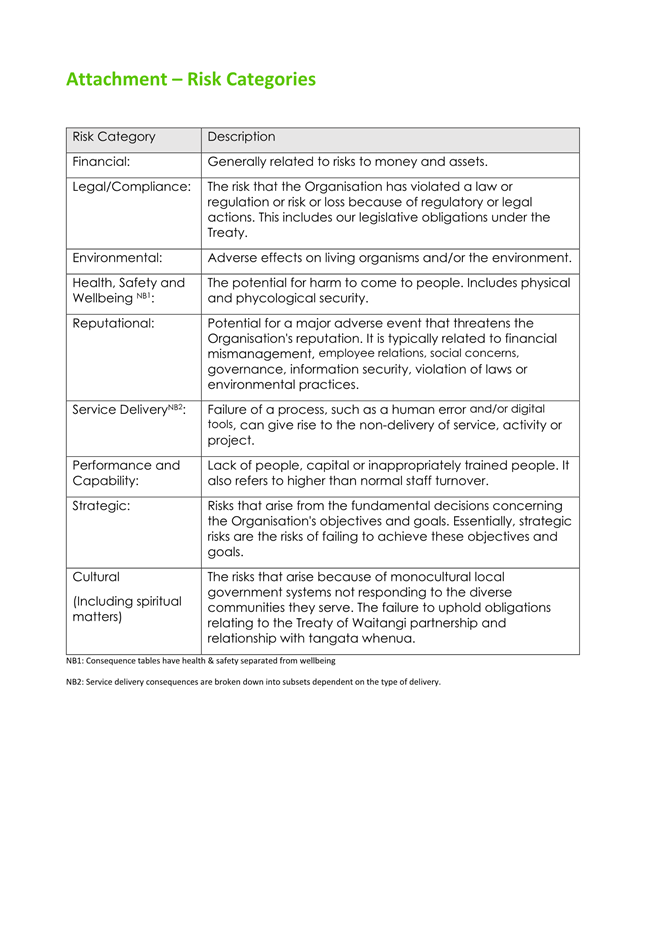
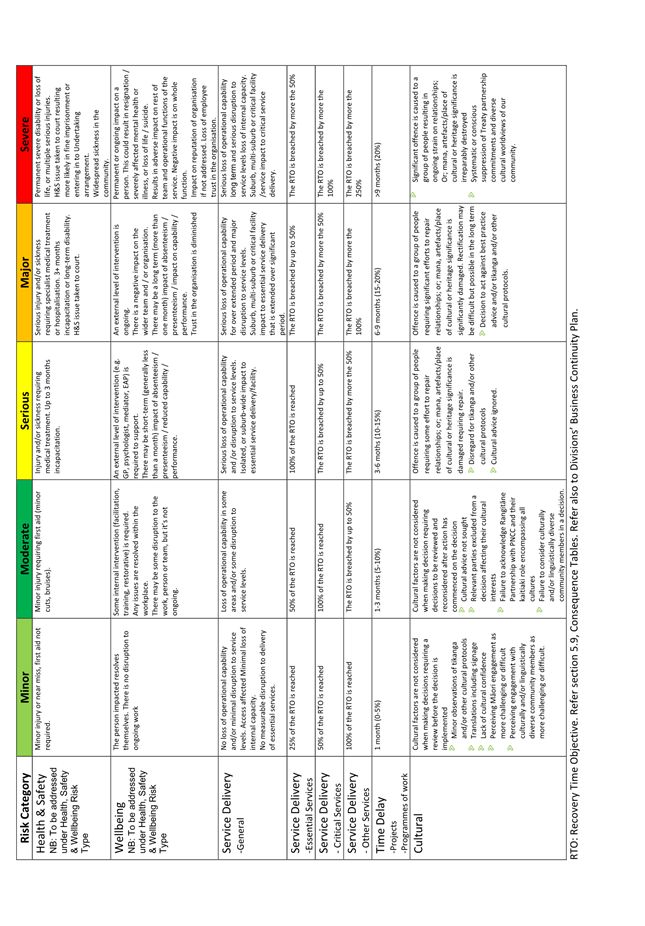
For risk category descriptions, refer to Attachment 2
to this memorandum.
3.2 Setting
Council’s Risk Tolerance
Officers recommend the following risk
tolerance for Council. The risk matrix should be referenced while reviewing the
risk tolerance levels. This risk
matrix will help guide users to the level of likelihood and relevant
consequences acceptable to Council.
|
Risk
Category
|
Risk Tolerance
|
|
Financial
|
Medium
|
|
Legal/Compliance
|
Medium
|
|
Environmental
|
Medium
|
|
Health,
Safety & Wellbeing
|
Low
|
|
Reputational
|
Medium
|
|
Service
Delivery
|
Medium
|
|
Performance
and Capability
|
Medium
|
|
Cultural
|
Medium
|
|
Strategic
|
Medium
|
3.3 Ultimately,
risk tolerance, versus risk appetite is the final determinant on the amount of
risk the Council is prepared to take, setting the line to which it endeavours
not to cross.
3.4 The
tolerance levels determine in part the degree of mitigation required to
maintain risk within these levels, generally involving increasing or decreasing
costs and/or consequences dependant of the level set. For example, if a risk
category had an extremely high appetite and tolerance, there may be zero cost
to implement controls and mitigation.
3.5 The
Risk Management Framework requires escalation of risk tolerance breaches to an
appropriate level of officer for acceptance and remedial
actions/management. This involves explaining current state and proposed
actions to reduce the risk through new and/or improved controls and mitigation,
or in a worst-case scenario, ceasing the activity if the risk is considered
unacceptable.
3.6 Implications
on risk appetite and risk tolerance if different to recommendations:
|
Risk Category
|
Implications
|
|
Increased Appetite & Tolerance
|
Decreased Appetite & Tolerance
|
|
Financial
|
· Increased
potential financial losses
· Reduced costs
(through non-delivery of services/activities and reduced mitigation costs)
· Increased legal
disputes
· Increased public
disquiet
· Greater
occurrences of project costs blowouts
· Greater
opportunities for fraud (internal & external)
|
· Increased
financial costs through control/mitigation implementation
· Reduced
financial losses, albeit at cost of implementation of controls
· Requirement for
higher buffers/contingencies to mitigate unforeseen events
· Increased
insurance requirements and resultant premium costs
· Slower delivery
of outcomes due to burdensome processes and procedures
|
|
Legal/ Compliance
|
· Increased
defensive litigation
· Increased legal
defence costs
· Appointment of a
commissioner
· Judicial or
Ombudsman adverse rulings
· Increased legal
fines and adverse litigious outcomes
|
· Increased legal
advice costs
· Increased
internal legal resource costs
· Increased cost
through transfer of legal risk
|
|
Environmental
|
· Increased
measurable, reversible damage to the environment
· Breaches of
environmental protection legislation and regulations
· Potential public
discourse at environmental inaction and/or damage
· Higher recovery
costs
|
· Decreased
measurable, reversible damage to the environment
· Higher
mitigation/compliance costs
· Perceived
imbalance from the public of costs verse environmental protections
· More
opportunities for realising co-benefits
· Restrictive
growth opportunities
|
|
Health, Safety and
Wellbeing
|
· Causing death or
serious injury to our people
· Increased
incidence of health & safety events
· Breaches of
Health & Safety at Work Act 2015, and potentially prosecution.
· Increased
absenteeism, and resultant decreased productivity
|
· Not applicable
(already lowest level)
|
|
Reputational
|
· Increased public
disquiet across the city
· Ineffective
community engagement
|
· Increased
resource engagement requirements
· Increased costs
for community wellbeing and activity delivery to meet broader level of
satisfaction
· Increase costs
to meet goals
· Increasing
conflicts between priorities
|
|
Service Delivery
|
· Reduced
activities provision
· Provision of
services not meeting community expectations and low customer satisfaction
· More regular
suspension of activities and services
|
· Significant
increase in costs to meet greater service delivery goals
· Potential
stifling of innovation, including productivity gains
|
|
Performance and
Capability
|
· Higher turnover
rates
· Continuous loss
of corporate knowledge
· Reduced
technical expertise
· Not seen as an
employer of choice, actual or perceived
|
· Increased
remuneration costs
· Increased costs
for benefits and wellbeing provisions
|
|
Cultural (Including
spiritual matters)
|
· Causing
cultural/spiritual offence
· Undermine
relationships with Maori and cultural/ ethnic representatives/groups
· Not fulfil fully
our Treaty commitments and obligations
|
· Increased
operational costs of control/mitigation for avoidance
· Increased
advisor resourcing within Maori Advisory, Community Development or
consultancy costs
· Strengthen
cultural resilience and resultant costs, including cultural events, engagement
etc
· Increasing
conflict in priorities across segments of the community
|
|
|

|

|
|
|
|
|
4. NEXT
STEPS
4.1 Officers
will continue to embed risk management in Council processes.
4.2 The
Risk Management Framework will be reviewed on a triennial basis, or by a
request of Council or the Chief Executive. This includes assessing risk
appetite, tolerance, and Council risk maturity settings.
4.3 Officers
will bring Officer-identified strategic risks to the next Risk & Assurance
Committee meeting to seek the direction and agreement of Council’s
Strategic Risks.
5. Compliance
and administration
|
Does the Committee have
delegated authority to decide?
|
No
|
|
Are the decisions significant?
|
No
|
|
If they are significant do they
affect land or a body of water?
|
No
|
|
Can this decision only be made
through a 10 Year Plan?
|
No
|
|
Does this decision require
consultation through the Special Consultative procedure?
|
No
|
|
Is there funding in the current
Annual Plan for these actions?
|
Yes
|
|
Are the recommendations
inconsistent with any of Council’s policies or plans?
|
No
|
|
The recommendations contribute
to Goal 5: A Driven & Enabling Council
|
|
The recommendations contribute
to the achievement of action/actions in (Not
Applicable)
|
|
Contribution to strategic
direction and to social, economic, environmental and cultural well-being
|
The risk management system is
one of the aspects that assists in ensuring Council can fulfil the tasks
required to achieve its purpose and objectives. These objectives will cover
all aspects of the organisation, including strategy, tactics, operations and
compliance. The risk appetite and risk tolerance guide the parameters within
which to operate.
|
|
|
|
Attachments
|
1.
|
Risk
Likelihood & Consequence Tables ⇩ 
|
|
|
2.
|
Risk
Category Descriptions ⇩ 
|
|
Memorandum
TO: Risk
& Assurance Committee
MEETING DATE: 6
March 2024
TITLE: Setting
Council's Strategic Risks
Presented
By: Stephen
Minton, Risk Management Advisor and Jason McDowell, Head of Risk &
Resilience
APPROVED BY: Cameron
McKay, Chief Financial Officer
RECOMMENDATIONS TO
COUNCIL
1. That Council
agree the strategic risk statements (Attachment 1) in the memorandum titled
‘Setting Council’s Strategic Risks’ presented to the Risk
& Assurance Committee on 6 March 2024.
1. ISSUE
1.1 Council’s
Risk Management Framework requires the creation of risk registers to manage
strategic, enterprise and business (operational) risks.
1.2 The
purpose of this memorandum is to provide Elected Members with a summary of the
process Officers have undertaken towards the development of strategic risk
descriptions, registers and next steps.
2. BACKGROUND
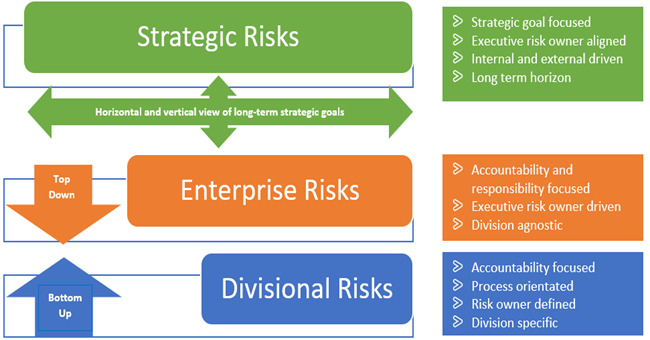
2.1 Business
(or divisional) and enterprise risks are operational risks by nature, however
in the context of the Council there is the need for an additional level of
strategic risks that sit above these.
2.2 Operational
risks and strategic risks are two distinct kinds of risks.
2.3 Operational
risk is potential adverse events resulting from disruptions to business
operations. These are connected with internal resources, systems and processes,
and can have a financial impact, affect business continuity or provision of
services, derogation of assets damage, reputation or weaken regulatory
compliance. Given these are, on the whole, shorter term in nature, ongoing
management is essential.
2.4 Strategic
risks focus on internal and external scenarios that impacts on Council’s
ability to achieve its long-term visions and goals. The Council may accept some
strategic risks in the short term and, at the same time, remain proactive and
undertake actions to reduce or eliminate these over a longer timeframe. The
following diagram shows the connection between each level.
3. SEtting council’s strategic risks
3.1 Officers
have analysed Council’s operations and the risk environment that Council
operates in. It is proposed that the Strategic Risk statements in Attachment 1
are endorsed and that these will be reported to future Risk and Assurance
Committee meetings. The list is not exhaustive and additional risks may be
added (or existing ones removed) if needed or identified.
3.2 Each
review will look at identifying causes and consequences of the risk event. This
leads to the creation of risk registers, which includes controls and
mitigations, their effectiveness and reliance, and any control
improvements/actions proposed.
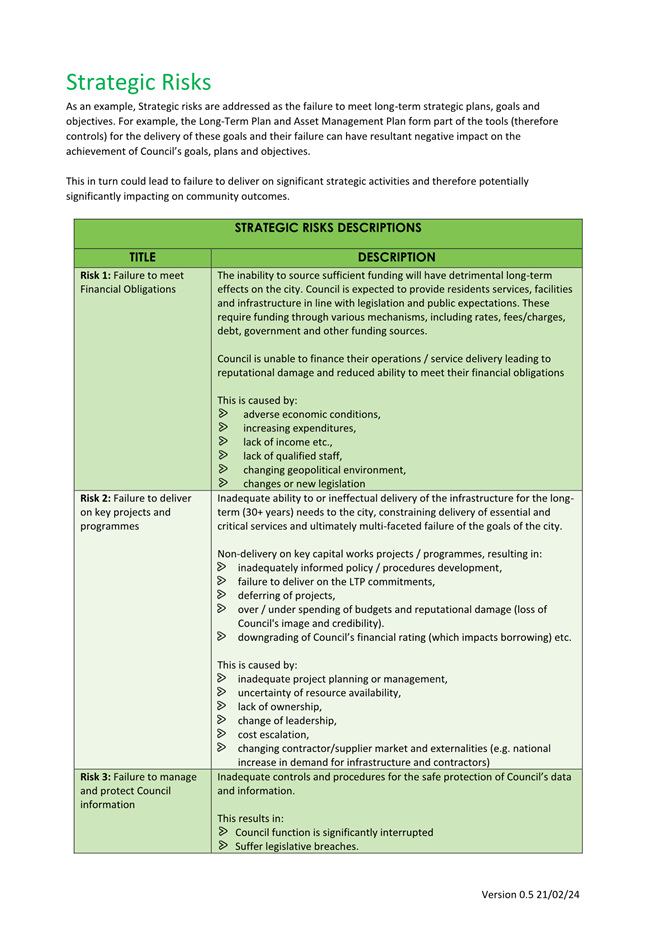
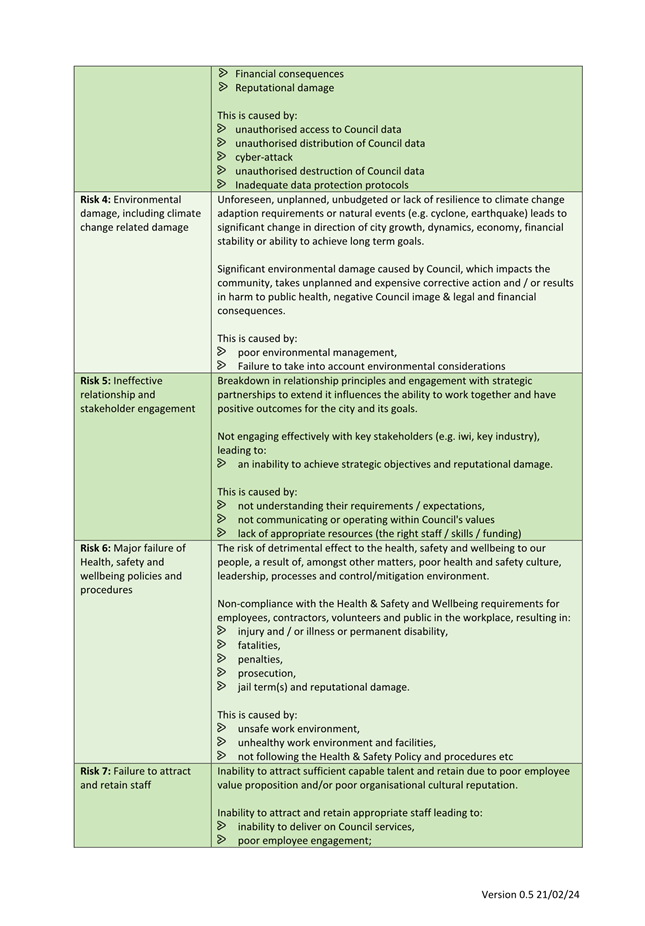
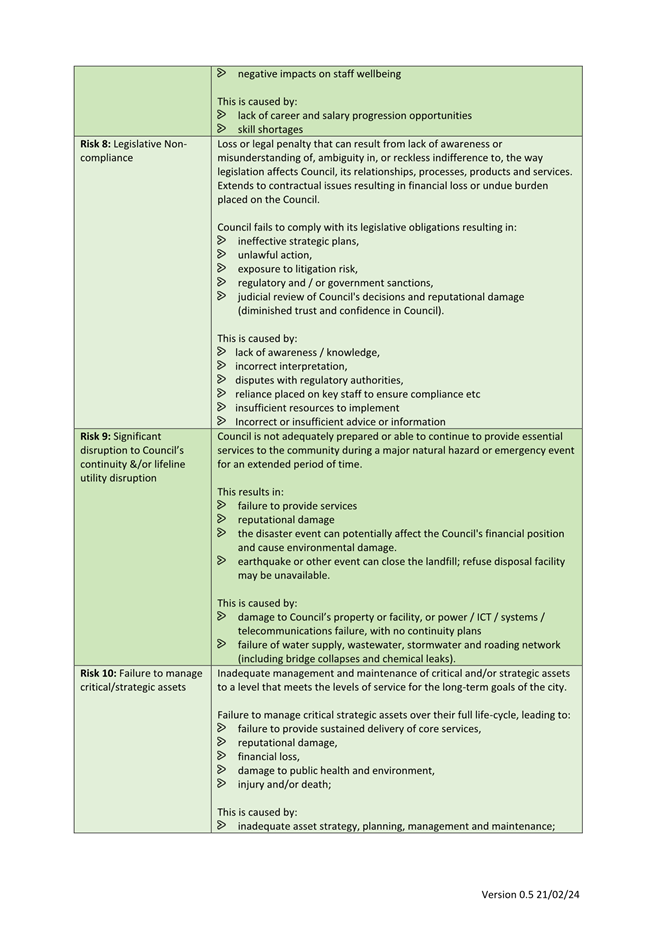
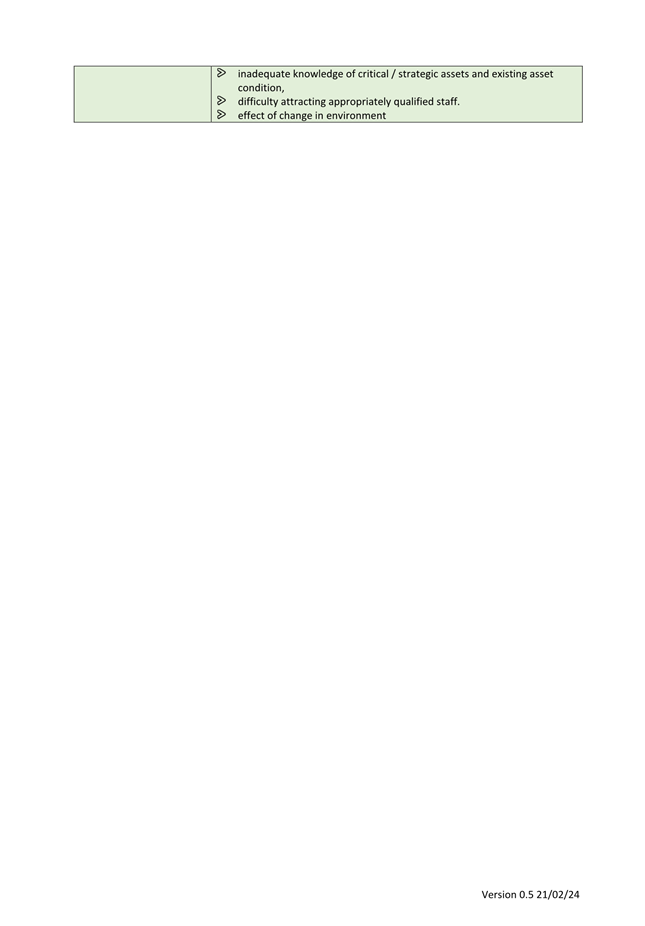
3.3 The
Strategic Risks are identified in the table below. None of the Strategic Risks
are prioritised over the other.
|
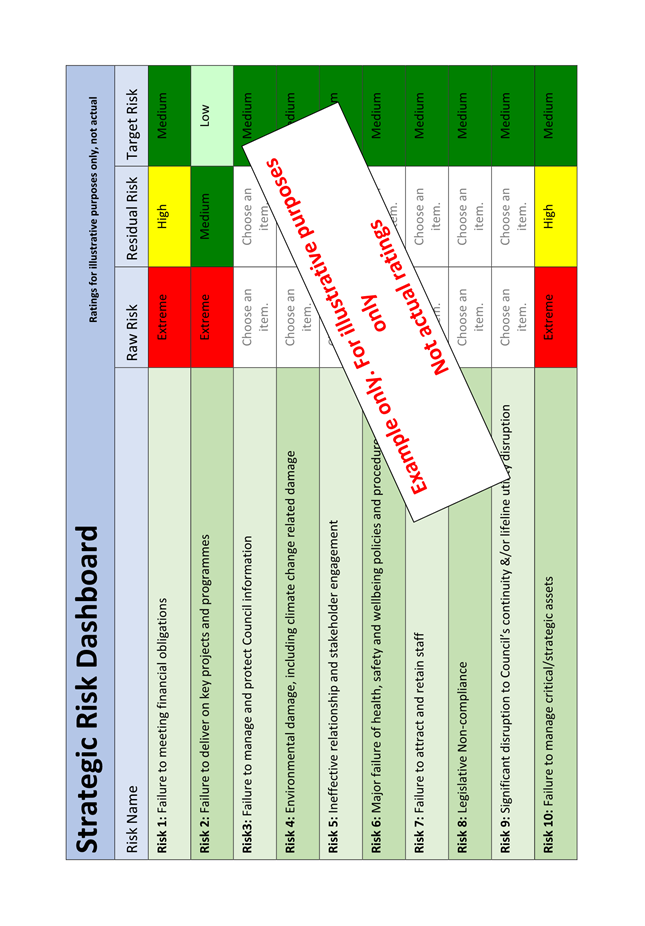
Risk 1: Failure to meeting financial obligations
|
|
Risk
2: Failure to deliver on key projects
and programmes
|
|
Risk
3: Failure to manage and protect Council
information
|
|
Risk
4: Environmental damage, including
climate change related damage
|
|
Risk
5: Ineffective relationship and stakeholder
engagement
|
|
Risk
6: Major failure of health, safety and
wellbeing policies and procedures
|
|
Risk
7: Failure to attract and retain staff
|
|
Risk
8: Legislative non-compliance
|
|
Risk
9: Significant disruption to
Council’s continuity &/or lifeline utility disruption
|
|
Risk
10: Failure to manage critical/strategic
assets
|
NB: Risk ID number is NOT based on priority/importance
3.4 An
overview of the risk descriptions for strategic risks is in Attachment 1. The
analysis and risk register creation is yet to be done for all but once
completed, they will provide an understanding of what could stop the
achievement of Council’s strategic goals, the causes, and the controls
and mitigations to avoid or reduce effects of events on the goals with
resultant raw, residual and target risk ratings determined.
4. Future reporting
4.1 Future
reporting to the Risk & Assurance Committee will include risk dashboards,
an example of which is included in Attachment 2, and strategic risk
assessments.
5. NEXT STEPS
5.1 Officers
will begin completing more in-depth analyses of the strategic risks, and create
risk registers for Committee oversight.
5.2 Regular
review of strategic risk statements.
6. Compliance and administration
|
Does the Committee have
delegated authority to decide?
|
No
|
|
Are the decisions significant?
|
No
|
|
If they are significant, do they
affect land or a body of water?
|
No
|
|
Can this decision only be made
through a 10 Year Plan?
|
No
|
|
Does this decision require
consultation through the Special Consultative procedure?
|
No
|
|
Is there funding in the current
Annual Plan for these actions?
|
Yes
|
|
Are the recommendations
inconsistent with any of Council’s policies or plans?
|
No
|
|
The recommendations contribute
to Goal 5: A Driven & Enabling Council
|
|
Contribution to strategic
direction and to social, economic, environmental and cultural well-being
|
The risk management
objectives cover all aspects of the Council, including strategy, tactics,
operations and compliance. The Risk Management Framework sets out the basis
for managing risk across the Council and a large part of this is culminated
through the creation of risk registers.
|
|
|
|
Attachments
|
1.
|
Strategic
Risk Descriptions ⇩ 
|
|
|
2.
|
Strategic
Risk Dashboard Example ⇩
|
|
Memorandum
TO: Risk
& Assurance Committee
MEETING DATE: 6
March 2024
TITLE: Business
Assurance Work Programme - Update
Presented
By: Masooma
Akhter, Business Assurance Manager
APPROVED BY: Donna
Baker, Acting Chief Executive Unit Manager
RECOMMENDATION(S)
TO Risk & Assurance Committee
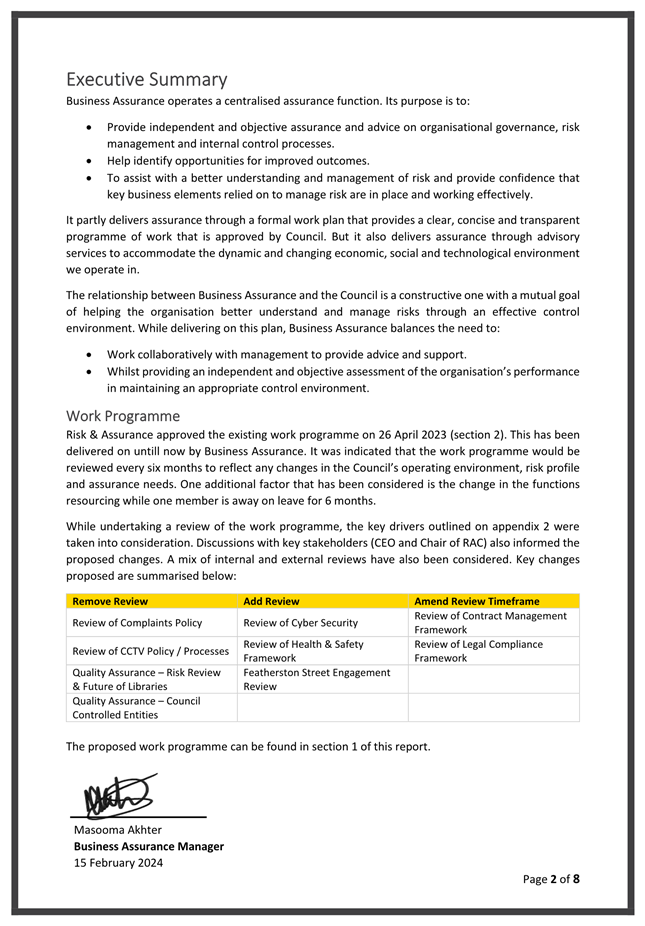
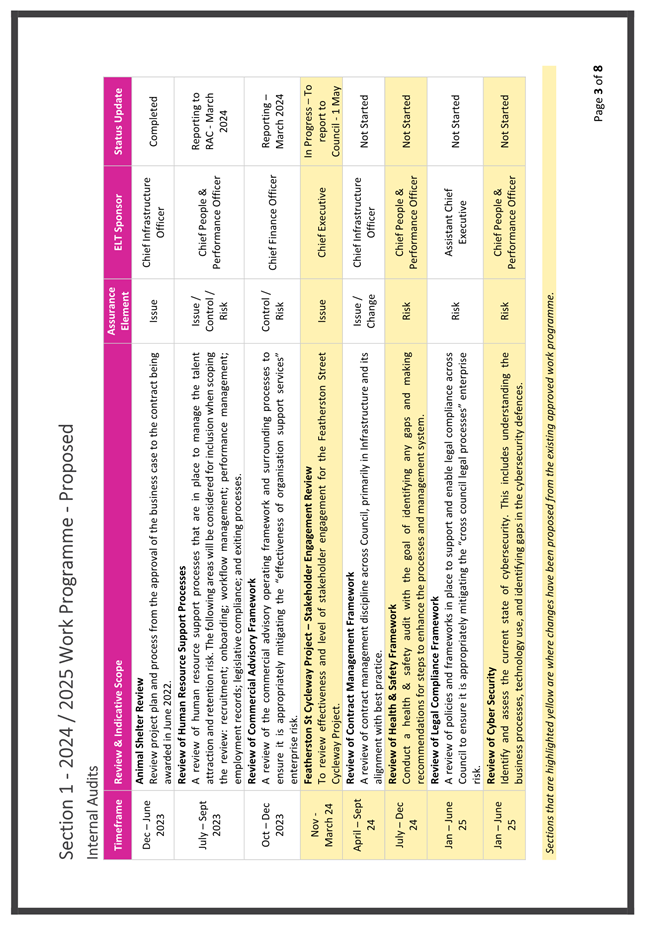
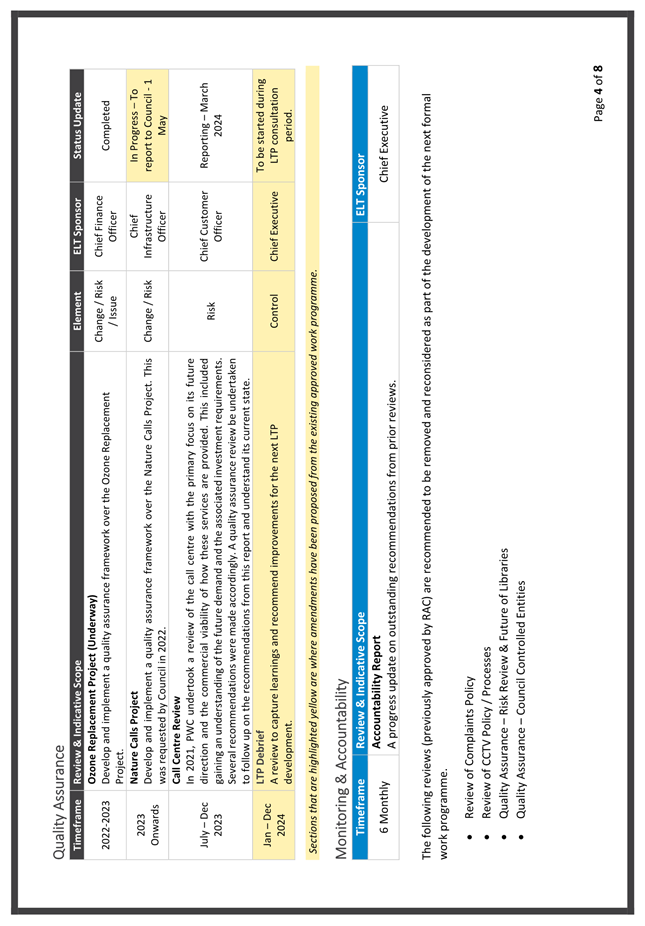
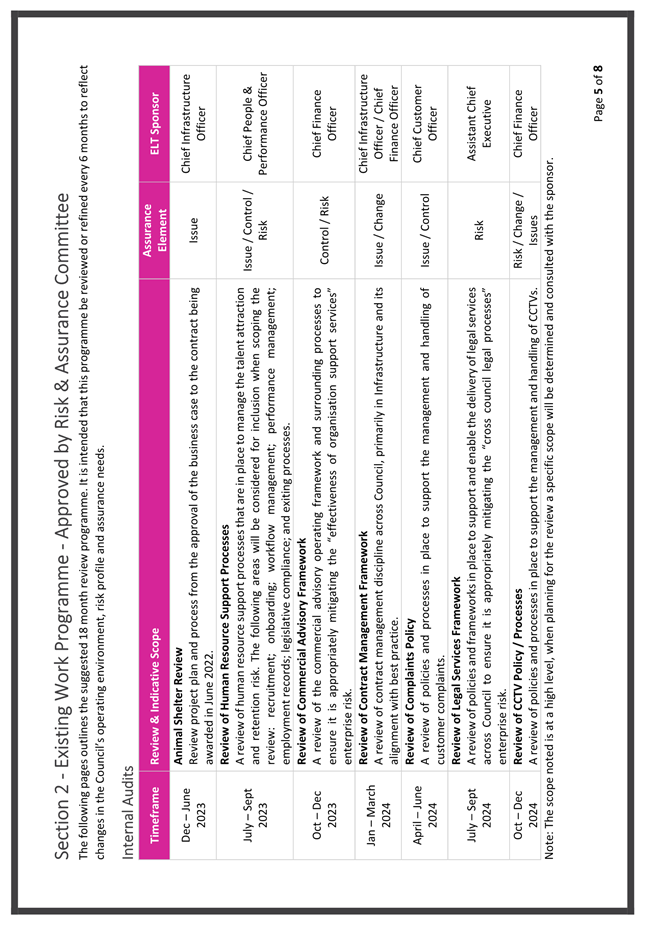
1. That the
Risk & Assurance Committee approve the updated Business Assurance Work Programme
for the 2024/2025 period (Attachment 1) presented on 6 March 2024.
2. That the
timeframes and amendments from the updated Business Assurance Work Programme be
updated on the work schedule for Risk & Assurance Committee.
1. ISSUE
To ensure the protection of
self, leadership and the organisation, the International Standards for the
Professional Practice of the Internal Auditing (the standards) requires that
the Business Assurance work programme is approved by the Risk & Assurance
Committee, or its equivalent. This will ensure robust outcomes can be
confidently represented by management and governance.
A six monthly review of the
work programme has been undertaken and an updated work programme (Attachment 1)
presented for approval.
2. BACKGROUND
In April 2023 Risk &
Assurance Committee approved a Business Assurance Plan for the 18 months ending
December 2024. At the time it was indicated that the work programme would be
reviewed every six months to reflect any changes in the Council’s
operating environment, risk profile and assurance needs. In addition to this, a
factor that has been considered is the change in the function’s
resourcing while one member is away on leave for six months.
The updated work programme was
socialised with the Executive Leadership Team on 20 February 2024 and no
additional changes were made to the proposed work programme.
3. NEXT
STEPS
Following approval, the updated
work programme will supersede the existing work programme and go live,
effective immediately. Business Assurance will complete the scheduled reviews
and report back to the Risk & Assurance Committee in due course.
4. Compliance
and administration
|
Does the Committee have
delegated authority to decide?
If Yes quote relevant clause(s)
from S4.8 – TOR for Risk & Assurance Committee
|
Yes
|
|
Are the decisions significant?
|
No
|
|
If they are significant do they
affect land or a body of water?
|
No
|
|
Can this decision only be made
through a 10 Year Plan?
|
No
|
|
Does this decision require
consultation through the Special Consultative procedure?
|
No
|
|
Is there funding in the current Annual
Plan for these actions?
|
Yes
|
|
Are the recommendations
inconsistent with any of Council’s policies or plans?
|
No
|
|
The recommendations contribute
to Goal 5: A Driven & Enabling Council
|
|
The recommendations contribute
to the achievement of action/actions in Governance
and Active Citizenship
|
|
Contribution to strategic
direction and to social, economic, environmental and cultural well-being
|
Business Assurance aims to
help the Council succeed by building trust and confidence in the core
controls relied on by management.
|
|
|
|
Attachments
|
1.
|
Proposed
Business Assurance Work Programme ⇩
|
|
Memorandum
TO: Risk
& Assurance Committee
MEETING DATE: 6
March 2024
TITLE: Business
Assurance Accountability Report
Presented
By: Masooma
Akhter, Business Assurance Manager
APPROVED BY: Donna
Baker, Acting Chief Executive Unit Manager
RECOMMENDATION(S)
TO Risk & Assurance Committee
1. That the
Risk & Assurance Committee receive the memorandum titled
‘Business Assurance Accountability Report’ and its attachment,
presented on 6 March 2024.
1. ISSUE
The Business Assurance Charter requires that follow-up
procedures for review recommendations are undertaken regularly and reported to
the Risk & Assurance Committee.
2. BACKGROUND
Follow-up
is a process by which internal auditors evaluate the adequacy, effectiveness,
and timeliness of actions taken by management on reported observations and
recommendations, including those made by external auditors and others. This
process also includes determining whether senior management and/or the
Committee have assumed the risk of not taking corrective action on reported
observations.
Where an external review/audit
has been completed and reported to the Risk & Assurance Committee, the
recommendations form part of the accountability report.
Attached
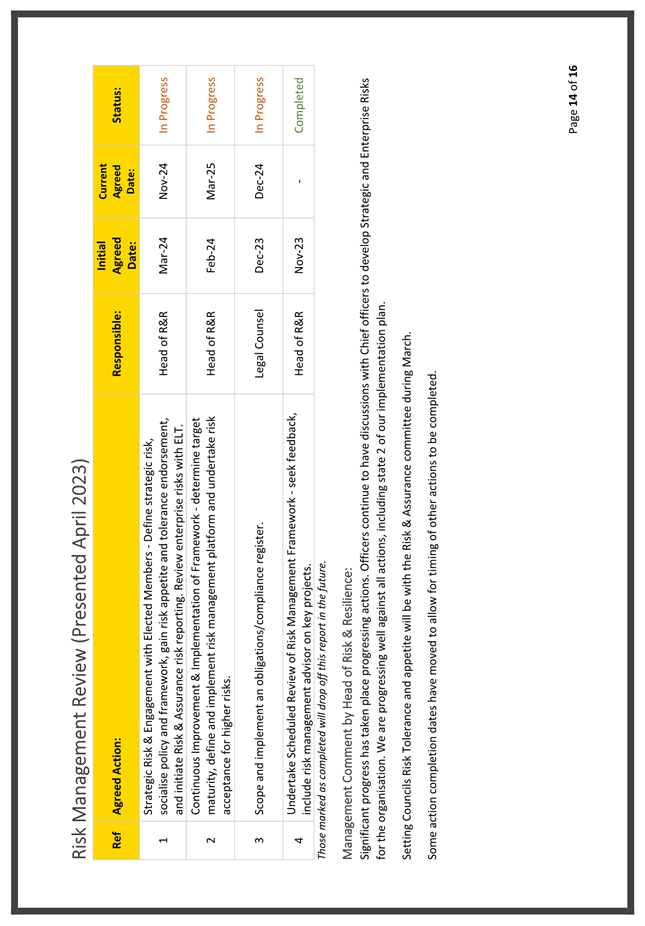
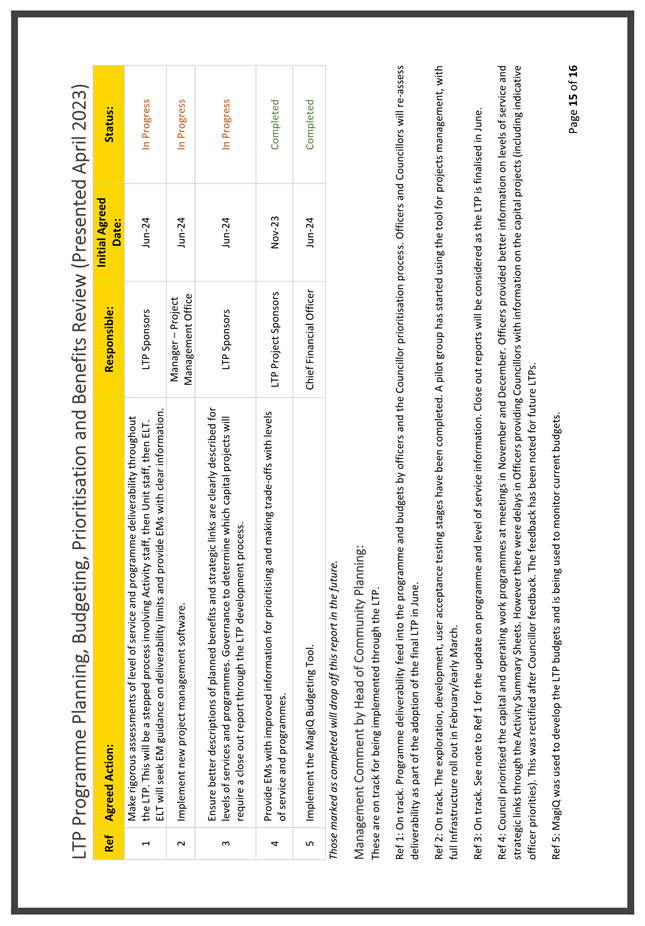
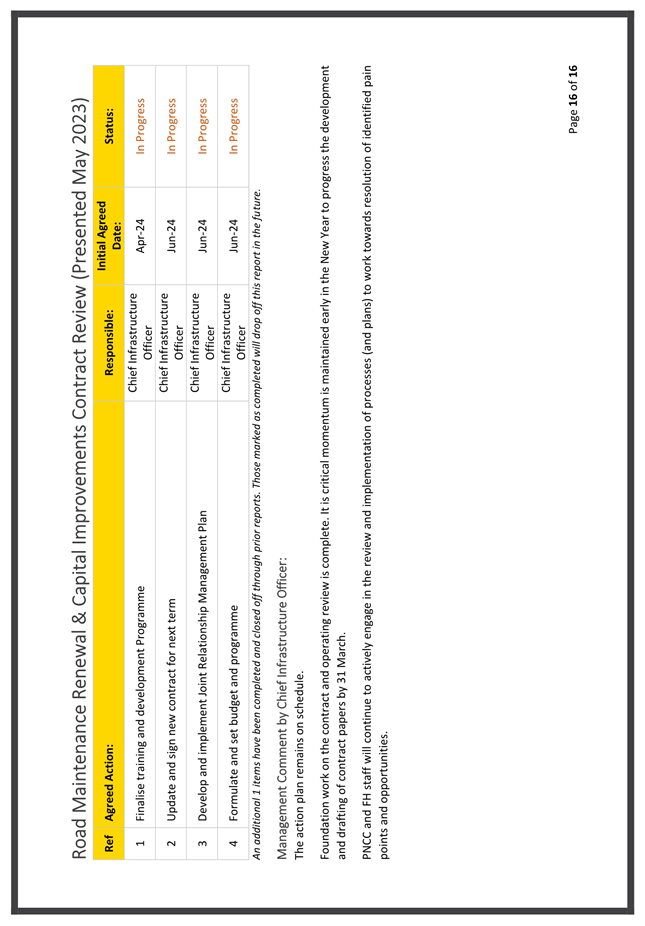
is the report that shows the status of each agreed action. As items are reported as completed, they fall off the
following report.
3. NEXT
STEPS
A six-monthly accountability
report will be reported to the Risk & Assurance Committee.
As further reviews are
completed (as per the Business Assurance Plan) and reported to the Risk &
Assurance Committee, their recommendations will form part of future
accountability reports presented by Business Assurance.
4. Compliance
and administration
|
Does the Committee have
delegated authority to decide?
If Yes quote relevant clause(s)
from S4.8 – TOR for Risk & Assurance Committee
|
Yes
|
|
Are the decisions significant?
|
No
|
|
If they are significant do they
affect land or a body of water?
|
No
|
|
Can this decision only be made
through a 10 Year Plan?
|
No
|
|
Does this decision require
consultation through the Special Consultative procedure?
|
No
|
|
Is there funding in the current
Annual Plan for these actions?
|
Yes
|
|
Are the recommendations
inconsistent with any of Council’s policies or plans?
|
No
|
|
The recommendations contribute
to Goal 5: A Driven & Enabling Council
|
|
The recommendations contribute
to the achievement of action/actions in Governance
and Active Citizenship
|
|
Contribution to strategic
direction and to social, economic, environmental and cultural well-being
|
Business Assurance aims to
help the Council succeed by building trust and confidence in the core
controls relied on by management.
|
|
|
|
Attachments
|
1.
|
6
Monthly Accountability Report ⇩
|
|
Memorandum
TO: Risk
& Assurance Committee
MEETING DATE: 6
March 2024
TITLE: Audit
NZ 2023 Management Report with Action Plan
Presented
By: Masooma
Akhter, Business Assurance Manager and Cameron McKay, Chief Financial Officer
APPROVED BY: Donna
Baker, Acting Chief Executive Unit Manager
RECOMMENDATION(S)
TO Risk & Assurance Committee
1. That the
Risk & Assurance Committee receive the memorandum titled ‘Audit NZ
2023 Management Report with Action Plan’ presented on 6 March 2024.
1. ISSUE
1.1 Audit
NZ undertook the annual Statutory Financial Statement Audit for Year End
30 June 2023.
1.2 As
part of the annual audit, each year Audit NZ produces an Audit Management
Report providing an overview of the audit and outlining any matters from the
audit, and an assessment of Council’s internal controls. Recommendations
for improvements are included in this report, along with progress against previous
recommendations raised in prior audits.
1.3 In
December 2023 Audit NZ released a draft final management report for the
June 2023 audit. Following further discussions and clarifications with
management, this was finalised by Audit NZ on 07 February 2024
(Attachment 1).
1.4 An
action plan was subsequently agreed with management to address the findings
that Audit NZ had highlighted (Attachment 2). This was approved by ELT on 14
February 2024.
2. BACKGROUND
2.1 In
response to the Audit NZ reports, the Business Assurance division facilitated
the preparation of an action plan that was subsequently endorsed by management.
2.2 It
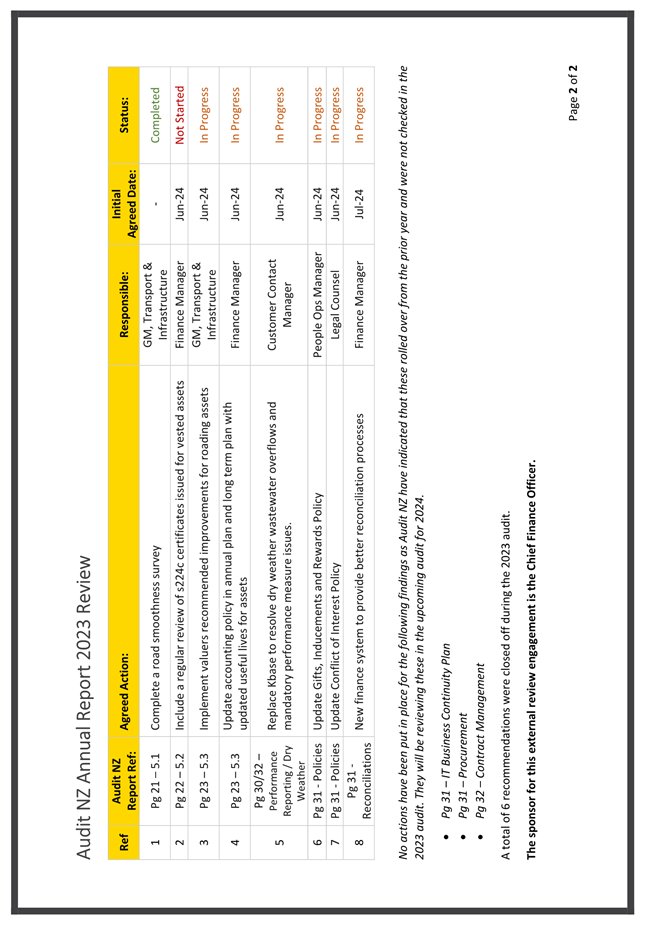
should be noted that six findings from the prior year were closed off during
the testing. Some of the previous points are still outstanding, however the
reason for a lack of progress on that front can be attributed to resourcing and
system constraints. We have therefore updated the previous action plan to
reflect up-to-date target dates.
2.3 It
is expected that with the implementation of the new finance system, procurement
tool, internal policy framework and Kbase replacement, we will see an
improvement in our internal controls and therefore see a number of our
recommendations close off. However, this should not be expected until the
report for the 2024 financial year is released.
2.4 One
recommendation has been actioned since the audit was completed and this has
been acknowledged in the report. This is also marked as completed in the action
plan.
3. Management
comment by chief FINANCIAL officer
3.1 Officers
have noted that there has been some good progress made on several issues raised
by Audit NZ, with 6 completed and 3 new issues raised. Management are aware of
the length of time some of the issues have been on the management report and
the need to address these. Officers had been in discussions with DIA and OAG in
relation to items on the recording of information regarding customer
complaints, but to date no change to the guidelines has been achieved.
Therefore, it is intended these be resolved as part of the Contact Centre
modernisation project currently in progress. Further to this, some items were
not tested this time by the Audit team so are unable to be removed from the
register. These have been requested to be reviewed in the upcoming audit.
4. NEXT
STEPS
4.1 The
action plan that has been developed will be followed up on by Business
Assurance every 6 months and will be reported back to Risk & Assurance
Committee through the accountability reporting.
5. Compliance
and administration
|
Does the Committee have
delegated authority to decide?
|
Yes
|
|
Are the decisions significant?
|
No
|
|
If they are significant do they
affect land or a body of water?
|
No
|
|
Can this decision only be made
through a 10 Year Plan?
|
No
|
|
Does this decision require consultation
through the Special Consultative procedure?
|
No
|
|
Is there funding in the current
Annual Plan for these actions?
|
Yes
|
|
Are the recommendations
inconsistent with any of Council’s policies or plans?
|
No
|
|
The recommendations contribute
to Goal 5: A Driven & Enabling Council
|
|
The recommendations contribute
to the achievement of action/actions in Governance
and Active Citizenship
|
|
Contribution to strategic
direction and to social, economic, environmental and cultural well-being
|
Business Assurance aims to
help the Council succeed by building trust and confidence in the core
controls relied on by management and governance.
|
|
|
|
Attachments
|
1.
|
Audit
NZ 2023 Management Report ⇩ 
|
|
|
2.
|
2023
Managment Action Plan ⇩
|
|
Memorandum
TO: Risk
& Assurance Committee
MEETING DATE: 6
March 2024
TITLE:
External Funding & Commercial Revenue - Business Assurance Review
Presented
By: Masooma
Akhter, Business Assurance Manager and Fiona Dredge, Commercial Advisory
Manager
APPROVED BY: Donna
Baker, Acting Chief Executive Unit Manager
RECOMMENDATION(S)
TO Risk & Assurance Committee
1. That the
Risk & Assurance Committee receive the memorandum titled
‘External Funding & Commercial Revenue – Business Assurance
Review’ and its attachments, presented on 6 March 2024.
1. ISSUE
The Business Assurance plan for
2023/2024 endorsed by Council on 26 April 2023 required this review.
2. BACKGROUND
The opportunity to support
current and future funding needs through the development and implementation of
commercial behaviours and practices has become a popular topic in the current
climate. In general, councils are facing many significant and often conflicting
pressures (including financial) which require difficult decisions to be made as
a result and Palmerston North City Council is no different.
The overall objective of this
review is to provide assurance over the effectiveness of the internal controls
and processes put in place over the Commercial Advisory Framework. The purpose
and scope of this review will ensure:
· that
the processes in place to maximise external funding and sponsorship
opportunities are robust, and
· that
the process to identify and analyse prospective business and economic
opportunities (to ensure they are financially and commercially sound) are
robust.
3. Findings
& Recommendations
A Commercial Advisory Framework
was recently drafted. This framework sets out the intended role of Commercial
Advisory and the outcomes they seek to achieve. This review was used as an
opportunity to provide feedback and guidance on next steps to further enhance
the framework.
While reviewing the framework
we noted that the funding processes were in a more mature state in comparison
to the commercial aspects of the framework. We have made recommendations to
reconsider the operating model and improve processes to help maximise the
return from funding and commercial opportunities.
It was acknowledged that the
development of the framework is a starting point for Commercial Advisory to
gain maturity within the organisation and once the framework is finalised, the
organisation will be better placed to enhance funding and commercial practices.
Detailed findings,
recommendations and agreed actions can be found in the attached review report.
4. Management
Comment
With the creation of the draft
Commercial Advisory Framework in 2023 this review is timely to identify further
opportunities to improve the framework and clarify the opportunities for the
Commercial Advisory Function to add further value. The currently in progress
Draft LTP has enabled Elected Members to provide direction through the Finance
Strategy, as well as the Significant Forecasting Assumptions for Officers to
investigate and provide advice on opportunities for private partnerships and
exploring opportunities to generate increased revenue from the assets that
Council owns and controls. It is acknowledged through the LTP process that
Council is heavily reliant on rates income, and funding new infrastructure
through debt, and that for of a number of key programmes external funding will
be required to enable them to proceed.
In terms of the services
Council provides on a commercial basis, moving from providing advice on an
ad-hoc basis to creating a schedule for regularly reviewing these arrangements
to ensure they are still valuable to Palmerston North City Council will provide
assurances that what we charge to others reflect any changing circumstances in
relation to costs and risks of providing the services.
I would like to thank the
Business Assurance Team for undertaking this review.
5. NEXT
STEPS
The actions from this review
will be followed up by Business Assurance and reported back to the Risk &
Assurance Committee through the six-monthly accountability reporting.
6. Compliance
and administration
|
Does the Committee have
delegated authority to decide?
If Yes quote relevant clause(s)
from S4.8 – TOR for Risk & Assurance Committee
|
Yes
|
|
Are the decisions significant?
|
No
|
|
If they are significant do they
affect land or a body of water?
|
No
|
|
Can this decision only be made through
a 10 Year Plan?
|
No
|
|
Does this decision require
consultation through the Special Consultative procedure?
|
No
|
|
Is there funding in the current
Annual Plan for these actions?
|
Yes
|
|
Are the recommendations
inconsistent with any of Council’s policies or plans?
|
No
|
|
The recommendations contribute
to Goal 5: A Driven & Enabling Council
|
|
The recommendations contribute
to the achievement of action/actions in Governance
and Active Citizenship
|
|
Contribution to strategic
direction and to social, economic, environmental and cultural well-being
|
This report is presented as a
business assurance activity in response to the business assurance plan
approved by Risk & Assurance Committee and as required by the Committee
Terms of Reference.
|
|
|
|
Attachments
|
1.
|
External
Funding & Commercial Revenue Review Report ⇩ 
|
|
Memorandum
TO: Risk
& Assurance Committee
MEETING DATE: 6
March 2024
TITLE: Wellbeing
Report, October to December 2023 (Quarter 2)
Presented
By: Connie
Roos, Employee Experience Manager and Wayne Wilson, People Operations Manager
APPROVED BY: Danelle
Whakatihi, Chief People & Performance Officer
RECOMMENDATION(S)
TO Risk & Assurance Committee
1. That the
Committee receive the memorandum titled ‘Wellbeing Report, October to
December 2023 (Quarter 2)’ presented to the Risk & Assurance Committee
on 6 March 2024.
1. ISSUE
1.1 Wellbeing
continues to be a focus area for leadership at all levels of Council and is
core to our Employee Experience.
1.2 Due
to feedback from the Risk and Assurance Committee, this report has been
adjusted to align with our wellbeing programme. These three components,
Prevent Harm, Provide Support and Enhance Wellbeing are a holistic approach to
wellbeing. Support relating to each of these components will be found under
each section. When applicable comparative data is included for context.
1.3 Employee
initiated turnover and lost time is included in this report.
Prevent Harm
1.4 Continuing from the endorsement of hybrid working
principles in August 2023, training for leaders has commenced in October,
providing managers with the skills to lead hybrid teams. These trainings will
continue into Quarter 3. Being flexible about how we work contributes to
life-work integration which can improve overall wellbeing.
1.5 Psychosocial
risk management practices are currently being assessed by the Employee Experience
team. This will inform organisational workplace stressor mitigation activities
in future.
|
Quarter 2 Wellbeing
Report – Prevent Harm
|
Q2 2023
|
YTD
|
Average Quarter for
2022/23 FY
|
|
|
Wellness space usage
|
1478
|
2984
|
1418
|
The comparative data
shows that wellness space usage has improved compared to the previous
average. This includes gym usage.
|
|
Biennial health / eye
check
|
34
|
50
|
20
|
Biennial Health and Eye
Check information is sent directly to staff members on their even birthdays,
e.g. age 38. This quarter had an increase compared to the previous quarter
(16).
|
Provide Support
|
Quarter 2 Wellbeing
Report – Provide Support
|
Q2 2023
|
YTD
|
Average Quarter for
2022/23 FY
|
|
|
Vitae – On-site
services
|
249
|
451
|
324
|
On-site services involve Vitae Officers
visiting sites to conduct informal wellbeing check-ins. Front facing roles,
dealing with the public directly, have reported to Vitae that these visits
are appreciated.
|
|
Reflect and Learn
sessions
|
10
|
26
|
18
|
Sessions are designed to
assist staff to deal constructively with high conflict incidents in front
facing customer roles.
|
Enhance Wellbeing
|
Quarter 2 2023
|
Year to date
Number of attendees
|
Target to be
completed by End of FY 23/24
|
|
|
Creating Respectful Workplaces (attendees)
|
11
|
60
|
This training encourages
positive workplace relationships by addressing unacceptable behaviours such
as bullying and harassment that could create internal and unhealthy conflict.
The service provider was unable to present this workshop during Q2. Training
will re-start in Q3.
|
|
Challenging Conversations & Resilience (attendees)
|
14
|
30
|
This workshop is designed to provide employees
with practical information and frameworks to deal successfully with
situations evoking strong emotional responses.
|
|
Tools for Change (attendees)
|
140
|
150
|
This training helps employees to identify thinking styles,
recognise thinking traps and manage responses to change.
|
|
Manager Completion of Leading Through Change (Manager attendees)
|
65
|
70
|
One way to support
employees’ wellbeing is to provide managers with a toolset to lead
their team through changing environments.
|
|
Manager completion of
Understanding Mental Health in the Workplace (Manager
attendees)
|
9
|
20
|
To date, 74 kaimahi
(staff) have attended this training. Support can be enhanced if managers
understand the impact of mental health on wellbeing.
|
|
Wellbeing Presentation
(attendees)
|
57/86 (66% of new
starters)
|
90% of new starters
|
This presentation helps
to orient new starters to the wellbeing support available here at Council.
This presentation was first created in February 2023 and is presented to all
staff who attend Orientation Day.
|
1.6 Unmind
app usage has fluctuated this quarter. Unmind is a tool that takes a proactive,
preventative approach to mental health. This includes wellbeing and mood
trackers, courses and shorts focused about wellbeing. Top completed Unmind
Shorts in October to December are Managing Stress, Team Synergy and Opening Up.
Turnover – Employee
initiated
|
Year
|
18/19
|
19/20
|
20/21
|
21/22
|
22/23
|
July 2023 - Jan 2024
(7 months)
|
|
Number
|
67
|
85
|
120
|
123
|
114
|
59
|
|
%
|
12.0%
|
14.1%
|
20.9%
|
19.8%
|
18.8%
|
15.3%
Annualised
|
|
Month
|
Turnover for Month
|
Turnover Previous 12
Months
|
Percentage (annual)
|
|
Nov 22
|
8
|
115
|
18.3%
|
|
Dec 22
|
8
|
119
|
18.9%
|
|
Jan 23
|
14
|
127
|
20.0%
|
|
Feb 23
|
9
|
130
|
20.6%
|
|
Mar 23
|
9
|
128
|
20.3%
|
|
Apr 23
|
11
|
126
|
19.9%
|
|
May 23
|
7
|
119
|
18.8%
|
|
Jun 23
|
8
|
114
|
18.0%
|
|
Jul 23
|
10
|
112
|
17.7%
|
|
Aug 23
|
8
|
112
|
17.7%
|
|
Sep 23
|
5
|
105
|
16.6%
|
|
Oct 23
|
10
|
107
|
16.9%
|
|
Nov 23
|
8
|
107
|
16.7%
|
|
Dec 23
|
9
|
108
|
16.4%
|
|
Jan 24
|
9
|
103
|
15.7%
|
Turnover by Unit (12 months to Jan 2024)
|
Chief Executive Unit
|
5
|
13.5%
|
|
Customer
|
35
|
14.6%
|
|
Finance
|
7
|
20.6%
|
|
Infrastructure
|
48
|
18.1%
|
|
People & Performance
|
5
|
9.8%
|
|
Strategy & Planning
|
2
|
7.4%
|
|
Headquarters
|
1
|
25%
|
1.7 Turnover
has continued to drop over the course of this financial year.
1.8 Our
trends show that the highest turnover occurs in the first 12 months of
employment. This is standard globally and we are not unique in this instance.
Lost Time (Days)
|
Dec-21
|
Mar-22
|
Jun-22
|
Oct-22
|
Dec-22
|
Mar-23
|
Jun-23
|
Sep-23
|
Dec 23
|
|
378
|
319
|
286
|
348
|
352
|
257
|
263
|
358
|
180.53
|
1.9 The
above lost time includes non-work injuries.
1.10 The number
of lost days is significantly lower, due to less accidents.
1.11 People
Operations are working on recruitment data in this space to ensure accuracy.
2. BACKGROUND
2.1 Wellbeing
is interconnected with a variety of individual and systemic factors which makes
it a difficult area to report on. The above metrics have been recorded with
that in mind.
2.2 The
Employee Experience team continue to review the provision of Mental
Health/Resilience training to identify opportunities and improvements to
capture our workforce and equip our people with skills and tools.
3. NEXT STEPS
3.1 Explore
opportunities in the wellbeing space to prevent harm, provide support and
enhance wellbeing. This includes presenting preliminary recommendations for
psychosocial risk management to the Chief People & Performance Officer
before presenting to Executive Leadership Team.
3.2 Presentations
available to all staff in the next quarter that touch on nutrition, sleep and
financial wellbeing. These presentations are planned to supplement our Unmind
courses and have been provided with no cost to Council.
4. Compliance and administration
|
Does the Committee have
delegated authority to decide?
|
Yes
|
|
Are the decisions significant?
|
No
|
|
If they are significant do they
affect land or a body of water?
|
No
|
|
Can this decision only be made
through a 10 Year Plan?
|
No
|
|
Does this decision require
consultation through the Special Consultative procedure?
|
No
|
|
Is there funding in the current
Annual Plan for these actions?
|
No
|
|
Are the recommendations
inconsistent with any of Council’s policies or plans?
|
No
|
|
The recommendations contribute
to Goal 5: A Driven & Enabling Council
|
|
The
recommendations contribute to the achievement of action/actions
in (Not Applicable)
|
|
Contribution to strategic
direction and to social, economic, environmental and cultural well-being
|
Providing information to Council
about the ongoing progress towards the good performance of the organisation
regarding wellbeing. The wellbeing of our kaimahi (staff) directly relates to
how the strategic direction is implemented.
|
|
|
|
Attachments
Nil
Memorandum
TO: Risk
& Assurance Committee
MEETING DATE: 6
March 2024
TITLE: Health
and Safety Report, October to December 2023 (Quarter 2)
Presented
By: Selwyn
Ponga-Davis, Health and Safety Manager
APPROVED BY: Danelle
Whakatihi, Chief People & Performance Officer
RECOMMENDATION(S)
TO Council
1. That the
Committee receive the memorandum titled ‘Health and Safety Report,
October to December 2023 (Quarter 2)’ presented to the Risk &
Assurance Committee on 6 March 2024.
2. That the
Chief Executive release the memorandum and attachments 1 and 3 as soon as is
practicable.
1. Executive
summary
1.1 Health
and Safety continues to be a focus area when providing encouragement to our
staff to report incidents as and when they occur. Management also recognises
the importance of sustaining effort and our investment to keep our people safe.
· Although
we continue to experience high levels of incidents involving the public, the
health and safety culture continues to improve with solid reporting through our
PeopleSafe health and safety management tool.
· The
number of Threatening Behaviour incidents toward staff has increased slightly
from 37 to 39 in comparison to the previous quarter (July to September 2023).
Details are included within the confidential Critical Risks Report schedule
(Attachment 2).
· Progress
on the close out of actions against the SafePlus report recommendations is near
complete.
1.2 Notable
highlights over the October to December 2023 quarter:
· Major
achievements have been the Gold accreditation status awarded by SiteWise, and
recently Totika accreditation of ‘Performing’ that now places us
amongst the ranks of other Person Conducting a Business or Undertaking (PCBUs).
Council therefore continues to move forward on its health and safety journey.
1.3 Looking
ahead:
· Hazard
and Risk registers are still under review, in particular Council’s
Critical Risks. Critical Risk 6 (Members of the Public) has been moved to
Critical Risk 1 and renamed ‘Frontline Working’ due to the
continued trend of our staff experiencing unacceptable behaviour when working
amongst the public. This, along with the new Health and Safety safe management
framework, will be provided to an internal reference group for review, ahead of
consideration by senior management.
· Towards
the end of Q3 (March) Health and Safety plans to again hold an annual induction
where we will set out and explain our expectations for contractors engaged in
our undertakings for PN City Council and on PN City Council premises. The
induction will include staff that are supporting / engaging with contractors as
part of their role.
1.4 Due
to feedback received at the last Risk & Assurance Committee meeting on 18
October 2023, this report has been adjusted to include information which notes
Police involvement, along with a coding reference within the confidential Critical
Risks Report Schedule (Attachment 2). This schedule identifies Critical Risks
involving verbal altercation and/or physical danger when staff are Frontline
Working. This additional information can be found below under section B.
Critical Risks.
· Graphed
data (refer to Table 3: CR1 – Frontline Working – on page 5) has
also been included within the public part of this memorandum to reference the
verbal altercation and/or physical danger information.
1.5 Updates
on topics reported previously:
· Update
and refresh on the Health and Safety Management Plans for Turitea Water
Treatment Plant, and WasteWater Treatment Plant remain ongoing.
· The
refresh on the organisational emergency flip charts, managed by Risk and
Resilience, is progressing.
· The
competency framework, implementation of recommendations (including training
plans for staff) is yet to be completed, presented and accepted.
2. Health
and safety report
2.1 This
report covers the period 1 October 2023 through to 31 December 2023. The information
included in Table 1 below is discussed at the Officers and Operations Health
and Safety Committee meetings.
A. Hazards, Incidents
and Near Misses Reported
Table 1: Hazards, Incidents and Near Misses
|
Quarter
|
Sep 22
|
Dec 22
|
Mar 23
|
Jun 23
|
Sep 23
|
Dec 23
|
|
PNCC
|
CON
|
PNCC
|
CON
|
PNCC
|
CON
|
PNCC
|
CON
|
PNCC
|
CON
|
PNCC
|
CON
|
|
Hazards
|
14
|
|
17
|
|
19
|
2
|
19
|
4
|
55
|
5
|
28
|
11
|
|
Incidents
|
100
|
3
|
69
|
8
|
125
|
11
|
99
|
16
|
115
|
11
|
108
|
11
|
|
Near Misses
|
14
|
|
19
|
3
|
19
|
2
|
10
|
5
|
9
|
1
|
14
|
1
|
Key: PNCC =
Staff; CON = Contractor
2.2 Comments:
· Hazards
and Incidents. Contractors have been reminded that:
o The
use of a mobile device while driving is illegal and an unsafe activity;
o They
ensure standard PPE practices are adhered to at all times; and
o That
prior approval is required for a contractor to drive a fleet vehicle.
o It
has also been noted and raised that some worksites are left in unkempt states
– concrete and material found in manholes, and no environmental controls
put in place.
· Graphed
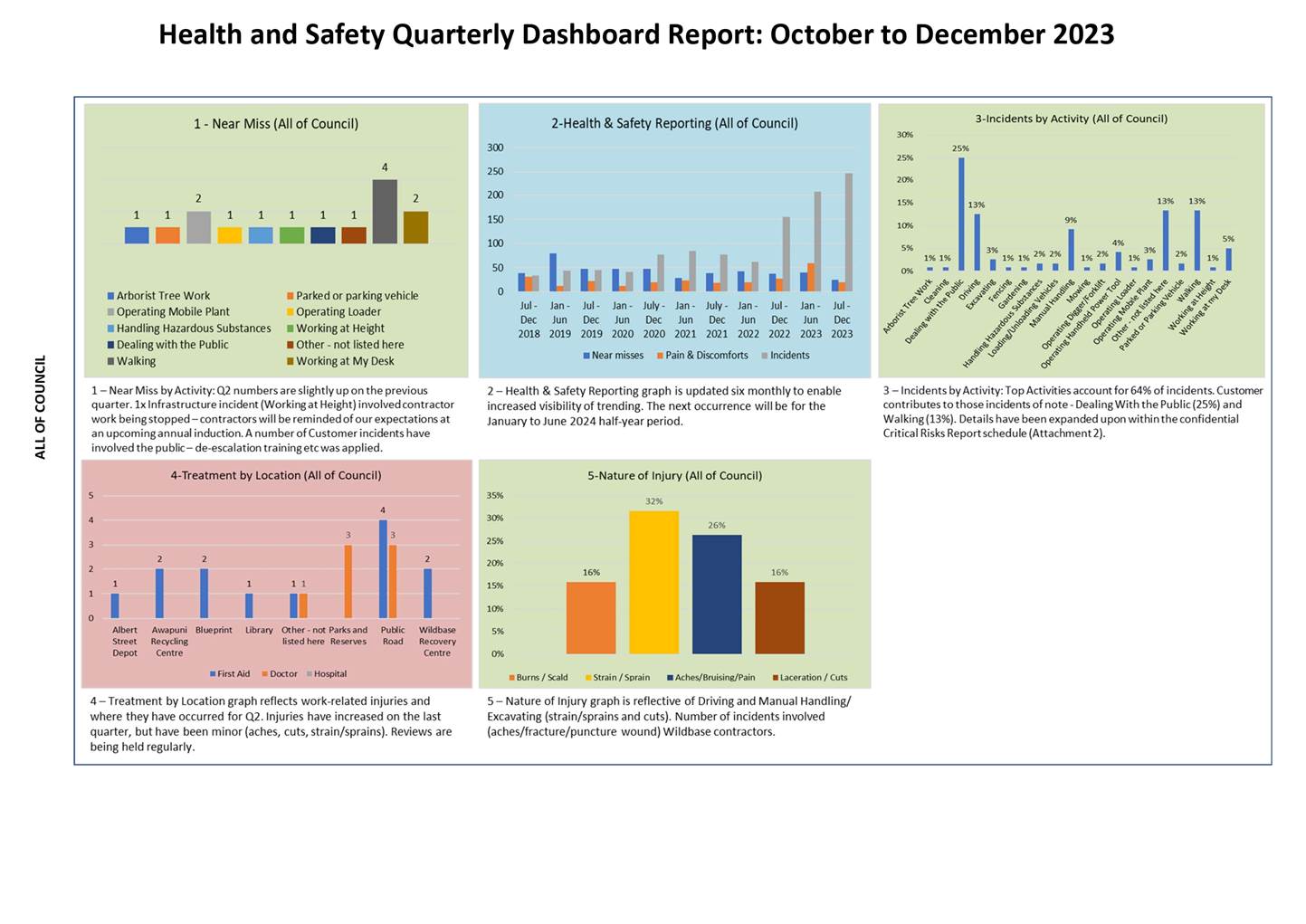
information in the Health and Safety Quarterly Dashboard Report (Attachment 1)
is no longer separated out to differentiate incidents occurring within
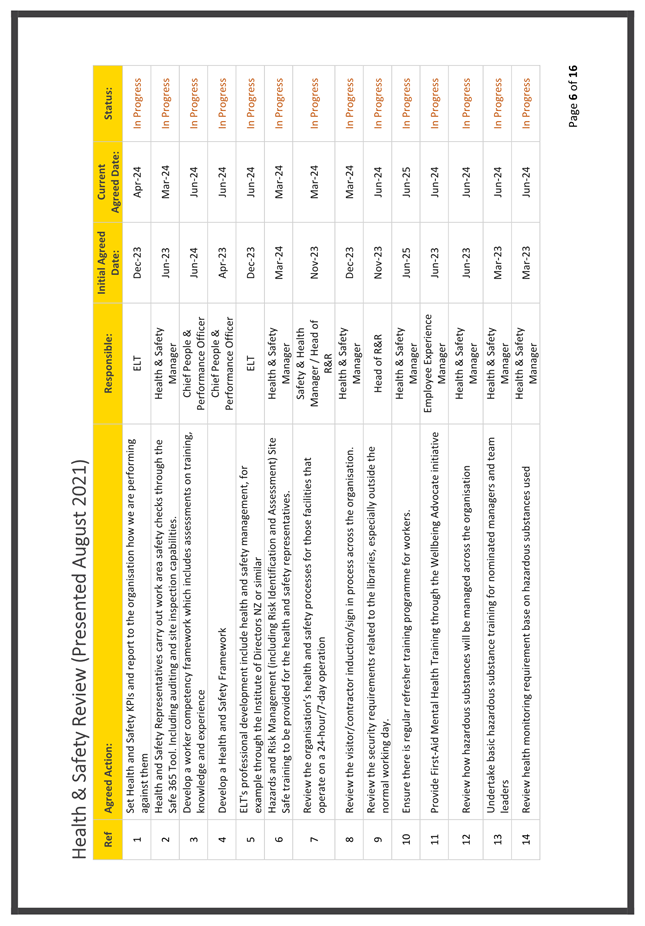
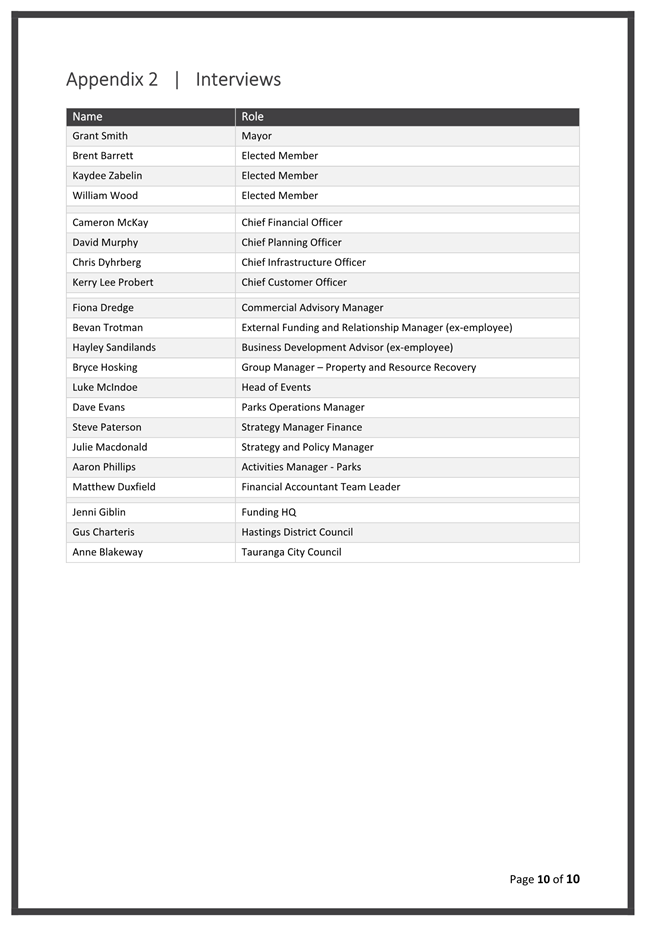
Infrastructure vs the rest of Council. Due to the number of incidents being
reported for the Customer division, the detail is now combined for All of
Council.
B. Critical Risks
2.3 The
table below has been included to provide clarity on the number of critical risk
events and the category each event relates to. For more information on the
individual events please refer to the confidential Critical Risks Report
schedule (Attachment 2).
Table 2: Critical Risks
|
No.
|
Critical Risk…
|
Near Miss
|
Incident
|
|
1
|
Frontline Working
|
5
|
48
|
|
2
|
Work Environment
|
1
|
1
|
|
3
|
Working at Height
|
1
|
|
|
4
|
Breaking Ground
|
|
1
|
|
5
|
Confined Space
|
|
|
|
6
|
Working with Mobile Plant
|
3
|
1
|
|
7
|
Driving
|
|
|
|
8
|
Lone Worker
|
|
|
|
9
|
Working Around Water
|
|
|
|
10
|
Hazardous Substances
|
1
|
|
|
11
|
Use of Power Handtools /
Plant
|
|
2
|
|
12
|
Asset Failure
|
|
|
2.4 Comments
· A
number of Nice Job Incidents have been included within CR1 (Frontline Working).
These relate to Parking staff providing support to not only our community, but
also their colleagues through positive displays of de-escalation.
· Police
have been providing support to Council.
· Overall,
5 trespass notices have been actioned over the quarter.
· The
graphs below identify Critical Risks involving Verbal Altercation (VA) and/or
Physical Danger (PD) when staff are Frontline Working.
o Customer
has recorded 31 VA incidents and 3 PD incidents for the quarter;
o Infrastructure
has recorded 5 VA incidents and 1 PD incident for the quarter.
o The
details of these incidents are included within the confidential Critical Risks
Report Schedule (Attachment 2).
Table 3: CR1 – Frontline Working
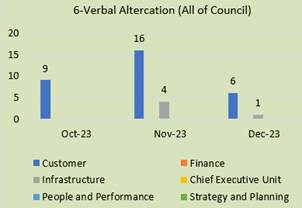
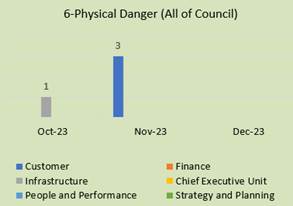
C. Manual Handling
2.5 A
number of proactive Manual Handling measures continue to be applied across
Council.
· Manual
Handling education (stretching, warm-up/cool-down), which is covered during a
staff member’s onboarding process – workstation set-up and
onboarding induction; the early reporting of discomfort and pain and injury is
also covered during Health and Safety inductions.
· Move
at Work/Manual Handling training occurs annually with refresher training every
three years (next occurrence is August 2025). There is also an online
self-booking manual handling course available via The Sauce.
· Monitoring
– Manual Handling incidents are reviewed, and additional
training/supervision initiated as needed.
· A
refresh on Manual Handling training options used over recent years (onsite via
an external provider, internally, and virtually) is being considered.
D. WorkSafe
Investigations
2.6 WorkSafe
investigation information remains on the report for 12 months or until actions
are completed.
Table 4: Investigations
|
Investigations occurred this quarter
|
0
|
|
Previous Investigations (last 12 months)
|
|
Number of remedial actions required
|
0
|
|
Number of remedial actions completed
|
0
|
2.7 Comments:
· During
the period being reported on, PNCC classified nil incidents as
‘notifiable’.
E. Training
2.8 Summary
information on Health and Safety training undertaken in the last 12 months is
shown below as reported in PeopleSafe and delivered internally by Health and
Safety.
Table 5: Training
|
Date
|
Mar-23
|
Jun-23
|
Sep-23
|
Dec-23
|
|
Number of events
|
29
|
48
|
35
|
35
|
|
Staff attending
|
329
|
398
|
187
|
210
|
2.9 Comments:
· Although
poor behaviour during Frontline Working continues, we remain committed to
training and providing support and assurance to what is important here at
Council – our people.
· Situational
Safety and Tactical Communications training was conducted with our Parking
Officers and Youth Space staff during the quarter.
o Looking
ahead, Health and Safety is currently piloting situational and de-escalation
training internally during Q3. The intent is to deliver this offering as an
internal PN City Council program to different parts of the business –
specifically tailored to their business needs.
· Further
to the Front-Facing Charter and Safety Plan project, duress alarm and radio
communications trials / training was carried out for identified staff in both
the Customer and Infrastructure divisions.
· A
two-day Health and Safety Representative training course was successfully
achieved by newly elected staff. This ensures our commitment to worker
engagement.
3. Compliance
and administration
|
Does the Committee have
delegated authority to decide?
|
Yes
|
|
Are the decisions significant?
|
No
|
|
If they are significant do they
affect land or a body of water?
|
No
|
|
Can this decision only be made
through a 10 Year Plan?
|
Yes
|
|
Does this decision require
consultation through the Special Consultative procedure?
|
No
|
|
Is there funding in the current
Annual Plan for these actions?
|
No
|
|
Are the recommendations
inconsistent with any of Council’s policies or plans?
|
No
|
|
The recommendations contribute
to Goal 5: A Driven & Enabling Council
|
|
The recommendations contribute
to the achievement of action/actions in (Not
Applicable)
|
|
Contribution to strategic
direction and to social, economic, environmental and cultural well-being
|
Providing information to Council
about the ongoing progress towards the good performance of the organisation
regarding health and safety.
|
|
|
|
Attachments
|
1.
|
Health
& Safety Dashboard report, Q2 2023 
|
|
|
2.
|
Health
& Safety Critical Risks report, Q2 2023 - Confidential
|
|
|
3.
|
Training
Update for October to July 2023 ⇩ 
|
|
Committee Work Schedule
TO: Risk
& Assurance Committee
MEETING DATE: 6
March 2024
TITLE: Committee
Work Schedule
RECOMMENDATION TO Risk & Assurance Committee
1. That the
Risk & Assurance Committee receive its Work Schedule dated March 2024.
|
COMMITTEE WORK SCHEDULE – MARCH 2024
|
|
March 2024
|
Delegations
Manual - Review of financial delegations and associated definition sections
|
CE
Unit Manager
|
|
Council
6 September 2023
Clause 147-23
|
|
March 2024
|
Review of Human Resource Support Processes
|
Business Assurance Manager
|
|
26 April 2023 Clause 2-23
|
|
March 2024
|
Review of Commercial Advisory Framework
|
Business Assurance Manager
|
|
26 April 2023 Clause 2-23
|
|
March 2024
|
Health & Safety Quarterly Update (Q2 October to
December 2023)
|
Chief People and Performance Officer
|
|
|
|
March 2024
|
Wellbeing Quarterly Update (Q2 October to December 2023)
|
Chief People and Performance Officer
|
|
|
|
March 2024
|
Business Assurance six-monthly accountability report
|
Business Assurance Manager
|
|
Finance and Audit
Committee
16 December 2020 Clause
68.2
|
|
March 2024
|
Quality Assurance Reporting - Call Centre Review
|
Business Assurance Manager
|
|
26 April 2023 Clause 2-23
|
|
2024
|
Quality
Assurance Framework for Wastewater Discharge Consent Project
|
Business
Assurance Manager
|
Reporting to Council meeting on
1 May 2024
|
Finance and Audit
Committee
28 September 2022
Clause 69
|
|
March 2024
|
Business
Assurance Report - Featherston Street Cycleway and Safety Improvements
process and engagement
|
Business
Assurance Manager
|
Reporting to Council meeting on
1 May 2024
|
Council
27 September 2023
Clause 154-23
|
|
As required
|
Fraud
and Whistleblowing Policy Quarterly Update
(Q1
October to December 2023)
|
Business
Assurance Manager
|
No new matters to report
|
26 April 2023 Clause 12-23
|
|
May
2024
|
Review
of Contract Management Framework
|
Business
Assurance Manager
|
|
26 April 2023 Clause 2-23
|
|
May
2024
|
Health
& Safety Quarterly Update (Q3 January to March 2024)
|
Chief
People and Performance Officer
|
|
|
|
May
2024
|
Wellbeing
Quarterly Update (Q3 January to March 2024)
|
Chief
People and Performance Officer
|
|
|
|
September
2024
|
Review
of Complaints Policy
|
Business
Assurance Manager
|
|
26 April 2023 Clause 2-23
|
|
September
2024
|
Quality
Assurance Reporting – Risk Review & Future of Libraries
|
Business
Assurance Manager
|
|
26 April 2023 Clause 2-23
|
|
September
2024
|
Health
& Safety Quarterly Update (Q4 April to June 2024)
|
Chief
People and Performance Officer
|
|
|
|
September
2024
|
Wellbeing
Quarterly Update (Q4 April to June 2024)
|
Chief
People and Performance Officer
|
|
|
|
October
2024
|
Review
Annual Report
|
Chief
Financial Officer
|
|
Terms
of Reference
|
|
November
2024
|
Quality
Assurance Reporting for Council Controlled Entities
|
Business
Assurance Manager
|
|
26 April 2023 Clause 2-23
|
|
Novermber
2024
|
Review
of Legal Services Framework
|
Business
Assurance Manager
|
|
26 April 2023 Clause 2-23
|
|
November
2024
|
Health
& Safety Quarterly Update (Q1 July to September 2024)
|
Chief
People and Performance Officer
|
|
|
|
November
2024
|
Wellbeing
Quarterly Update (Q1 July to September 2024)
|
Chief
People and Performance Officer
|
|
|
|
TBC
|
Risk
Management Reporting
|
Chief
Financial Officer
|
Following confirmation of risk appetite and strategic risks
|
Terms
of Reference
|
|
TBC
|
3
Waters Transition - Assets and Liability Assessment
|
Chief
Financial Officer
|
On
hold until direction set after election
|
|
|
TBC
2025
|
Review
of CCTV Policy/Processes
|
Business
Assurance Manager
|
|
26 April 2023 Clause 2-23
|
Proactive Release of
Confidential Decisions
All released confidential decisions can be found
on Council’s website.