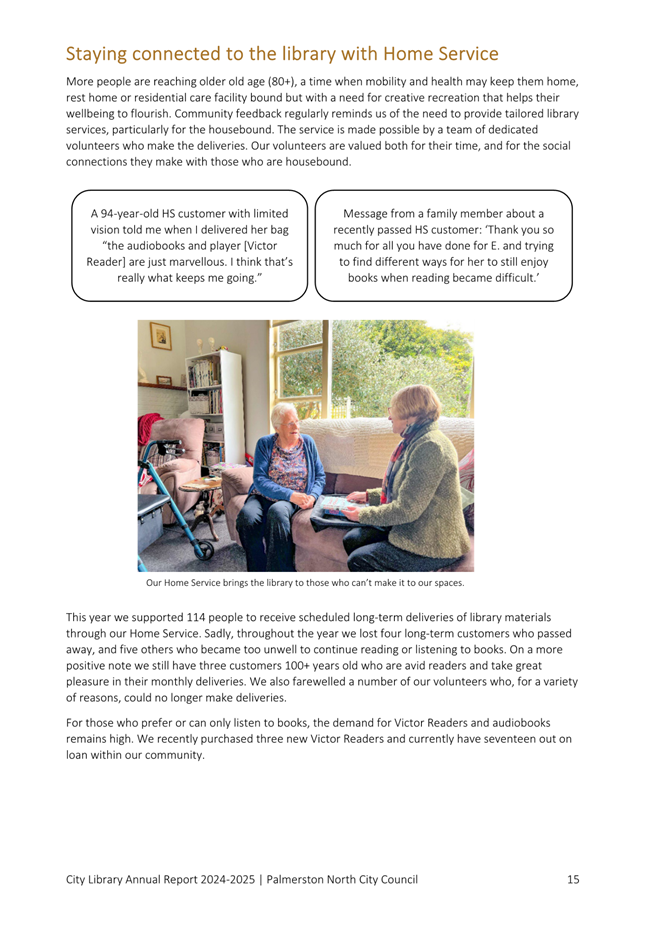
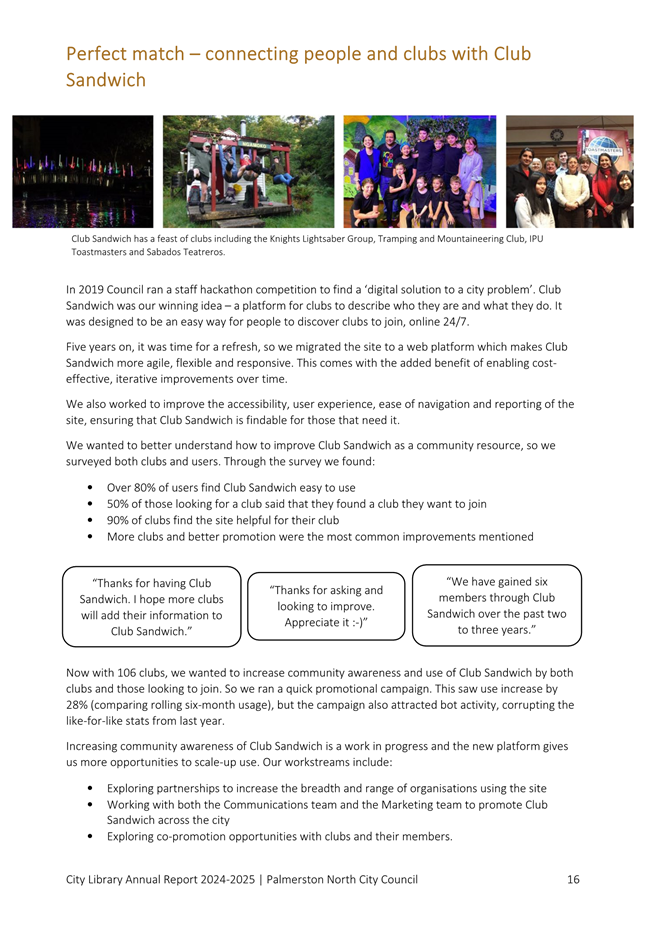
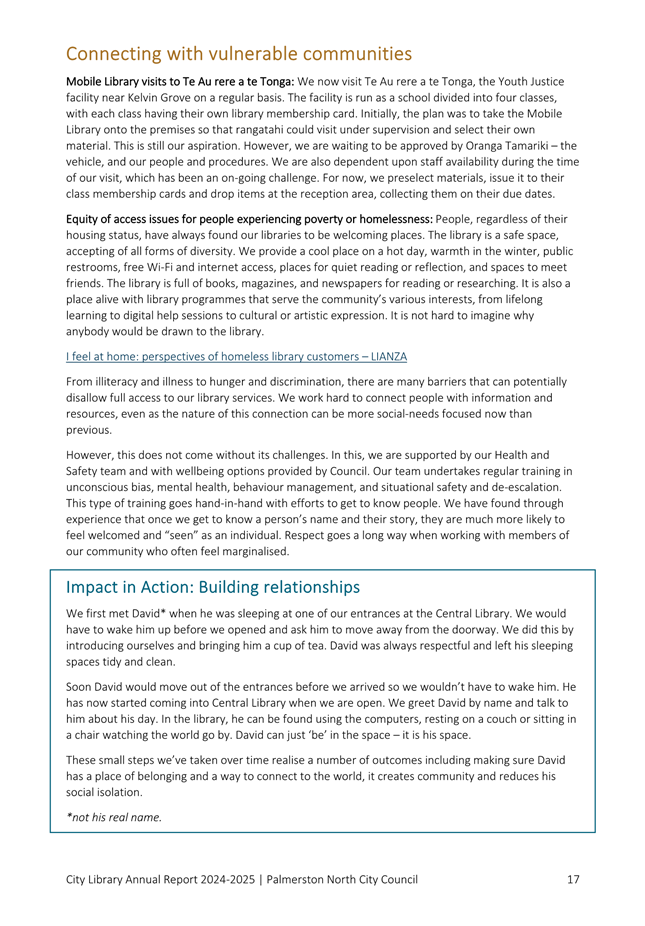
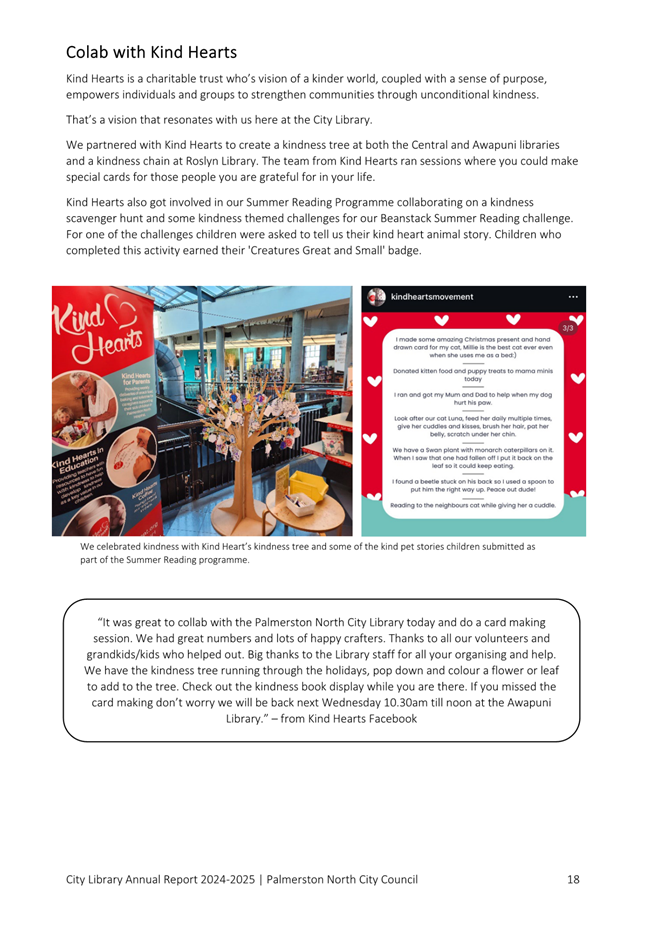
|
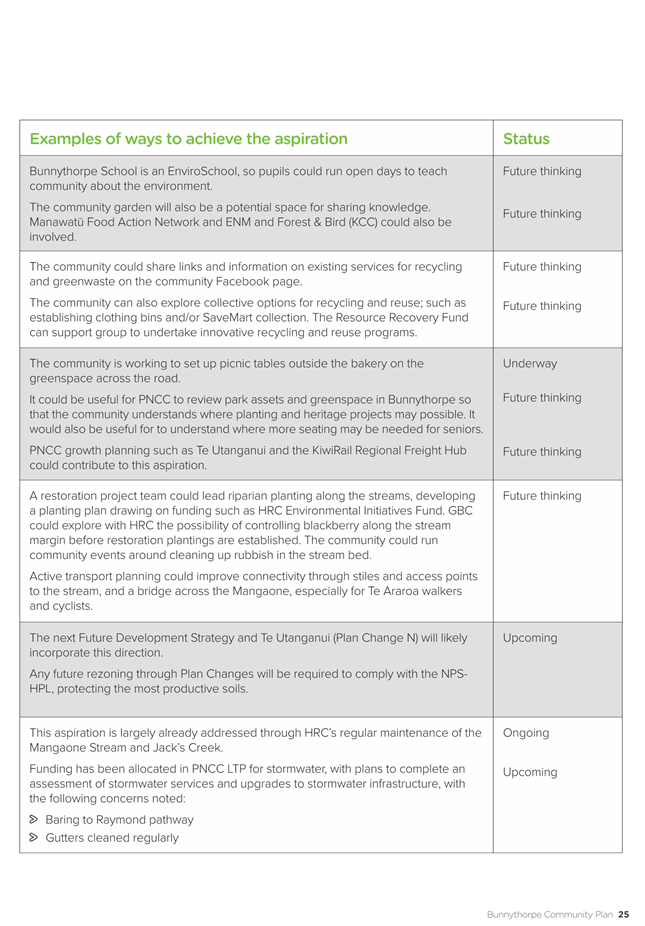
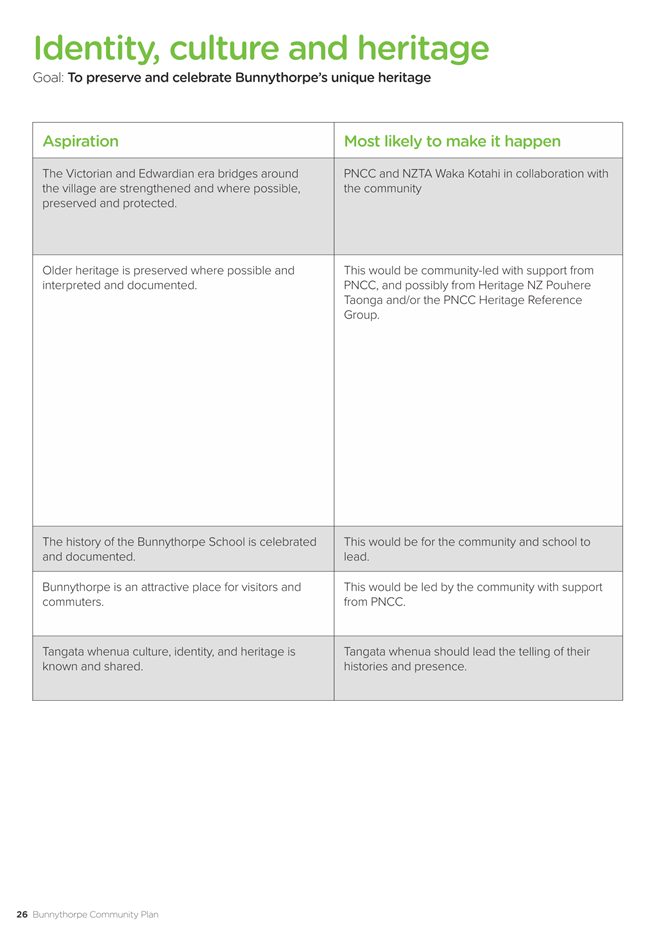
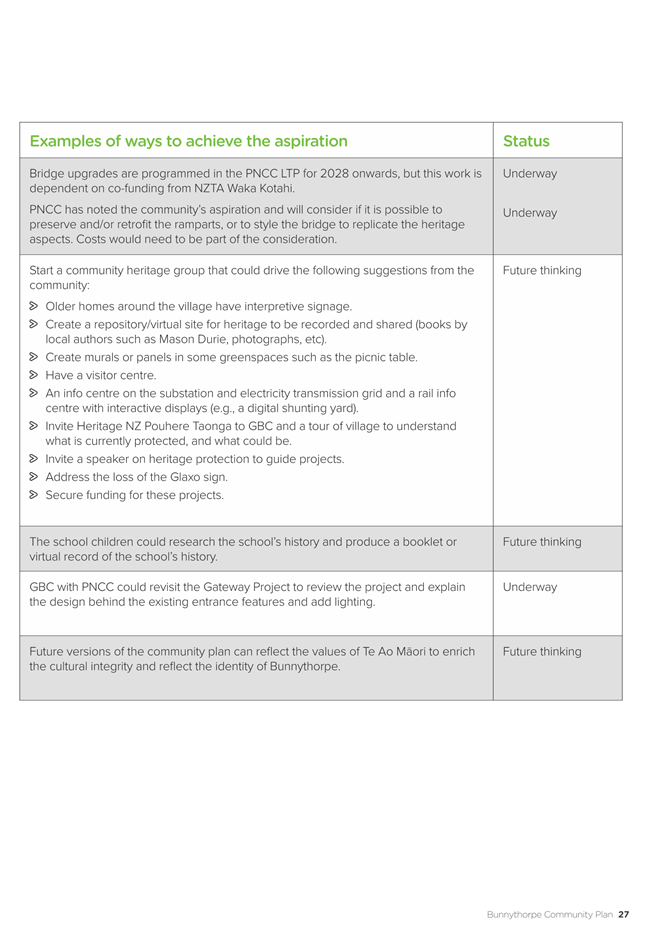
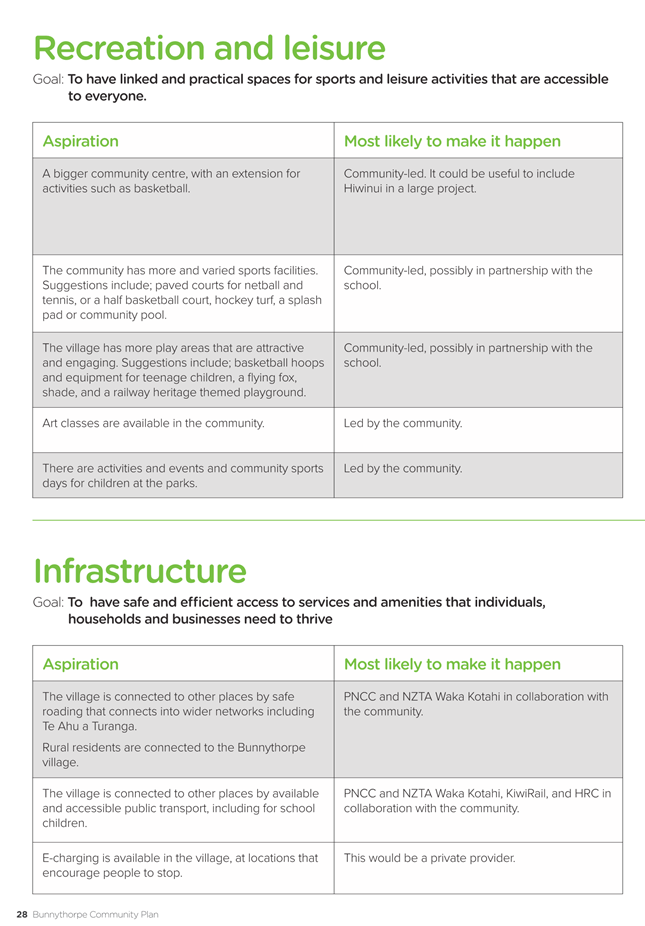
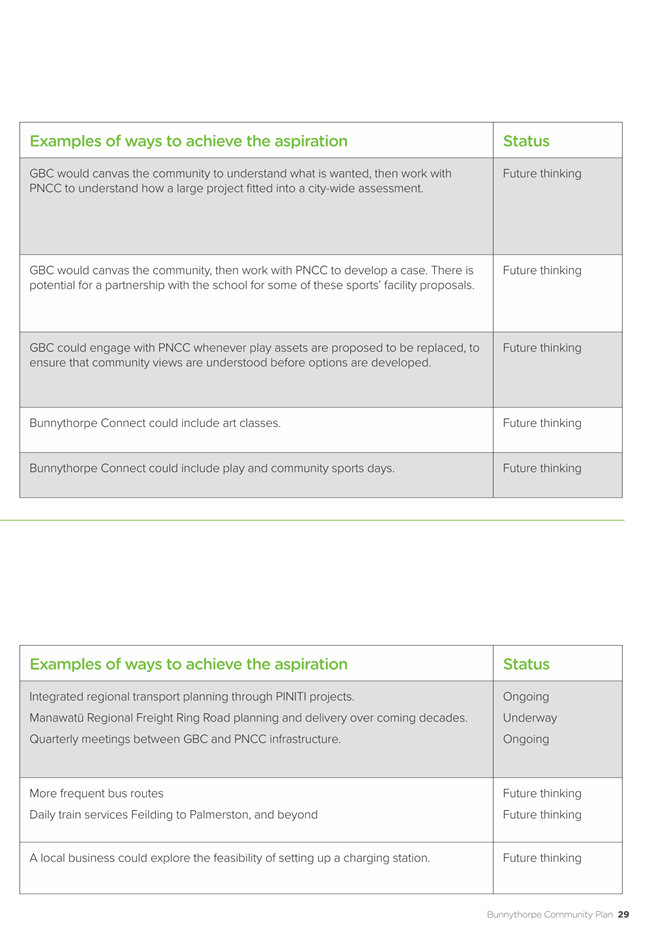
Lorna Johnson (Chair)
|
|
Patrick Handcock (Deputy Chair)
|
|
Grant Smith (The Mayor)
|
|
Brent Barrett
|
Orphée Mickalad
|
|
Rachel Bowen
|
Karen Naylor
|
|
Lew Findlay (QSM)
|
William Wood
|
|
Billy Meehan
|
Kaydee Zabelin
|
Community Committee MEETING
13 August 2025
Order of Business
1. Karakia Timatanga
2. Apologies
3. Notification
of Additional Items
Pursuant to
Sections 46A(7) and 46A(7A) of the Local Government Official Information and
Meetings Act 1987, to receive the Chairperson’s explanation that
specified item(s), which do not appear on the Agenda of this meeting and/or the
meeting to be held with the public excluded, will be discussed.
Any
additions in accordance with Section 46A(7) must be approved by resolution with
an explanation as to why they cannot be delayed until a future meeting.
Any
additions in accordance with Section 46A(7A) may be received or referred to a
subsequent meeting for further discussion. No resolution, decision or
recommendation can be made in respect of a minor item.
4. Declarations
of Interest (if any)
Members are
reminded of their duty to give a general notice of any interest of items to be
considered on this agenda and the need to declare these interests.
5. Public
Comment
To receive
comments from members of the public on matters specified on this Agenda or, if
time permits, on other Committee matters.
6. Petition
- Review of the Operations and Management of Animal Management Team Page 7
7. Confirmation
of Minutes Page 9
That the minutes of the Community Committee meeting of 21
May 2025 Part I Public be confirmed as a true and correct record.
8. Bunnythorpe
Community Plan 2025 - 2028 Page 15
Memorandum,
presented by Hilary Webb, Planner.
9. Presentation:
Pasifika Reference Group - Annual Presentation Page 53
10. Presentation:
Seniors Reference Group - Annual Presentation Page 55
11. Presentation:
Disability Reference Group - Annual Presentation Page 57
12. Presentation:
Manawatū Tenants Union Page 59
13. Social
Housing Update - Work Programme 1: Delivery Model for Property Page 61
Memorandum,
presented by Glenn Bunny, Manager Property.
14. Update
on Housing Insecurity Pilot Programme Page 71
Memorandum,
presented by Martin Brady, Community Development Advisor and Danu Sefton,
Community Development Advisor.
15. Summary
of Community Funding Allocations 01/07/2024 - 30/06/2025 Page 77
Memorandum,
presented by Stephanie Velvin, Manager Community Development.
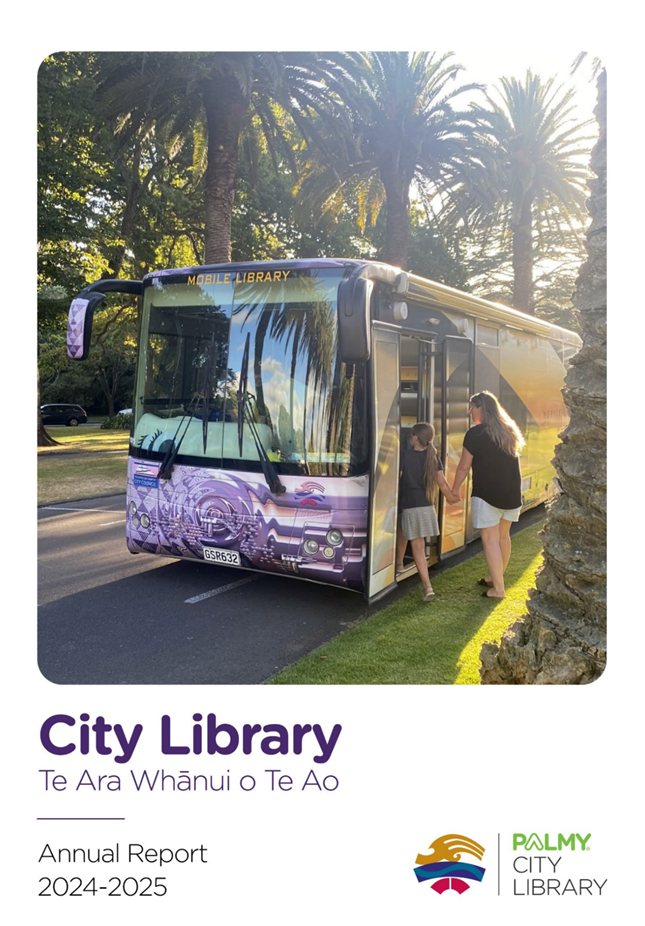
16. City
Library Annual Report 2024-2025 Page 105
Memorandum,
presented by Linda Moore, Manager City, Library and Shannon Simpson Business
and Technical Support.
17. Committee
Work Schedule - August 2025 Page 203
18. Karakia
Whakamutunga
19. Exclusion
of Public
|
|
To be moved:
That the public be excluded from the following parts
of the proceedings of this meeting listed in the table below.
The general subject of each matter to be considered
while the public is excluded, the reason for passing this resolution in
relation to each matter, and the specific grounds under Section 48(1) of the
Local Government Official Information and Meetings Act 1987 for the passing
of this resolution are as follows:
|
General subject of each matter to be
considered
|
Reason for passing this resolution in
relation to each matter
|
Ground(s) under Section 48(1) for
passing this resolution
|
|
|
|
|
|
|
|
|
|
This resolution is made in reliance on Section
48(1)(a) of the Local Government Official Information and Meetings Act 1987
and the particular interest or interests protected by Section 6 or Section 7
of that Act which would be prejudiced by the holding of the whole or the
relevant part of the proceedings of the meeting in public as stated in the
above table.
Also that the persons listed below be permitted to
remain after the public has been excluded for the reasons stated.
[Add Third Parties], because of their knowledge and ability to assist the
meeting in speaking to their report/s [or other matters as specified] and
answering questions, noting that such person/s will be present at the meeting
only for the items that relate to their respective report/s [or matters as
specified].
|
Presentation
TO: Community
Committee
MEETING DATE: 13
August 2025
TITLE: Petition
- Review of the Operations and Management of Animal Management Team
FROM:
RECOMMENDATION
TO Community Committee
1. That the
Community Committee receive the presentation for information.
Kath Dixon will present the petition.
Petition to Palmerston North City
Council requesting a review of the operations and performance of the Animal
Management team with respect to nuisance dogs, and more substantive enforcement
of the Dog Control Act 1996
We, the undersigned residents and
ratepayers of PNCC, are concerned about the performance of PNCC's Animal
Management team with respect to their management and enforcement of issues that
fall under the jurisdiction of the Dog Control Act 1996.
We believe that irresponsible dog
ownership is a growing problem, which - while also causing an unacceptable and
abhorrent lack of compliance with the Animal Welfare Act - significantly
reduces the amenity value of our community’s public spaces.
We request a review of the policies and
processes, activities and performance of the Animal Management team, which
includes the opportunity for public submissions. We request greater enforcement
of the Dog Control Act in order to sanction and deter irresponsible dog
ownership, and signal the community's expectations and lack of tolerance for
such conduct.
24 signatures
Attachments
Nil
Palmerston North City Council
Minutes of
the Community Committee Meeting Part I Public, held in the Council Chamber,
First Floor, Civic Administration Building, 32 The Square, Palmerston North on 21 May 2025,
commencing at 09.02am
|
Members
Present:
|
Councillor Lorna Johnson (in the Chair),
and Councillors Patrick Handcock, Brent Barrett, Rachel Bowen, Lew Findlay,
Billy Meehan, Orphée Mickalad, Karen Naylor, William Wood and Kaydee
Zabelin.
|
|
Non Members:
|
Councillor Debi Marshall-Lobb.
|
|
Apologies:
|
The Mayor (Grant Smith) on Council
business, Councillor William Wood and Billy Meehan on an early departure.
|
Councillor William
Wood left the meeting at 11.27am after consideration of
clause 15. He was not present for clauses 16
to 18 inclusive.
Councillor Billy
Meehan left the meeting at 11.28am during consideration
of clause 16. He was not present for clauses 16
to 18 inclusive.
Councillor Debi
Marshall-Lobb left the meeting at 12.12pm during
consideration of clause 17. She entered the
meeting again at 12.17pm during consideration of clause 18. She was not present
for clause 17.
|
|
Karakia
Timatanga
|
|
|
Councillor Lorna Johnson opened the meeting with karakia
|
|
9-25
|
Apologies
|
|
|
Moved Lorna Johnson, seconded Patrick Handcock.
The
COMMITTEE RESOLVED
1. That
the Committee receive the apologies.
|
|
|
Clause 9-25 above was carried 11 votes to 0, the voting being as
follows:
For:
Councillors Lorna Johnson, Patrick Handcock, Brent Barrett, Rachel
Bowen, Lew Findlay, Billy Meehan, Orphée Mickalad, Karen Naylor,
William Wood, Kaydee Zabelin and Debi Marshall-Lobb.
|
|
10-25
|
Confirmation of Minutes
|
|
|
Moved
Lorna Johnson, seconded Patrick Handcock.
The COMMITTEE RESOLVED
1. That the minutes of
the Community Committee meeting of 19 March 2025 Part I Public be confirmed
as a true and correct record.
|
|
|
Clause 10-25 above was
carried 10 votes to 0, with 1 abstention, the voting being as follows:
For:
Councillors Lorna Johnson,
Patrick Handcock, Brent Barrett, Rachel Bowen, Lew Findlay, Billy Meehan,
Orphée Mickalad, Karen Naylor, William Wood and Kaydee Zabelin.
Abstained:
Councillor Debi
Marshall-Lobb.
|
|
11-25
|
Recommendation to engage Sector Lead Organisations
Memorandum, presented by
Ahmed Obaid, Community Development Advisor and Stephanie Velvin, Manager
Community Development.
Councillor Wood moved a
procedural motion to lie 1.b of the recommendation on the table until further
consultation with the Pasifika Community.
|
|
|
Moved
William Wood, seconded Orphée Mickalad.
The COMMITTEE RESOLVED
That 1.b Sector Lead Niuvaka Trust be laid on the
table until further consultation with Pasifika Community.
|
|
|
Clause 11.1-25 above was
carried 8 votes to 3, the voting being as follows:
For:
Councillors Brent Barrett,
Lew Findlay, Billy Meehan, Orphée Mickalad, Karen Naylor, William
Wood, Kaydee Zabelin and Debi Marshall-Lobb.
Against:
Councillors Lorna Johnson,
Patrick Handcock and Rachel Bowen.
|
|
|
Moved
Lorna Johnson, seconded Patrick Handcock.
The COMMITTEE RECOMMENDS
That Council engage the following organisation through
Sector Lead Partnership Agreement for the period 1 July 2025 to 30 June 2028:
a. MASH Trust
|
|
|
Clause 11.2-25 above was
carried 11 votes to 0, the voting being as follows:
For:
Councillors Lorna Johnson,
Patrick Handcock, Brent Barrett, Rachel Bowen, Lew Findlay, Billy Meehan,
Orphée Mickalad, Karen Naylor, William Wood, Kaydee Zabelin and Debi
Marshall-Lobb.
|
|
12-25
|
Potential locations for a public toilet at Albert St
Memorandum, presented by Bill
Carswell, Activities Manager, Property Services.
|
|
|
Moved
Lorna Johnson, seconded Patrick Handcock.
The COMMITTEE RECOMMENDS
1. That Council proceed with applying for a planning and building
consent for the installation of a single pan toilet at the end of Albert
Street (option 2 residential pump station).
|
|
|
Clause 12-25 above was
carried 10 votes to 1, the voting being as follows:
For:
Councillors Lorna Johnson,
Patrick Handcock, Brent Barrett, Rachel Bowen, Lew Findlay, Billy Meehan,
Orphée Mickalad, William Wood, Kaydee Zabelin and Debi Marshall-Lobb.
Against:
Councillor Karen Naylor.
|
|
13-25
|
Annual Youth Wellbeing Update
Memorandum, presented by Remy
Waldteufel-Irvine, Youth Services Team Leader and Stephanie Velvin, Manager
Community Development.
|
|
|
Moved
Lorna Johnson, seconded Patrick Handcock.
The COMMITTEE RESOLVED
1. That the Committee receive the memorandum titled ‘Annual Youth
Wellbeing Update’ presented to the Community Committee on 21 May 2025.
|
|
|
Clause 13-25 above was
carried 11 votes to 0, the voting being as follows:
For:
Councillors Lorna Johnson,
Patrick Handcock, Brent Barrett, Rachel Bowen, Lew Findlay, Billy Meehan,
Orphée Mickalad, Karen Naylor, William Wood, Kaydee Zabelin and Debi
Marshall-Lobb.
|
|
14-25
|
Community Centres' Delivery Model Review
Memorandum, presented by
Stephanie Velvin, Manager Community Development and Amy Viles, Community
Development Advisor.
Councillor Mickalad moved an
additional motion for a progress report on the actions for improvement.
|
|
|
Moved
Lorna Johnson, seconded Patrick Handcock.
The COMMITTEE RESOLVED
1. That the Committee receive the memorandum titled ‘Community
Centres’ Delivery Model Review’ presented to the Community
Committee on 21 May 2025.
Moved
Orphée Mickalad, seconded Karen Naylor.
2. That the Chief Executive provide a one
off progress update report on identified actions for improvement with regard
to Community centres.
|
|
|
Clause 14-25 above was
carried 11 votes to 0, the voting being as follows:
For:
Councillors Lorna Johnson,
Patrick Handcock, Brent Barrett, Rachel Bowen, Lew Findlay, Billy Meehan,
Orphée Mickalad, Karen Naylor, William Wood, Kaydee Zabelin and Debi
Marshall-Lobb.
|
The meeting adjourned at 10.55am
The meeting resumed at 11.12am
|
15-25
|
Council Infrastructure accessibility initiatives
Memorandum, presented by Glen
O'Connor, Manager Transport and Development and Kathy Dever-Tod, Manager
Parks and Reserves.
Councillor Johnson moved an
additional motion to receive an ongoing progress report.
|
|
|
Moved
Lorna Johnson, seconded Patrick Handcock.
The COMMITTEE RESOLVED
1. That the Committee receive the memorandum titled
‘Council Infrastructure accessibility initiatives’ presented to
the Community Committee on 21 May 2024
2. That the Committee note that officers are
currently working with the Disability Reference Group to confirm the scope
for the assessment of transport assets.
3. That the Committee receive a regular progress
report on Council Infrastructure accessibility initiatives.
|
|
|
Clause 15-25 above was
carried 11 votes to 0, the voting being as follows:
For:
Councillors Lorna Johnson,
Patrick Handcock, Brent Barrett, Rachel Bowen, Lew Findlay, Billy Meehan,
Orphée Mickalad, Karen Naylor, William Wood, Kaydee Zabelin and Debi
Marshall-Lobb.
|
Councillor William Wood left the meeting at 11.27am.
|
16-25
|
Accessibility Charter: actions and resources needed for
Council to adopt
Memorandum, presented by Jessica Papple, Marketing Manager
and Olivia Wix, Communications Manager.
Councillor
Billy Meehan left the meeting at 11.28am.
|
|
|
Moved
Lorna Johnson, seconded Patrick Handcock.
The COMMITTEE RESOLVED
1. That the Committee receive
the report titled ‘Accessibility Charter – actions and resources
needed’, presented to the Community Committee on 21 May 2025.
2. That
the Chief Executive prepare a programme for the 2027-2037 Long Term Plan for
Elected Members to consider.
|
|
|
Clause 16-25 above was
carried 9 votes to 0, the voting being as follows:
For:
Councillors Lorna Johnson,
Patrick Handcock, Brent Barrett, Rachel Bowen, Lew Findlay, Orphée
Mickalad, Karen Naylor, Kaydee Zabelin and Debi Marshall-Lobb.
|
|
17-25
|
Update on The Ada Street Project
Memorandum, presented by Danu
Sefton, Community Development Advisor and Stephanie Velvin, Manager Community
Development.
Councillor Debi
Marshall-Lobb left the meeting at 12.12pm
|
|
|
Moved
Lorna Johnson, seconded Patrick Handcock.
The COMMITTEE RESOLVED
1. That the Committee receive the memorandum titled ‘Update on The Ada
Street Project’ presented to the Community Committee on 21 May 2025.
|
|
|
Clause 17-25 above was
carried 8 votes to 0, the voting being as follows:
For:
Councillors Lorna Johnson,
Patrick Handcock, Brent Barrett, Rachel Bowen, Lew Findlay, Orphée
Mickalad, Karen Naylor and Kaydee Zabelin.
|
|
18-25
|
Committee Work Schedule - May 2025
Councillor Debi Marshall-Lobb returned to the meeting at 12.17pm
|
|
|
Moved
Lorna Johnson, seconded Patrick Handcock.
The COMMITTEE RESOLVED
1. That the Community Committee receive its Work Schedule dated May
2025.
|
|
|
Clause 18-25 above was
carried 9 votes to 0, the voting being as follows:
For:
Councillors Lorna Johnson,
Patrick Handcock, Brent Barrett, Rachel Bowen, Lew Findlay, Orphée
Mickalad, Karen Naylor, Kaydee Zabelin and Debi Marshall-Lobb.
|
|
|
Karakia
Whakamutunga
|
|
|
Councillor Lorna Johnson closed the meeting with karakia
|
The meeting finished at 12.22pm.
Confirmed 13 August 2025.
Chair
Memorandum
TO: Community
Committee
MEETING DATE: 13
August 2025
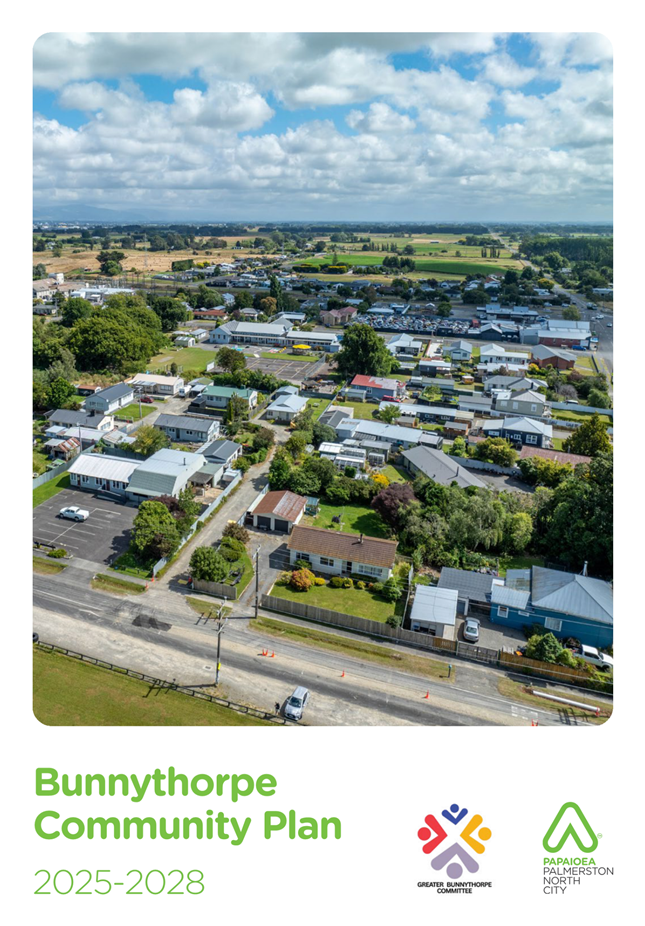
TITLE: Bunnythorpe
Community Plan 2025 - 2028
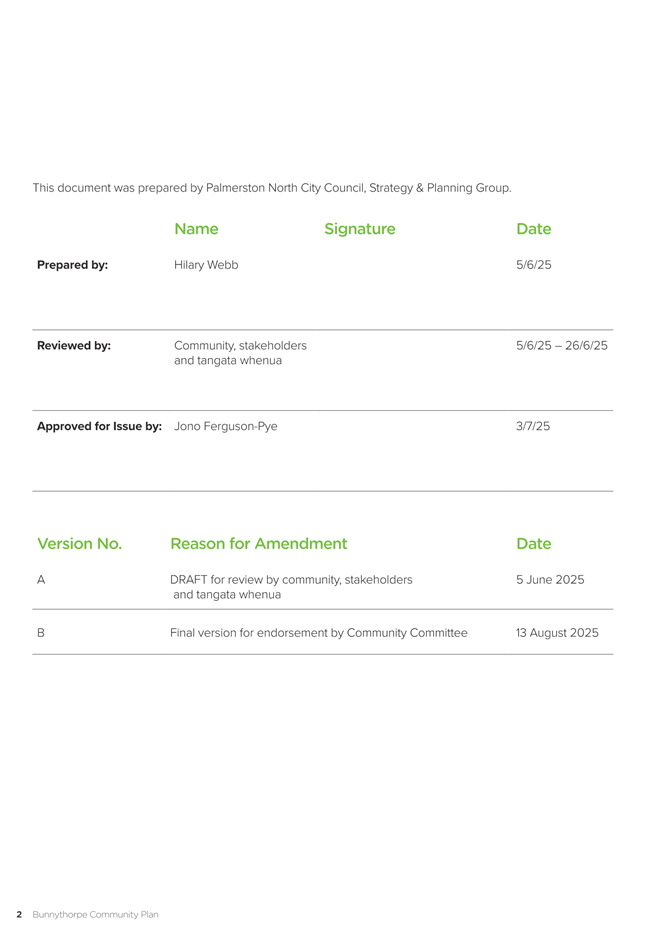
Presented By: Hilary
Webb, Planner
APPROVED BY: David
Murphy, General Manager Strategic Planning
RECOMMENDATION TO Community Committee
1. That the
Committee endorse the Bunnythorpe Community Plan 2025 - 2028 to inform future
planning and decision-making, including the 2027-37 Long-Term Plan and land-use
and infrastructure planning processes associated with Te Utanganui, the Central
New Zealand Distribution Hub.
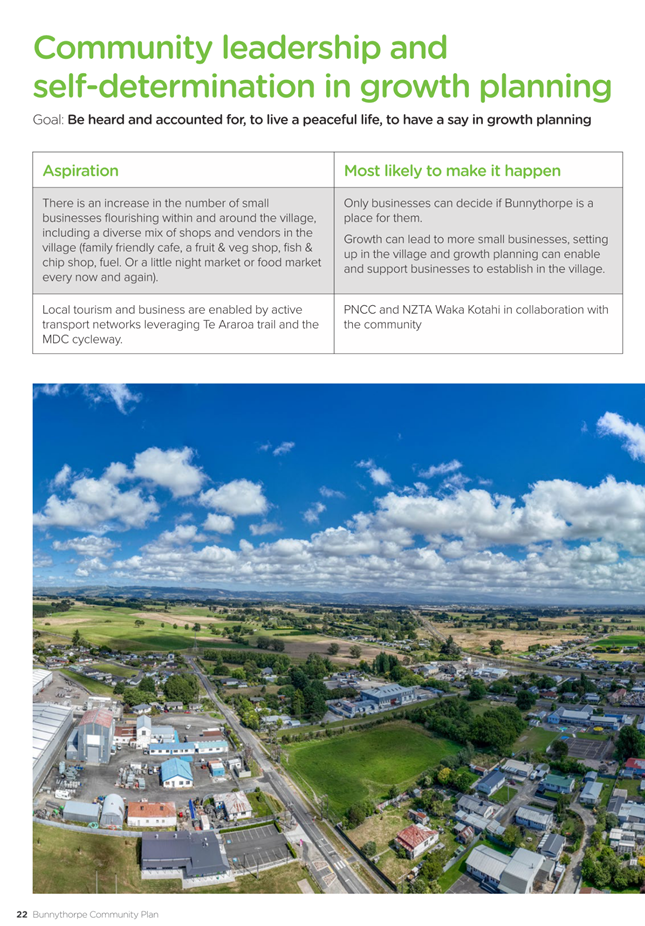
1. ISSUE
1.1. The
Bunnythorpe community faces uncertainty and disruption from industrial and
infrastructure development north of Palmerston North city in coming decades,
including the Manawatū Regional Freight Ring Road, and the ongoing
development of Te Utanganui, the Central New Zealand Distribution Hub.
1.2. Community
plans are a common tool used by councils to enable and empower community-led
engagement with agencies during such large-scale change. Officers have been
working with the Bunnythorpe community to develop a community plan that will
provide a first-step foundation for engagement with stakeholders in this
significant and long-term development.
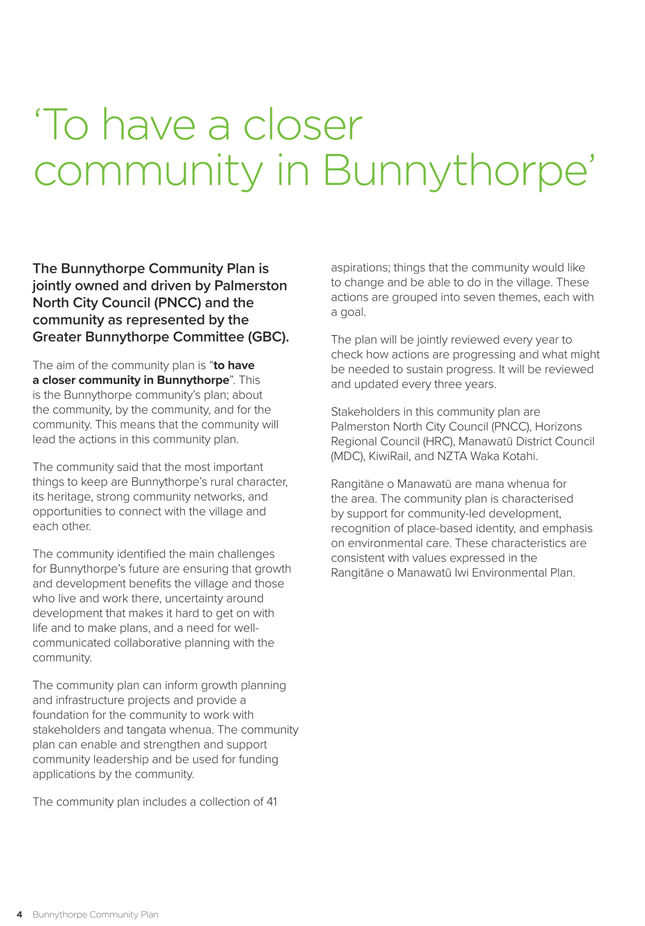
1.3. The
Bunnythorpe Community Plan is jointly owned by Palmerston North City Council
(PNCC) and the community as represented by the Greater Bunnythorpe Committee.
Stakeholders in the Bunnythorpe Community Plan are Horizons Regional Council,
Manawatū District Council, KiwiRail and NZTA Waka Kotahi.
1.4. The
community will lead the actions described in this plan, with the aim:
‘to have
a closer community in Bunnythorpe’.
1.5. Formal
endorsement by Council’s Community Committee will enable the community,
tangata whenua, stakeholders, and Council officers to be sure that the
Bunnythorpe Community Plan informs future planning and decision-making by the
Council.
2. ORIGIN
AND DRIVERS OF THE COMMUNITY PLAN PROCESS
2.1. Since
Bunnythorpe was integrated into PNCC in a boundary change in 2012, the
community has actively sought equivalent levels of service for infrastructure,
community assets, and democracy, which included exploring the option of a
Community Board. The Local Government Commission’s 2021 determination of
Council’s decision not to establish a Community Board included three
recommendations, one of which was that Council undertake a village
master-planning exercise with the Bunnythorpe community. To give effect to this
recommendation, trialling a
village plan development process with Bunnythorpe is a new or one-off action in
Mahere Hoahoa Tone Urban Design Plan for years 1 and 2 of the Long-Term Plan.
2.2. A master plan is a detailed and
comprehensive vision of the physical development in an area. This process can
take years, and incur considerable cost, so best value is gained from master
planning when the technical aspects of large components, such as
infrastructure, are well understood. Similarly, a village plan is a blueprint
for the physical works associated with development.
2.3. The
current uncertainty around the early stages of future industrial and
infrastructure development, and the disruption and distress this uncertainty
causes for individuals and the community, meant that it is important to focus
on developing community leadership and coherence. A community plan is a proven
process for a community to unite and actively engage with Council in
infrastructure and planning projects. A community plan can also ensure that the
community has a sound foundation for engagement with development planning,
before commencing more detailed planning, such as a master plan.
2.4. Community
plans are commonly used to encourage and enable community-led development, to
enhance collaboration between
different groups, and identify the community’s priorities so these can
inform planning and decision-making. For an example of another local community
plans, refer to Hiwinui Community Plan. Another useful example is Te Puna in
Bay of Plenty. Like Bunnythorpe, this rural community is facing growth pressure
from a nearby city.
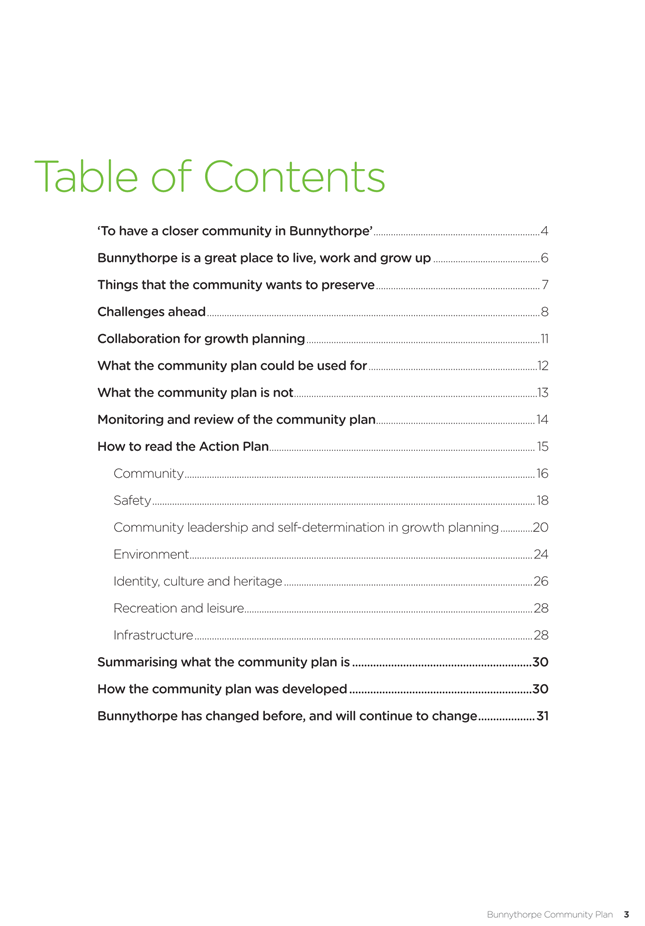
3. What
the Bunnythorpe Community Plan can be used for
3.1. This
community plan lays out the Bunnythorpe community’s values and
aspirations, what makes Bunnythorpe a great place to live, and the things that
the community wants to preserve. These are the rural village character, the
heritage, strong active community networks, and opportunities such as safe
walking and cycling to connect with the landscape and each other. The community
plan also describes the challenges and opportunities from development as these
are perceived by the community. This statement of values and responses to
development can inform engagement with the community in growth planning
processes and infrastructure projects.
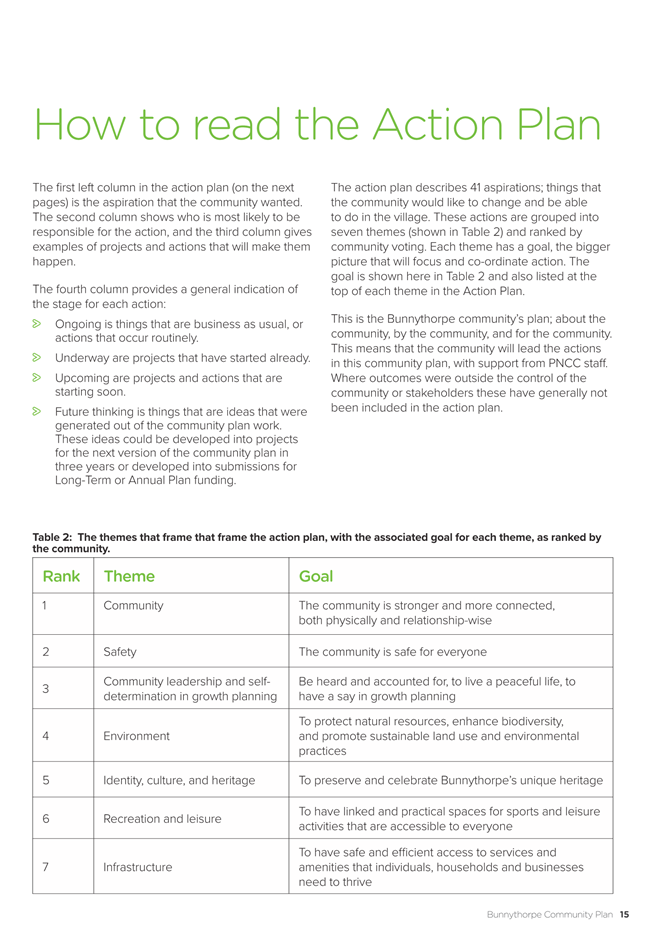
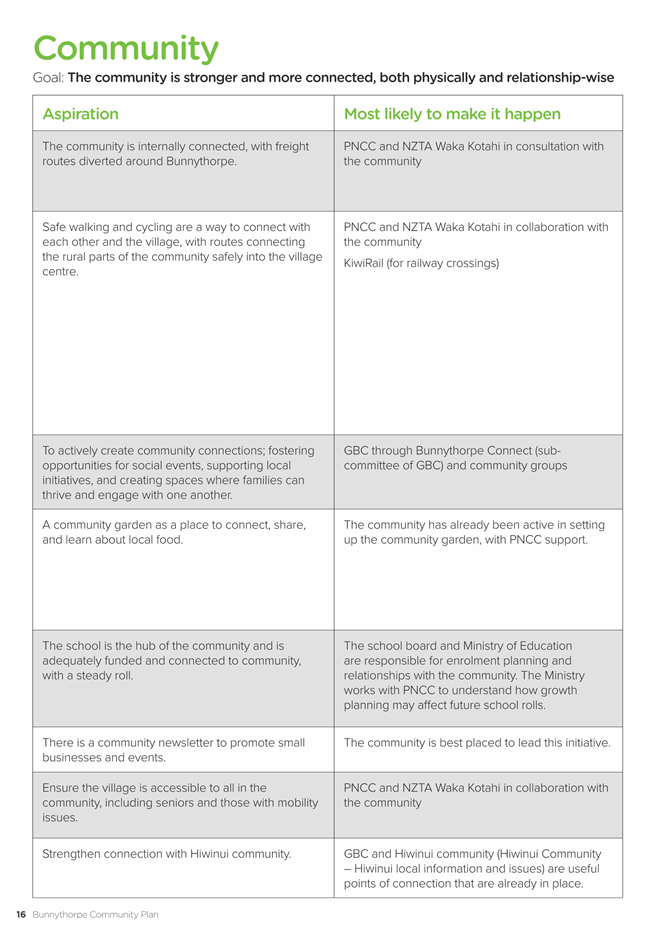
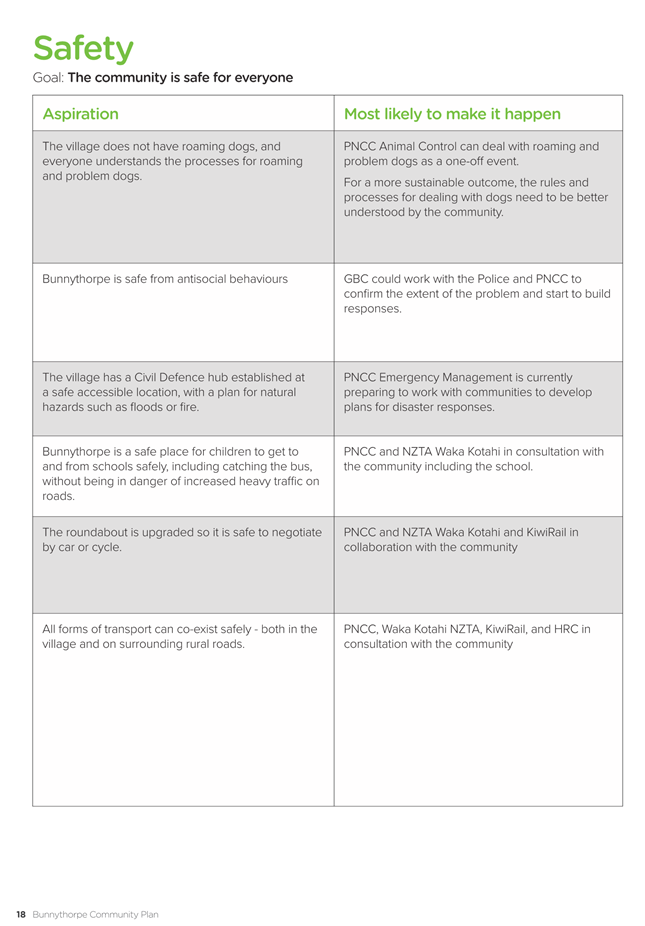
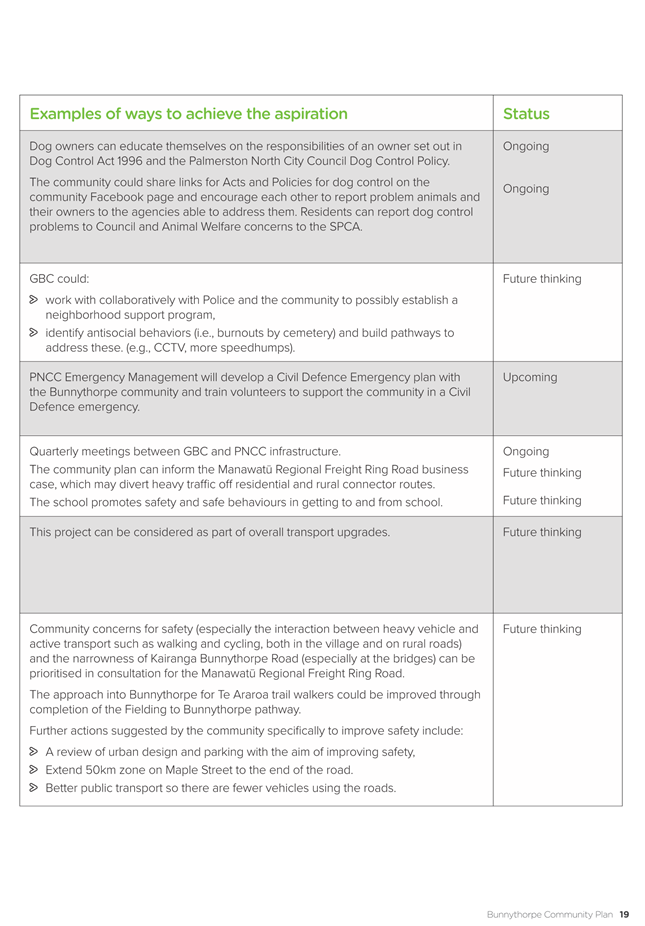
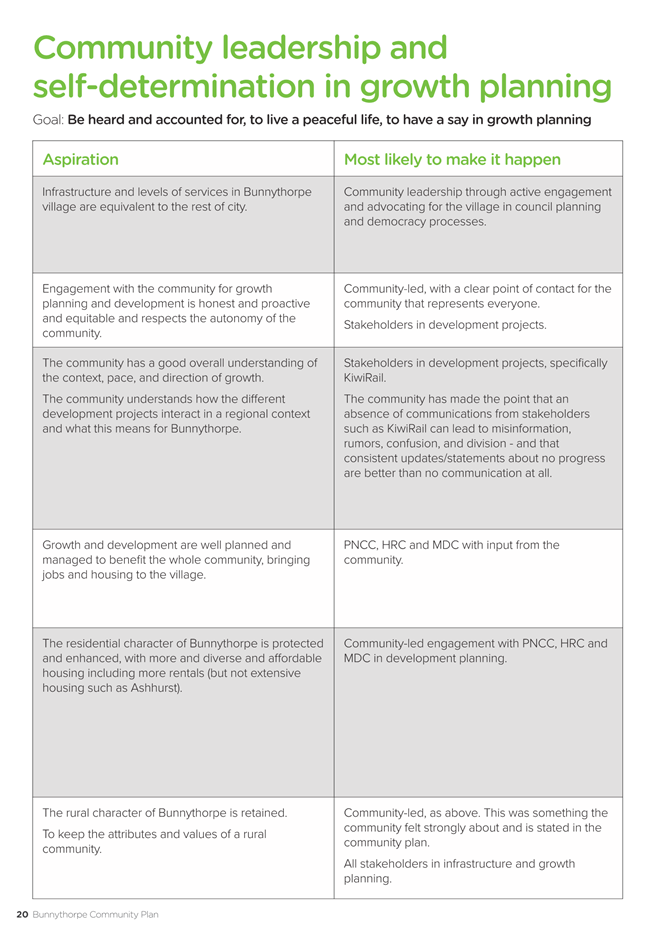
3.2. The
community plan includes 41 actions or projects that the community can lead,
with support from Council. These actions are grouped under the following seven
themes that reflect the community’s aspirations and priorities for their
everyday lives:
· Community
· Safety
· Leadership and
self-determination
· Environment
· Heritage
· Recreation
· Infrastructure.
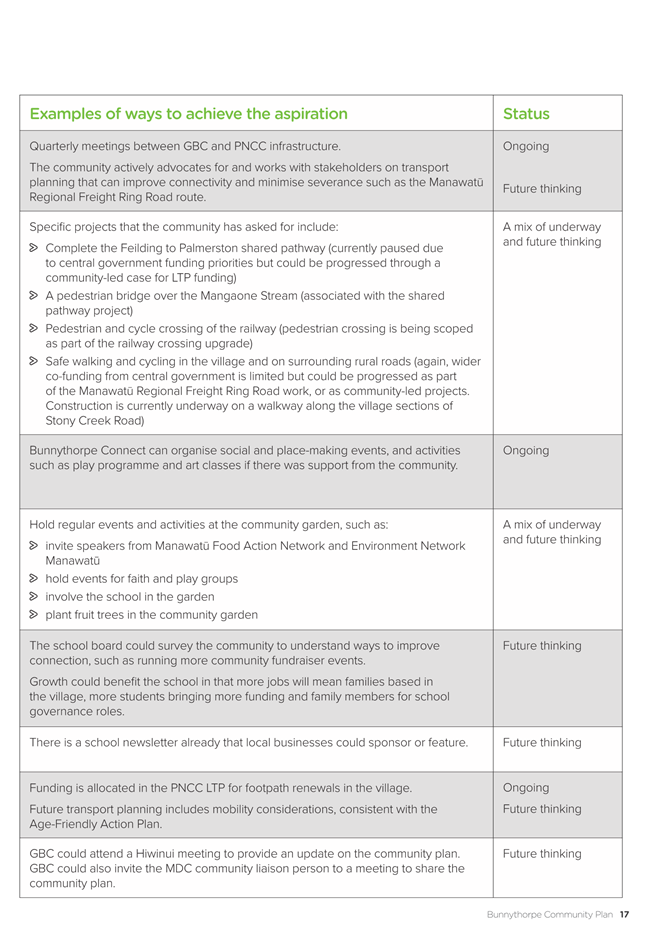
3.3 Some
actions are already underway, or starting soon, and the community plan is a
useful way to communicate this current work to the wider community. Some
actions are ideas (‘future thinking’) that were generated out of
the community plan process and can be developed by the community over time into
projects.
4. what
the Bunnythorpe Community Plan is not
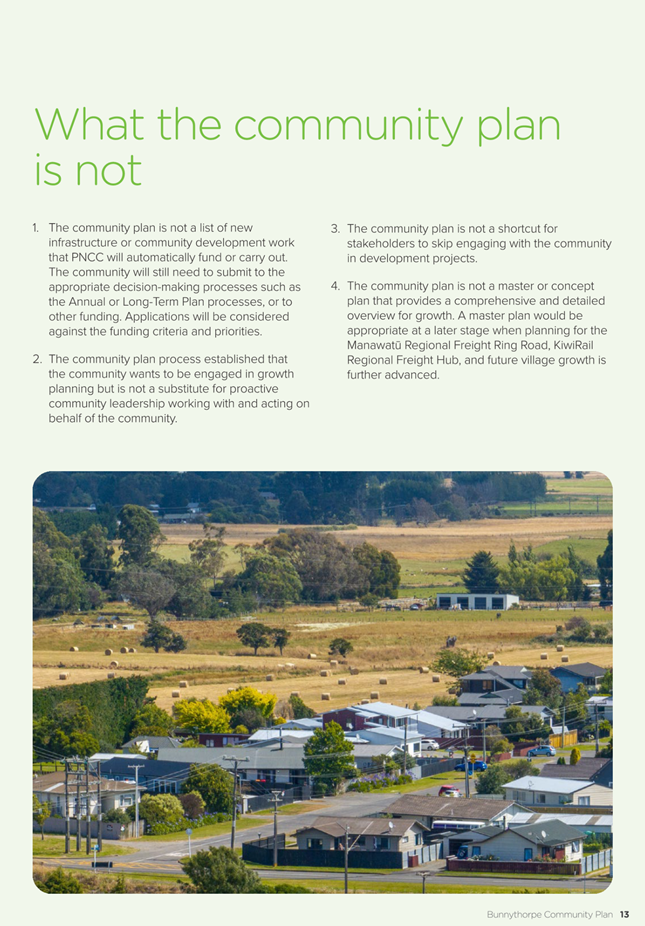
4.1 The community plan
is not a list of infrastructure or community development
work that Council will
automatically fund or deliver, therefore the community plan does not commit
Council to expenditure that is not already included in the Long-Term Plan. The
Bunnythorpe Community Plan should not be confused with the Council’s
Community or Long-Term Plan.
4.2 The
community plan process established that the community wants to be
engaged in
growth planning, but the Bunnythorpe Community Plan is not a
substitute for
proactive community leadership working with and acting on
behalf of the
community to engage with stakeholders in development works.
4.3 While
the community plan can usefully inform development work, it is not a
shortcut for stakeholders to skip
engaging with the community in development projects.
5. how
the bunnythorpe community plan will be IMPLEMENTED
5.1 The Greater
Bunnythorpe Committee on behalf of the community will lead the actions
described in this plan, with support from Council officers and other agencies.
5.2 The
community plan can be used to support funding applications and cases by the
community (see Table 1, page 8 of the Community Plan for examples).
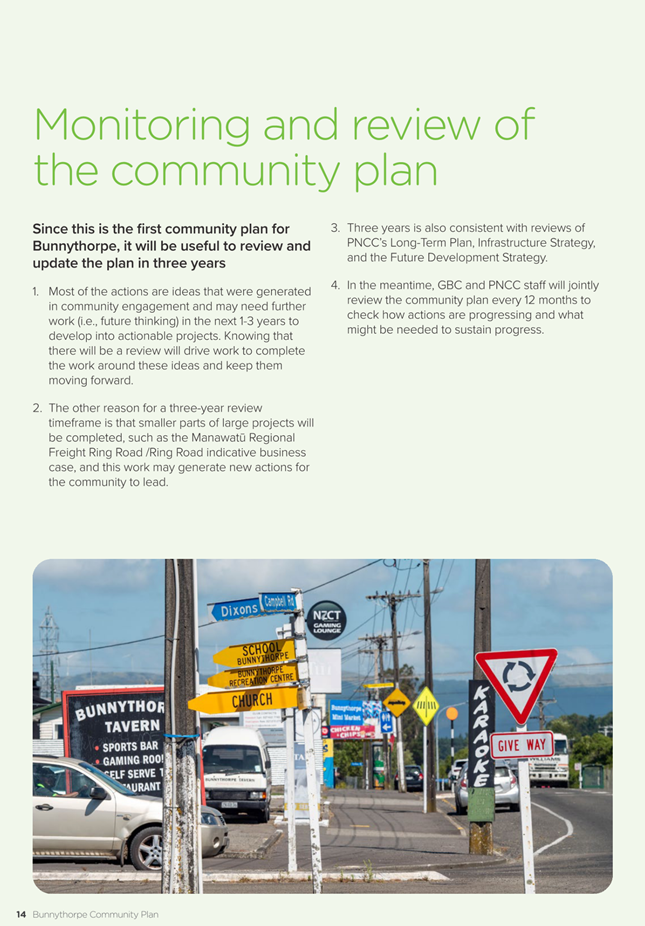
5.3 The Bunnythorpe
Community Plan will be reviewed in three years, which provides adequate time
for new ideas to be developed into active projects by the community.
5.4 In the meantime,
the Greater Bunnythorpe Committee and Council officers will jointly review the
plan annually to check how actions are progressing and what might be needed to
sustain progress.
5.5 Showing
success with smaller projects that matter to the community is a means of
building the community’s confidence in their leadership, which increases
coherence and unity. Through strengthened community leadership from the process
of developing and then implementing the community plan, the community is better
able to lead collaboration with Council and other stakeholders in development
planning and projects.
6. PROCESS
OF DEVELOPNG THE BUNNYTHORPE COMMUNITY PLAN
6.1 Since
November 2024, officers have worked with the Bunnythorpe community to develop
the community plan. This work, shown in the table below, included a survey, a
focus group, meetings, workshops, community events, and interaction through a webpage
and the Bunnythorpe Community Facebook page.
|
Community contribution to the Bunnythorpe Community
Plan
|
|
Stage and tasks
|
Date/s
|
Numbers engaged
|
|
Green light from Greater Bunnythorpe Committee (GBC)
|
November 2024
|
9
|
|
Scoping community and plan content with GBC
|
December 2024
|
8
|
|
Survey
|
December 2024
|
74
|
|
Verification with GBC
|
January 2025
|
7
|
|
Focus group
|
February
|
12
|
|
Community market day
|
March 2025
|
50 - 55
|
|
Open community meeting
|
June 2025
|
26
in-person 13 online
|
|
Bunnythorpe Community Facebook page
(4 posts)
|
January to July 2025
|
21 comments 32
reactions
|
|
Webpage
|
January to July 2025
|
297 views, 206
active users
|
|
Online consultation and submissions (1,371 views, 923
active users)
|
July 2025
|
14
|
|
Verification with GBC
|
July 2025
|
10
|
6.2 Rangitāne
o Manawatū were advised of the Community Plan project through Te Whiri
Kōkō in March 2025 and provided feedback on the final draft version.
Ngāti Kauwhata were regularly updated on the project.
6.3 The
project team met regularly with KiwiRail, Horizons Regional Council, Waka
Kotahi NZTA via the PINITI management group, and Manawatū District
Council. All stakeholders provided minimal feedback on the final draft version
in the recognition that this is the community’s plan.
6.4 The
outcome of this work is the Bunnythorpe Community Plan that is recommended to
Committee for endorsement.
7. NEXT
STEPS
7.1 Upon
formal endorsement by this Committee, the Bunnythorpe Community Plan can be
used to inform the Indicative Business Case for the Manawatū Regional
Freight Ring Road, the Future Development Strategy review that begins in
September 2025, KiwiRail’s planning for the Regional Freight Hub, and the
continued development of Te Utanganui, the Central New Zealand Distribution
Hub.
7.2 In
the longer term, the Bunnythorpe Community Plan may inform other work such as
the PNCC Long-Term and Annual Budget, PNCC Asset Management Plans, and master
planning for Te Utanganui Plan Changes A – C and Private Plan Changes.
8. Compliance
and administration
|
Does the Committee have delegated
authority to decide?
|
Yes
|
|
Are the decisions significant?
|
No
|
|
If they are significant do they
affect land or a body of water?
|
No
|
|
Can this decision only be made
through a 10 Year Plan?
|
No
|
|
Does this decision require
consultation through the Special Consultative procedure?
|
No
|
|
Is there funding in the current
Annual Plan for these objectives?
|
No
|
|
Are the recommendations
inconsistent with any of Council’s policies or plans?
|
No
|
|
The recommendations
contribute to: Whāinga 1: He tāone auaha, he tāone
tiputipu
Goal 1: An innovative
and growing city
Whāinga 3: He
hapori tūhonohono, he hapori haumaru
Goal 3: A connected
and safe community
|
|
The recommendations contribute to this plan:
1.
Mahere hoahoa tāone
1. Urban Design Plan
The objective is: Trial a village plan development process
with the Bunnythorpe Community (new or one-off action for years 1 & 2)
|
|
Contribution to strategic
direction and to social, economic, environmental and cultural well-being
|
The
Community Plan will provide a formal document, received and adopted by
Committee, that can usefully inform ongoing development in the north-eastern
part of the city. The Bunnythorpe Community Plan provides a clear statement
of the community’s aspirations to development stakeholders and tangata
whenua; and the community has a framework for systematically working together
to achieve their aspirations.
The
recommendations contribute to the outcome (Whāinga Goal 1) of a city
that fosters pride and supports the aspirations of people and communities.
The
recommendations contribute to most of the outcomes for Whāinga Goal 3,
and specifically to the opportunities for community-led contribution to the
design of our city
|
|
|
|
Attachments
|
1.
|
Bunnythorpe Community Plan 2025-28 ⇩ 
|
|
Presentation
TO: Community
Committee
MEETING DATE: 13
August 2025
TITLE: Presentation:
Pasifika Reference Group - Annual Presentation
RECOMMENDATION TO Community Committee
1. That the
Community Committee receive the presentation for information.
Pasifika Reference Group will share their annual
presentation to update the Committee on their activities of the past 12 months.
Attachments
Nil
Presentation
TO: Community
Committee
MEETING DATE: 13
August 2025
TITLE: Presentation:
Seniors Reference Group - Annual Presentation
RECOMMENDATION TO Community Committee
1. That the
Community Committee receive the presentation for information.
Seniors’ Reference Group will share their annual
presentation to update the Committee on their activities of the past 12 months.
Attachments
Nil
Presentation
TO: Community
Committee
MEETING DATE: 13
August 2025
TITLE: Presentation:
Disability Reference Group - Annual Presentation
RECOMMENDATION TO Community Committee
1. That the
Community Committee receive the presentation for information.
Disability Reference Group will share their annual presentation
to update the Committee on their activities of the past 12 months.
Attachments
Nil
Presentation
TO: Community
Committee
MEETING DATE: 13
August 2025
TITLE: Presentation:
Manawatū Tenants Union
FROM:
RECOMMENDATION TO Community Committee
1. That the
Community Committee receive the presentation for information.
Manawatū Tenants Union will present to
the Committee a summary of their activities
Attachments
Nil
Memorandum
TO: Community
Committee
MEETING DATE: 13
August 2025
TITLE: Social
Housing Update - Work Programme 1: Delivery Model for Property
Presented By: Glenn
Bunny, Manager Property
APPROVED BY: Glen
O'Connor, Acting General Manager Infrastructure
RECOMMENDATION TO Community Committee
1. That the
Community Committee receive the Memorandum titled ‘Social Housing
Update’ presented on 13 August 2025.
1. INTRODUCTION
1.1 This
memorandum seeks to update the Committee on progress to date on the strategic
review into the operation of Council’s social housing portfolio, and
outline next steps and associated timeframes, including the status of the Summerhays
Street redevelopment.
2. BACKGROUND
2.1 A
memorandum
titled ‘Social Housing and property review work programme’ was
submitted to the Community Committee meeting on 4 December 2024.
In accordance of with that memorandum Council resolved:
That Council endorse the proposed broad terms of
reference for an investigation of social housing delivery models (Workstream A)[1],
as described in memorandum titled ‘Social housing and property review
work programme’ presented to the Community Committee on 4 December 2024
and its Attachment 1;
and in relation to the Summerhays Street redevelopment;
That Council confirm its intention to await the outcome
of an investigation of social housing delivery models (Workstream A) prior to
considering the reports dated 1 May 2024 ‘Summerhays Street Redevelopment
– Partnership Models’ and ‘Summerhays Street Redevelopment
–Expressions of Interest Feedback’.
3. social
housing portfolio summary
3.1 The
portfolio currently consists of 444 units across 19 complexes. The units are a
mix of 1, 2- and 3-bedroom dwellings and range in age between 2 and 55 years
old.
3.2 Council
officers conduct annual condition assessments for all units. Condition
assessment scores are generally ‘good’ to ‘very good’,
although the units are largely out-dated and do not reflect modern day best
practice with regards to configuration and fit out. The portfolio is 100%
compliant with Healthy Homes Standards. Condition assessments play a critical
role in planning and prioritising maintenance. They also inform
decisions about significant repair and renewal work, which are undertaken as
required.
3.3 As
tenants vacate, units are subject to refurbishment as needed, including renewal
and redecorating. This approach ensures that vacated units are brought up to an
acceptable standard prior to re-letting.
3.4 An
annual maintenance schedule is in place that addresses exterior cleaning ground
maintenance and building compliance requirements.
3.5 Council
officers carry out tenant inspections on a 6-monthly basis. These inspections
help monitor the condition of the units during occupancy and address tenant
related issues proactively.
3.6 There
is currently 493 people on the wait list for Council provided social housing,
including both urgent (homeless or pending homeless) and non-urgent applicants.
The total number of applicants at any given time is consistently around 500.
3.7 Occupancy
rates across the portfolio sit at 94% to 97%. The period where the units are being
refurbished between change in tenancies is the main contributing factor to the
occupancy rate being less than 100%.
3.8 Turnover
rates per annum across the portfolio are year on year around 13%.
3.9 Satisfaction
scores through tenant surveying in 2025 was 96%.
Social Housing Framework
3.10 Council’s
key documents underpinning the Social Housing Framework are the ‘Mahere
Whare Housing Plan 2024-34’ and the ’Social
Housing Guidelines’.
3.11 These two
documents outline Council’s intended direction for the organisation in
providing social housing, and signal to other providers and developers the
intended direction for the increased provision of social housing.
3.12 The Mahere
Whare Housing Plan identifies initiatives such as rezoning and permissibility
changes to increase densities, repurposing existing Council properties for
housing, provision of enabling infrastructure, regulatory and incentive
measures, partnership programmes with providers.
3.13 The Social
Housing Guidelines give effect to the Mahere Whare Housing Plan and address
more operational aspects of the Portfolio. This includes the purpose for the
provision of social housing, rental settings, and applicable eligibility
criteria.
Arrangement with MASH Trust
3.14 Council
currently leases 34 units to the MASH Trust within the Cardrona Close, Persson
Place and Wood Street complexes. This arrangement began in 2003 and has been
maintained through rolling three-year Lease Agreement.
3.15 The
current agreement ceased on 1 July 2025 and has not yet been renewed, as both
parties continue to negotiate new terms in response to changes to the
Trust’s funding. Both parties have agreed to continue working together
whilst a new agreement is established.
3.16 Tenant
inspections are carried out by MASH staff on a 3-monthly basis, while annual
condition assessments are conducted by Council officers. All maintenance costs
associated with these properties are met by Council. Council’s tenancy
officers have no responsibility or relationship with tenants occupying the
properties leased from Council by MASH.
4. Financial
summary of current model
4.1 The
financial result of the portfolio for the 2023-24 Financial year was a net loss
of $1.77m as detailed in Table 1 below.
|
|
2023/24
|
2024/25
|
|
Expenses
|
$5.01M
|
$5.90M
|
|
Revenue
|
$3.25M
|
$3.38M
|
|
Result
|
-$1.77M
|
-$2.52M
|
Table 1:
2023-24 Net Operating Result
4.2 Financial
modelling based on the existing operations extrapolated out to the 2031-32
financial year projects an increasing gap between operating expenses and
revenue. The operating shortfall is forecast to reach $3.75M.
4.3 The
current operating deficit has impacted the funding ratios stated in the Annual
Report. The targeted funding split for the 2023-24 FY was intended to be 0-19%
ratepayer funding and 80-100% tenancy funding. The actual funding split is 35%
ratepayers and 65% tenants. Under current forecast trends, this departure from
targeted funding ratios increases.
4.4 The
Revenue and Financing Policy[2]
sets a ratepayer contribution of 0-19%, the LTP budget projects that ratepayer
funding will exceed 50% by year 5 significantly departing from the policy
target.
5. social
hOUSING REVIEW TO DATE
5.1 The
strategic review on the social housing portfolio will identify all potential
actions and initiatives that can be examined to improve all aspects of the
operation of the portfolio, including financial sustainability. The review of
these initiatives will then be considered with regards to future state operational
models, and ultimately a recommendation for a preferred operating model.
Scope of the Review
5.2 The
review to date has:
· Investigated
current operational and financial aspects of the existing model
· Considered
the Social Housing Framework consisting of the Mahere Whare Housing Plan and
Social Housing Guidelines with a view to what changes could be made to enable
continued improvements
· Reviewed
work undertaken to date and reports generated since 2015
· Identified
improvement initiatives and levers across the portfolio
· Analysed
best practice and innovative models in New Zealand
· Explored
different ownership and operational structures including Trusts, Council
Controlled Organisations (CCOs) and Community Housing Providers (CHPs)
· Investigated
various public and private partnership opportunities
Best Practice Principles
5.3 Based
on the "Better Practice Guide for Community Housing in New Zealand"[3], published
by Community Housing Aotearoa the peak body for New Zealand’s community housing
sector, several key themes emerge for achieving financial sustainability while
maintaining high-quality service delivery in social housing.
5.4 Robust
financial management systems are critical to ensure probity and operational
viability. Clear financial policies and procedures, budget development and
cashflow projections, strategies for increasing revenue and reinvesting
proceeds are all integral.
5.5 Effective
strategic asset management is crucial to provide fit for purpose assets for
long term quality service delivery. Planned and reactive asset maintenance and
renewal programmes coupled with strategic investment logic including acquiring
and developing new stock is required.
5.6 In
order to drive true financial performance diversified funding and partnerships
play a role in successful models. Leveraging government funding and subsidies,
private sector partnerships, equity investment and philanthropic contributions
can all play a critical role in successful operations by diversifying and there
de-risking funding.
5.7 A
strong focus on tenant well-being and community development is imperative.
Applying a tenant-centric approach that encourages participation, complete with
support services and a sense of community, ensure a strong tenant community with
quality living and positive outcomes.
5.8 To
give effect to these best practice aspects of social or community housing
provision, Council has several levers that can be examined that in isolation or
in combination can be used for strategic and operational improvement.
|
Lever or Initiative
|
Commentary
|
|
Review of Social Housing
Framework
|
May enable more favourable
conditions for provision of housing units, partnerships, diversified funding,
and rental settings, and enable more innovative products along the housing
continuum.
|
|
Internal Operational
Efficiencies
|
Identify opportunities within
Council operations for improvements to all aspects of social housing
provision.
|
|
Rationalise and Re-invest
|
Undertake a review of the
complexes to investigate opportunities to unlock capital from the portfolio
to re-invest to greater effect through improved or modernised units, higher
densities and yields. May also accelerate the development of Summerhays Street
and other sites.
|
|
Partnerships
|
Strategic partnerships with
housing providers, private developers, and government agencies may accelerate
housing outcomes and alleviate the burden on ratepayers.
|
|
Diversified Funding
|
Identify alternate funding
solutions to increase working capital or subsidise operational expenses,
including private equity and Government grants and subsidies.
|
|
Tax benefits and subsidies
|
Investigate the financial
advantages of alternate business structures including Trusts and a
CCO’.
|
|
Altered Mix of Rental Product
|
Investigate diversifying the
mix of rental products offered within the social housing stock to provide
broader housing options that align with community need along the housing
continuum.
|
|
Developer Incentives
|
Consideration for encouraging
private sector involvement in delivering social and affordable housing.
|
Table 2:
Potential Improvement Levers
5.9 Any
combination of the levers and initiatives in the table above could result in a
significant strategic and operational shift as a result of these potential
improvements. In determining the initiatives that Council wish to endorse, an
improved version of the current operating model could eventuate, or
alternatively a new operating model may emerge as a result.
Market engagement
5.10 In order
to confirm whether a partnership model could be a viable option, conversations
have been held at a high level on a commercial in confidence basis with a small
number of operating Trust’s and registered Community Housing Providers. All
parties approached expressed interest in a partnership model, noting the
conversation was without prejudice and held with the intent of information
gathering rather than to discuss an actual opportunity.
5.11 This
positive market sounding in addition to the positive response Council received
to the Expression of Interest process for the Summerhays Street Redevelopment
allows partnership models to be included for consideration or in part in the
broader review.
5.12 The
engagement above was for the specific purpose of finding out whether there is
interest in a partnership. For clarity, this does not constitute full
consultation. Appropriate consultation will be undertaken in association with
the continued review and any subsequent change. As the review progresses
further engagement with additional operators, Government and neighbouring
councils, and importantly Rangitāne.
6. Summerhays
street redevelopment
6.1 In
relation the proposed Summerhays Street redevelopment, it is recommended that
the development remain on hold pending the confirmation of a preferred
operating model. This sequencing is important to avoid compounding the net
financial loss of the existing model, and to ensure the development maximises
positive outcomes.
6.2 If
Council wanted to advance the development, it is difficult at this stage to
suggest a model that could be implemented on a ‘no regrets’ basis.
A possible avenue could be to consider products other than traditional social
housing on the housing continuum. Options such as affordable market rentals,
market rentals, or a more innovative product like build to own on long term
ground leases could contribute valuable supply into the housing market. While
these alternatives may not directly increase affordable housing stock, additional
housing on the continuum would be provided - potentially result in reduced
demand for social housing.
The Housing Continuum

6.3 Council
is already active in certain aspects across the continuum. Homelessness is
being addressed through the Housing Insecurity Pilot Programme, and Council is
contributing to market housing supply through the Tamakuku Terrace development.
6.4 If
Summerhays is to proceed before the strategic review is complete, the
associated budget would need to be bought forward into this financial year, as
it was deferred to 2026-27 financial year pending the outcome of the strategic
review.
7. next
steps
7.1 There
is a significant amount of work to advance the investigation and assessment of
future social housing operating models. This includes further examination of
the individual ‘levers’ available to Council as identified in Table
2, and how these initiatives may be implemented in combination to provide the
most impactful strategic and operational impact.
7.2 Work
to date confirms that Council has opportunities for improvement and innovation
in the portfolio. Continued work will focus on financial performance, improving
service levels, growth and improvement in the asset base, innovation and
increased options of housing and products offered, and operational structures.
7.3 As
a result, it is intended that a preferred operating model will be identified
and can be assessed against a comprehensive baseline model so any changes and
positive and negative consequences can be best understood prior to any
decisions being implemented.
7.4 Engagement
with Government, existing operators, iwi, investors and developers,
neighbouring Councils and other stakeholders will also be an important aspect
of continuing work. This will ensure that the review is broad and thorough and
appropriately influenced by other experts and operators in the industry.
7.5 It
is envisaged that some specialist input may be required to assess legal or
accounting aspects of particular models. This engagement will be covered within
existing budgets.
7.6 A
subsequent report containing this additional information and any recommendation
for change is intended to be complete by May 2026.
8. Compliance
and administration
|
Does the Committee have
delegated authority to decide?
|
Yes
|
|
Are the decisions significant?
|
No
|
|
If they are significant do they
affect land or a body of water?
|
No
|
|
Can this decision only be made
through a 10 Year Plan?
|
No
|
|
Does this decision require
consultation through the Special Consultative procedure?
|
No
|
|
Is there funding in the current
Annual Plan for these objectives?
|
Yes
|
|
Are the recommendations
inconsistent with any of Council’s policies or plans?
|
No
|
|
The recommendations
contribute toWhāinga 3: He hapori tūhonohono, he hapori haumaru
Goal 3: A connected
and safe community
Whāinga 4: He
tāone toitū, he tāone manawaroa
Goal 4: A sustainable
and resilient city
|
|
The recommendations contribute to this
plan:
15.
Mahere whare
15. Housing Plan
The objective is:
Investigate models of delivery
for Councils social housing
Develop a community housing
partnership programme
Support social housing provides
through a community housing partnership.
|
|
Contribution to strategic
direction and to social, economic, environmental and cultural well-being
|
Providing access to healthy
affordable housing as a response to city housing needs.
Providing social housing and support
community-led social housing initiatives.
|
|
|
|
Attachments
Nil
Memorandum
TO: Community
Committee
MEETING DATE: 13
August 2025
TITLE: Update
on Housing Insecurity Pilot Programme
Presented By: Martin
Brady, Community Development Advisor and Danu Sefton, Community Development
Advisor
APPROVED BY: Danelle
Whakatihi, General Manager Customer & Community
RECOMMENDATION TO Community Committee
1. That the
Committee receive the memorandum titled ‘Update on Housing Insecurity
Pilot Programme’ presented to the Community Committee on 13 August 2025.
1. ISSUE
1.1 This
report provides an update on the first year of implementation of the three-year
pilot programme designed to respond to homelessness in Palmerston North.
2. BACKGROUND
2.1 Housing
insecurity, or homelessness, remains an issue affecting individuals and
whānau across Palmerston North. The causes of housing insecurity are
complex and interrelated, ranging from housing cost and availability, to mental
health challenges, family breakdowns, and systemic inequities.
2.2 The
negative wellbeing impacts of housing insecurity for individuals and whānau are well documented; the affects also extend beyond
individuals, with those experiencing housing insecurity less able to contribute
to positive social, cultural and economic activity within the community, and
extra pressure placed on health and social services. Visible homelessness also
negatively affects perceptions of safety in public spaces and can impact
business activity.
2.3 In
recent years, following community submissions to the 2021-2031 Long-Term Plan,
Council has been working to establish a response to homelessness in our
community. Previous reports relevant to this work were presented to this
Committee in March
2022, March
2023 and November
2023.
2.4 The
November 2023 report sought direction from elected members on the future role
of the Council in responding to the issue of homelessness. As a result, the
Committee resolved:
‘That the Committee refer to the 2024-2034 draft
Long-Term Plan [to] pilot highest priority systems-change interventions to
respond to housing insecurity plus a $30,000 flexi-fund for urgent
intervention’.
2.5 In
May 2024, Long-term Plan deliberations confirmed the direction and resourcing
for the Housing Insecurity Pilot programme, as reflected in Council’s
Mahere Whare Housing Plan for 2024-2034.
2.6 The
programme is underpinned by a collective impact approach, with a cross-sector
group, the Palmerston North Housing Insecurity Response Collective (PNHIRC),
instrumental in the development of the three programmes and providing
overarching support and knowledge for the implementation. The PNHIRC currently
includes Housing Advice Centre, MASH Trust, Te Tihi o Ruahine Whānau Ora
Alliance, Manawatū Tenants Union, Kāinga Ora, Ministry of Social
Development and Rangitāne o Manawatū.
2.7 The
programme implementation includes three interconnected workstreams:
· Outreach programme - to engage and work alongside individuals
without shelter, with a focus on those who are chronically homeless. The role
of the outreach officer is to develop relationships with individuals and
support them to navigate barriers they are having to housing, including
liaising with social services and other supports.
· Flexi-fund – a quick response fund designed to act as a
safety net for those experiencing issues in maintaining their tenancy, and to
support the removal of barriers to individuals entering housing.
· Housing First – to develop a Housing First Model that
fits the needs of Palmerston North, including the development of an operating
model and implementation plan (year 1) and implementation (years 2 and 3).
3. CONTEXT
3.1 As
noted above, the drivers of homelessness are complex, with local experiences in
large part a result of historical systems and government policy settings.
3.2 As
at June 2025, the Ministry of Social Development (MSD) advised it has 399
applicants on their waiting list for social housing. There are 4 whānau in
emergency housing. Recent changes in government policy settings appear to be
influencing increasing numbers of people experiencing homelessness locally,
based on information from housing and social service providers.
3.3 While
the exact number of people currently sleeping rough in our community remains
unknown, the introduction of a dedicated Outreach officer in recent months has
enabled a clearer understanding of the current situation. It is estimated that
at least 15 individuals are sleeping rough within the city centre, with a
further 20 people visibly sleeping rough in other areas of the city. Note these
figures do not account for those residing in vehicles, garages, or other
uninhabitable and unsafe spaces.
3.4 While
this context is challenging, and numbers remain higher than anyone would like
to see, as detailed below there has been a significant amount of positive
activity within the Housing Insecurity Pilot Programme thus far, meaning that
the present situation locally is better than what it would have been had the
programme not proceeded, and, further, the city is better positioned than it
could have otherwise been to respond moving forward.
4. implementation
UPDATE
4.1 The
first year of the pilot programme has involved the establishment of the three
workstreams, in partnership with the PNHIRC.
4.2 Across
August to October 2024, Council staff worked through a procurement process to
identify the partners to oversee the respective workstreams. The contracts were
awarded from November 2024 to the following organisations:
· Manawatū Tenants’ Union – Flexi Fund
· MASH Trust – Outreach programme
· Te Tihi o Ruahine Whānau Ora Alliance – Housing First
4.3 From
January to June 2025, these lead organisations, with the support of Council and
the wider PNHIRC, have drawn on experiences and learnings from other
organisations within New Zealand and internationally, and commenced activity
within each workstream.
4.4 Flexi
Fund
4.4.1 This initiative
aims to provide timely, responsive financial support to tenants experiencing
urgent or unforeseen barriers to sustaining their housing.
4.4.2 The initial
focus of the Flexi fund has centred around the development of operational
guidelines, followed by the marketing of the fund’s availability to
service providers and the community.
4.4.3 The uptake of
the fund in the first six months has been slower than predicted. Rather than
lack of need, this appears to be due to limited awareness to date of the fund
by service providers and tenants, initial limitations of the fund’s
scope, and some unwillingness from individuals to engage with the fund.
4.4.4 Despite these
initial challenges, the fund has been accessed by some in need, with
Manawatū Tenants Union working closely with the Outreach Officer to
connect to individuals to the fund. Areas of support have included obtaining
acceptable identification, such as a driver’s licence, which is needed to
open a bank account and therefore obtain housing.
4.4.5 Moving forward,
the PNHIRC will continue to evolve this fund to meet community needs as they
emerge, while remaining within the intended purpose. Focus will also remain on
growing awareness amongst service providers and other referral pathways.
4.5 Outreach
programme
4.5.1 The Outreach
programme, led by the MASH Trust, has been operating since late March 2025 and
the outcomes so far have exceeded expectations.
4.5.2 One Outreach
Officer has been employed, based out of the LUCK venue in Berryman’s
Lane. Across this period, they have engaged with over 75 people experiencing
housing insecurity right across the city, including Ashhurst. Of those, 66 have
been housed, including in private rentals, social housing and emergency
housing, both within Palmerston North and the wider region.
4.5.3 Additionally,
the Outreach Officer has supported five individuals to retain their property,
in conjunction with the MTU, as they were at risk of eviction.
4.5.4 Progress in the
Outreach space has occurred faster than anticipated and can be attributed to
strong collaboration amongst service and housing providers.
4.5.5 Moving forward,
MASH Trust will work with the PNHIRC to continue this successful outreach work,
and focus on developing processes, strengthening information gathering and
identifying opportunities to advocate for systems change.
4.6 Housing
First
4.6.1 The objective
of the Housing First workstream is to devise the Housing First Model for
Palmerston North, including development of a model and plan in year one (phase
1), and implementation in years two and three (phase 2).
4.6.2 Housing First
is an international model which has been operating for several years around the
world, as well as in other cities within New Zealand. It is a best practice,
evidence-based model for addressing chronic homelessness. More information
about Housing First can be found in the previous reports to this Committee
linked at 2.3 above.
4.6.3 This year, Te
Tihi has completed Phase 1 of the Housing First workstream with the development
of a model suited for Palmerston North city and an implementation plan for the
model.
4.6.4 The model
itself is grounded in local realities, relationships, and aspirations of
Palmerston North whānau. Te Tihi’s approach to the implementation
phase is underpinned by the principles of Housing First, drawing on a
Whānau Ora lens, and collective impact as the framework for delivery.
4.6.5 The
implementation plan outlines the pathway required to bring Housing First to
fruition in Palmerston North over the next two years.
4.6.6 Te Tihi will
continue to work with the PNHIRC, as well as a strong network of wider
relationships in the housing and social service sector, to drive the
implementation plan forward.
5. CONCLUSION
5.1 This
report has provided an update on the first year of implementation of the
Housing Insecurity pilot programme.
5.2 The
three-year pilot has started well, with the Outreach programme, in particular,
providing immediate impact in improving housing insecurity for a number of
whānau.
5.3 Progress
of the Flexi Fund has been slower to start but with growing awareness and
adaptation to meet community needs, it is expected that uptake and therefore
impact will increase in the coming year.
5.4 The
Housing First workstream is on track, with the development of a local Housing
First model complete, and the implementation plan now underway; this work is
well positioned to provide a transformational service with long-term benefits.
5.5 Whilst
this remains a complex, challenging area of work, the early success within the workstreams,
together with the continued commitment of the locally-led collective sitting in
behind the programme, suggests that this pilot is positioning Palmerston North
well for success in meeting the needs of our community.
5.6 Council
officers will provide elected members a further implementation update in 12
months’ time.
6. Compliance
and administration
|
Does the Committee have
delegated authority to decide?
|
Yes
|
|
Are the decisions significant?
|
No
|
|
If they are significant do they
affect land or a body of water?
|
No
|
|
Can this decision only be made
through a 10 Year Plan?
|
No
|
|
Does this decision require
consultation through the Special Consultative procedure?
|
No
|
|
Is there funding in the current
Annual Plan for these objectives?
|
Yes
|
|
Are the recommendations
inconsistent with any of Council’s policies or plans?
|
No
|
|
The
recommendations contribute to:Whāinga 3: He hapori tūhonohono, he
hapori haumaru
Goal 3: A connected and safe community
|
|
The recommendations contribute to this
plan:
15.
Mahere whare
15. Housing Plan
The objective is: Provide social
housing and support community-led housing initiatives
|
|
Contribution to strategic direction
and to social, economic, environmental and cultural well-being
|
Housing is fundamental to
social, cultural and economic wellbeing.
|
|
|
|
Attachments
Nil
Memorandum
TO: Community
Committee
MEETING DATE: 13
August 2025
TITLE: Summary
of Community Funding Allocations 01/07/2024 - 30/06/2025
Presented By: Stephanie
Velvin, Manager Community Development
APPROVED BY: Danelle
Whakatihi, General Manager Customer & Community
RECOMMENDATION TO Community Committee
1. That the
Committee receive the memorandum titled ‘Summary of Community Funding
Allocations 01/07/2024 – 30/06/2025’ presented on 13 August
2025.
1. ISSUE
1.1 Council
wishes to see an annual overview of all community funding.
2. BACKGROUND
2.1 Palmerston North depends on having a capable and sustainable
community and voluntary sector to support a connected, safe and exciting
community, The community sector is also a critical contributor to the
advancement of our city’s sustainability, while well supported arts,
sports and events sectors are a vital part of our growing economy.
2.2 To this end, the Council funds a wide range of community
groups, organisations, businesses and individuals via several contestable
initiative-specific and outcomes-focused grant programmes.
2.3 This
report will provide information and analysis on the performance of
Council’s community funding programmes delivered in the 2024/2025 financial
year.
2.4 The
funding programmes (also referred to as Grants or Fund) included in this report
are:
a. Strategic Priority
Grants
b. Community-led Initiatives
Fund
c. Community Development
Small Grants Fund
d. Community Training
Fund
e. Creative Communities
Scheme
f. Arts Event Fund
g. Major Events Fund
h. Sports Event Partnership
Fund
i. Sponsorship Fund
j. Natural and Cultural
Heritage Incentive Fund
k. Palmerston North Youth
Council Scholarships and Grants Fund
l. Resource Recovery
Fund
m. Active Communities
Fund
2.5 This report will provide an overview of each fund for the
2024/2025 financial year, comment on trends seen over the previous three years
of the funding programme where applicable, and comment on the future of each
fund.
2.6 Following the overview by the fund, this report will
provide insight into overall themes across the funding programmes.
2.7 This report has been prepared by Community Development,
with input from Council’s Events, Marketing, Resource Recovery, and
Strategic Planning teams, as well as Te Pū Harakeke and Sport
Manawatū.
2.8 Note as this report is being presented earlier than usual
in the year, some of the data is less complete than previous years, as events
have not yet occurred or accountability reporting has not yet been completed.
3. Context
3.1 Grant funding is a tool used
to support community and economic development, as a mechanism to devolve
resources into the community to support community-led activity. For the
Council, other benefits of grant funding processes include:
· facilitating interactions
between the Council and the community as opportunities to build
relationships
· providing the Council with
information via applications and reporting as to the challenges and
opportunities present in communities
· providing
capability-building opportunities for the community sector
· providing
cost-effective ways to meet community needs, and strong return on investment,
with community groups often better placed to leverage volunteer resource,
access additional funding sources, and create sustained outcomes based on local
connections and capability.
3.2 A
common challenge of contestable funding is oversubscription, particularly as
community and voluntary sectors grow in size and capability. As depicted in
Graph 1 below, 2024/2025 saw another increase in demand for funding, with
$6,477,471 requested across the year, a nearly 5% increase on 2023/2024.
Graph
1
3.3 As
Council cannot afford to fund all requests within the budgets allocated, staff
draw on guidelines, policy and expertise to prioritise available funding. Staff
also use a range of other tools to support capacity and capability building in
the community, including the provision of governance support, project advice,
training, networking support, and coordination activities. For example, each
year Council works alongside the Department of Internal Affairs and Eastern
& Central Community Trust to organise the annual Funding Expo; this
year’s event attracted around 400 people to connect with 16 funders who are
looking to invest in our city.
3.4 The policy guiding the
administration of Council’s funding programmes is the Support
and Funding Policy, which was endorsed by the
Council in April 2022. An administrative update was undertaken on
this policy early in 2024/2025, to align the policy wording with the updated
wording within the Oranga Papaioea City Strategy for 2024-2034. A review of
this policy is planned for the 2025-2026 year.
4. ANNUAL
UPDATE
4.1 Strategic
Priority Grants
Purpose: To activate the potential of the community sector to deliver
on the Council’s strategic direction, specifically Goals 2, 3 and 4,
through three-year funding agreements.
The Strategic
Priority Grants (SPG) programme is the Council’s largest funding stream
available for the for-purpose sector. With three-year funding agreements, it
provides organisations with a higher level of certainty in their operations
than annual or project-specific funding. It is also one of the few funding
programmes available for back-office costs, and many SPG recipients rely on
this funding to contribute to staff salaries and overheads.
Budget 2024/2025:
$1,661,703
Allocation
process: Once every three years, a staff panel assesses SPG applications
against the criteria and priorities set out in the funding policy. Due to
demand and the relative complexity of the applications, the allocation process
involves multiple steps, including initial individual staff assessments,
ranking, and a full panel moderation stage.
2024/2025 Year: This
was the third year of the 2022-2025 three-year contract period. In the first
year, funding was allocated to 43 groups. As
noted last year, one funding recipient,
Manawatu Reuniting Refugee Families Trust (MRRFT) ceased operation in 2023, so
there were 42 funded groups who continued their SPG contracts into this final
year, including the seven sector leads.
Performance
data submitted by SPG recipients this year continues to demonstrate the
significant impact the SPG recipient organisations, and their facilities and
services, have on the day-to-day lives of our community. Note data is only
available for the June – December 2024 period at the time of writing.
In this period,
there were over 60,000 individuals who participated in the services offered by
the SPG groups, and over 3000 ‘services’ delivered, including
programmes, events, projects, workshops, engagement hui, and more. This level
of delivery is in alignment with the high output seen in 2023/2024. There were
also 1121 volunteers reported as supporting the activities delivered by the
groups during this period, an increase on both years prior, demonstrating the
significant and growing level of civic engagement and community connectivity
underpinned by these groups, and reinforcing the value of Council’s
investment.
Reports show
94% of all clients of services funded are highly satisfied or satisfied with
the programme or service they received or participated in, demonstrating the
continued high calibre of activity occurring in the sector.
In terms of
outcomes achieved, the data shows that 91% of clients reported an increased
sense of community connection, while 97% of clients reported an increase of
confidence and/or that they had gained new skills, knowledge and experience
(note not all organisations have all outcomes measured, outcomes are measured
as relevant to the services delivered).
Future of the fund:
Alongside continued monitoring and support for the existing 42 contract
holders, this year staff also advertised, assessed and allocated contracts for
the new SPG period 2025-2028. 72 applications were received, requesting over
$4.8 million per year; the available funding of $1.8 million per year was
allocated across 39
successful applicant groups, including three
first-time recipients. The 39 recipients for 2025-2028 include 8 Sector Lead
groups, with six continuing and two new. This was a challenging assessment
round, with the financial pressures being faced by many groups, driven by
central government funding changes together with rising demand for many
services, clear through the process. Further, as highlighted in previous
reports, the current scope of this funding programme is very broad,
incorporating 17 outcomes within Council’s Goals 2, 3 and 4 as support
priorities; this means social, arts and environmental groups are competing for
the same dollar, adding another layer of complexity for assessors.
Despite these challenges, the available funding was
allocated in alignment with the intent, criteria and priorities of the fund,
and the 39 recipient groups are set to deliver valuable, sustainable outcomes
for our city over the next three years. Further, evaluation has shown that the
process was well received by applicants, with a recent survey finding that 80%
of applicants considered the communication of outcomes from staff to be
excellent or good, 90% rating their experience developing the funding agreement
as excellent or good, and 80% of applicants were highly satisfied or satisfied
with the SPG process overall (and a further 10.3% as neutral)[4]. The survey
also identified opportunities for process improvement, such as simplifying some
parts of the application form and increasing communication frequency in between
submission and decision, which will be considered in developing the process in
future.
4.2 Community-led
Initiatives Fund
Purpose: To
provide communities with the resources to deliver their own small-scale
community-led initiatives, including events and projects, that will primarily
benefit Palmerston North communities of identity, place, or interest.
This fund is to support initiatives provided by the community for
the community. Open year-round, it gives Council flexibility to support
community-led initiatives as they emerge.
Budget 2024/25: $180,000
Allocation process: Applications are assessed by a panel of
two officers, including a first full assessment and a second peer review
assessment.
2024/2025 Year: The
Community-Led Initiatives Fund saw 47 applications submitted, with 33
successful in receiving funding. Examples include the Pasifika Night Market
project, by Papaioea Pasifika Community Trust, which received a grant of
$11,280, $10,000 of support for a Ngā Toi Harakeke project, and $9,500
granted to Snapback Gym for their Rangatahi Toa programme. A wide range of
cultural, neighbourhood and educational events were also supported throughout
the year.
Over $370,000 was requested across the 47 proposals this
year, another significant increase on the previous year, in line with trends
across the previous four years, as shown in Graph 2 below.
17 projects and events have submitted acquittal reporting
to date, which show over 11,600 people were engaged in these initiatives.
Further, the reports indicate that nearly 450 volunteers were involved in the
initiatives, showing that this funding helps to leverage the potential within
our community to take ownership of outcomes, and enhance civic engagement.
This fund continues to see a good diversity in the type of
applications received, as demonstrated by Graph 3 below. This is reflective of
the work of staff to ensure funding is accessible for all in our community.
Graph 2
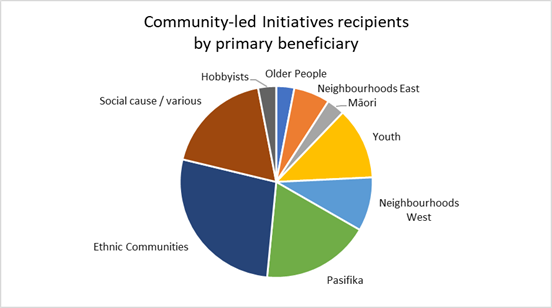
Graph
3
Future of the fund:
Staff will continue to work with community groups to develop new initiatives
for funding and encourage a diversity of applications.
4.3 Community Development Small Grants Fund
Purpose: To provide funding for essential administration expenses to
enable local not-for-profit community groups to operate. Groups may apply for grants of up to
$5,000 to cover costs related to audit or financial review, communication,
energy, insurance, volunteer expenses, rent or stationery. Organisations
seeking funding must contribute to either Goal 2, 3 or 4.
Budget 2024/2025: $235,000 (excluding $10,000 for Te Pū
Harakeke’s administration costs)
Allocation process:
Grants are allocated through a contestable process once a year, administered by
Te Pū Harakeke. Te Pū Harakeke appoints a
community panel to meet with applicants and make allocation decisions.
To maintain consistent alignment with the Support and
Funding Policy 2022, the Allocation Committee continued place an emphasis on
the support priority “groups which have a need for administrative
funding” again in this funding period. This meant some groups who had
received grants in the past but had very large operating budgets or had very
large reserves were deprioritised, ensuring that the funds went to the groups
that needed it most.
2024/2025 Year: 70 applications were
received in total, and 52
of these were successful in receiving an
allocation of funding. Of the 52 approved applications, the average amount
requested was $4,679 and the average amount allocated was $4,423. Of the
52 approved applications, 19 were also Strategic Priority Grants 2022-25
recipients.
Feedback from recipients via accountability reports from
last year show that 94% ‘strongly agreed’ or ‘agreed’
that the application and assessment process was efficient, and that they were
better able to meet their essential administration expenses for operation as a
result of receiving the grant.
Future of the fund:
The contract for the administration of Small Grants has been incorporated in
the Sector Lead partnership agreement with Te Pū Harakeke for 2025-2028.
That contract requires that administration of the fund is undertaken in
alignment with the Support and Funding Policy 2022; the contract may be amended
in line with the Policy review, if required.
4.4 Community
Training Fund
Purpose: This
fund supports the provision of affordable training opportunities for staff,
volunteers and board members of community groups to build capacity and
capability in the arts, environment and social sectors.
Budget
2024/2025: $20,300
Allocation process:
Funding is available throughout the financial year or until funds run out.
Sector Lead groups can use Smarty Grants to apply for funding prior to offering
training to community groups. Applications are assessed by Council officers.
2024/2025 Year:
12 training workshops were delivered, at a total cost of $17,837. There were
total of 238 attendees throughout the year. The following table shows the range
of training workshops delivered:
|
Training
|
Description
|
Attendees
|
|
Volunteer
Training Series: Recruitment & Management
|
Increase
of capacity and capability through volunteers – identifying and
developing volunteer roles, then working through how to recruit the right
people to the roles. Discussing positives and pit falls of volunteer
recruitment.
|
9
|
|
Te
Tiriti o Waitangi Training
|
Raising
levels of cultural sensitivities for participants which has directly
influenced their working relationships.
|
21
|
|
Sustainable
Funding
|
Sustainable
funding for community groups. Delivering new ways and approaches for
organisations to plan for funding.
|
45
|
|
Inclusion
Workshop
|
Individuals
from Te AweAwe whanau, disability, youth, older persons, former prisoner,
rainbow, and multi-cultural community will openly share their views and be
available to answer any questions from the floor about what organisations can
genuinely do to break down barriers for them accessing your services.
|
23
|
|
Sustainable
Development Goals
|
The SDGs
are the first global framework to provide a holistic approach to
sustainability that integrates society, nature and the economy in a global
effort to create a world where everyone has the opportunity to experience
wellbeing and justice.
|
12
|
|
Strong
relationships between the Board and Manager
|
Focus on
the relationship between staff and the board i.e. the difference between
governance and operations. The aim is to attract different pockets of our
community sector, including boards that don't realise they have governance
issues.
|
8
|
|
Dealing
with the Hard Stuff
|
The
workshop is tailored to address real-life challenges that participants are
experiencing. Be prepared to realise you are not alone, find your approach
comfortable addressing less-than-desirable behaviour/actions/comments in your
team, and look at strategies to avoid them happening in the future.
|
7
|
|
Inclusion
101, 102
|
The
workshop draws from the experiences of panellists from different communities,
such as people with disabilities, mana whenua, rainbow, immigrants, former
refugees, and the elderly.
|
27
|
|
How
Not-For-Profits can save time and achieve more in 2025
|
Sharing
useful tools to get the most out of your day. This includes free online
resources, tips on choosing the right software, and deeper tips on finding a
productive workflow that works for you.
|
9
|
|
Community
Sector Finance
|
Helping
organisations learn key financial skills. These include budgeting, PAYE, GST,
using Xero, reading financial documents and more.
|
52
|
|
Community Communication
|
Connecting
organisations with wider community, and better promotion for more funding.
|
9
|
|
First Aid Training
|
First aid training covering NZQA unit standards 6401 and 6402.
|
6
|
Future of the fund: The fund will continue to support
community groups to access opportunities to build their capacity and
capability. The community sector is always
seeking to learn new and innovative ways to help do their work. Sector
Lead organisations will continue to be encouraged to use the Community Training
Fund to support the organisations in their sector.
4.5 Creative Communities
Scheme
Purpose: This grants programme is a partnership between Creative New
Zealand and the Council. The fund supports local arts projects that create
opportunities for the local community to engage with and participate in arts
activities. While Creative New Zealand set the priorities for this fund, the
local allocation panel has the option to also consider the priorities outlined
in the Council’s Creative and Liveable Strategy (to achieve Goal 2: A
creative and exciting city) and the Connected Community Strategy (to achieve
Goal 3: A connected and safe community).
Budget 2024/2025: The
total fund pool for 2024/25 was $114,400 made up of a $37,800 Council
contribution, $68,220 from Creative NZ, and $8380 carried forward from
2023/2024.
Allocation process:
This process is determined by the Creative Communities guidelines set by
Creative NZ. A panel is made up of community representatives and two Elected
Members, with two funding rounds per year (allocation decisions in September
and March of each year).
2024/2025 Year: A total of 67 applications were received across the two
rounds, with 42
projects funded. The total allocated amount for
the Creative Communities Scheme was $110,763.70.
The average grant awarded this year for the Creative Communities
Scheme was approximately $2,637 per application. The unspent amount will be
carried over to the 2025-2026 financial year.
Grants ranged from $462 to support a children’s
workshop on papermaking using native plants, to $6,109 for The KaRs Christmas
Show, by Hokozoo Productions, a showcase at the Globe Theatre in April 2025
featuring the KaRs latest album of Christmas waiata and Class carols
reimagined.
Three -year trend: This year saw the highest number of applications
received to this fund in the last five years, with a 42% increase on 2023/2024,
which can be seen reflected in the significant increase in the total amount
requested from the fund in 2024/2025, as per Graph 4 below. This can be
attributed to an increased focus on promotion of this fund to new audiences
throughout this year, in combination with the overall funding landscape.
In a recent presentation from Creative New Zealand, it was
advised that the success rate for individual artists applying for funding from Creative New Zealand is currently
seven percent of the total applications, with a twenty percent success rate for
art organisations. By comparison, 72 percent (42 of 58 applications assessed)
of applicants for Council’s Creative Communities Scheme funding were
successful in the 2024-25 year. This demonstrates a good level of accessibility
within our fund, and reflects the work of staff in walking alongside applicants
to ensure the applications they are putting forward are of a high quality.
Future of the fund: The Creative Communities Scheme remains
a popular and effective funding stream to support small-scale art initiatives
and local artists to grow.
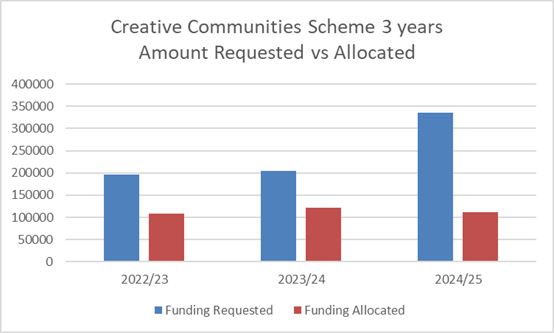
Graph 4
4.6 Arts Event Fund
Purpose: To invest in
events that contribute to the Council’s vision for the City, in
particular, Goal Two: A creative and exciting city. This fund recognises the
opportunities that arise from hosting significant art events in Palmerston
North, both in terms of economic growth and in developing the city as a
culturally rich city where people have the opportunity to express their
creativity and cultural identity. To be considered for funding the event must:
· Have the arts
as a central focus.
· Be of significant
regional, national or international importance.
· Be accessible to the community.
· Positively profile the
city of Palmerston North; and
· Provide an economic
benefit for Palmerston North.
Budget 2024/2025:
$52,500
Allocation process:
The Arts Event Fund is open all year until allocated. Applications are
assessed by a panel of two officers, including a first full assessment and a
second peer review assessment.
2024/2025 Year: Of the
nine applications to the fund, six were successful, two were declined, and one
withdrawn. A total of $89,709 was requested over the eight applications
assessed. The successful projects included:
· PNDA 25th Annual Dance
Festival (Palmerston North Dance Association) - supported with $12,208 to host
their seven-day multi-genre dance championships at the Regent Theatre. This
year’s event attracted 1500 young performers and their families from
Auckland, Taranaki, Hawkes Bay, Wellington and the top of the South Island.
Nineteen dance schools participated in the troupe events, including
contemporary dance and hip-hop, the most popular competitions for the audience.
Tribute was also paid to former Patron, the late Sir Jon Trimmer, and newly
appointed Patron Deirdre Tarrant was welcomed.
· Manawatū Jazz &
Blues Festival 2024 (Manawatū Jazz Club) - granted $15,000 to support
delivery of the 55th annual Jazz and Blues Festival in Palmerston North,
comprising public concerts at the Globe Theatre, workshops and 'Cafe Scene'
artists. The Manawatū Jazz Club is yet to submit their final report, but
informally advised that the total audience for the festival (not including the
Jazz Cafe venues) was 1200.
· Burleskiwi International
Festival of Aotearoa (Burleskiwi Limited) - a new biennial festival featuring
local, national and international burlesque dancers received $10,063.98 for
their workshops and performances held at the Globe Theatre in May 2025. More
than 500 people attended the event as competitors and attendees, with the 12
international performers from Canada, USA and Australia declaring it was the
best festival they had attended and that they will encourage their communities
to apply for the 2027 event.
· 2025 Rose City Dancesport
Championships (Shirley Wall Dance Academy) - granted $5000 for the ballroom
& Latin American dance competition to be held over the weekend of 15-16
August 2025. Organisers expect 650 dancers and their families will attend from
around New Zealand. Since its inception in 1994, the event has built a great
reputation with dancers and supporters for a high-quality event and
entertaining spectacle, accessible to dancers of all ages & levels.
· Heart of the Highlands
Concert Tour (New Zealand Academy of Highland & National Dancing
Incorporated) - received $2500 to support elite level Highland dancers to
perform for the first time in the North Island. The performance also provides
the opportunity for local dance students to join the elite dancers for a workshop
and the main performance on stage. This event is scheduled for 28-31 August
2025.
· Puanga Exhibition 2025
(Rangitāne o Manawatū Settlement Trust) - received $7700 to support
the largest exhibition of Rangitāne o Manawatu art and artists in the
country. The exhibition scheduled for 19 June to 20 July 2025 is a unique
opportunity for Rangitāne members and the general public in Manawatū
to experience, engage with and even purchase Toi Rangitāne.
Three-year trend:
Funding for the arts remains under pressure with Creative New Zealand’s
reduction in funding, and their change in focus away from event-based funding.
This has contributed to organisers of local art events seeking higher levels of
support from the Arts Event Fund.
Future of the fund: In
2025/2026, officers will continue to maximise the available funds to support
the arts community, including supporting larger events to pathway into the
Major Events Fund and the Creative New Zealand large grants where appropriate.
Officers will work with event organisers on economic impact reports for each
event to demonstrate the return on investment. Early applications to the fund
for 2025/2026 indicate that this fund will be under further pressure this year;
officers are considering avenues to rebalance arts funding to ensure the levels
of support provided continue to meet the needs of applicants and the intent of
the fund.
4.7 Major
Events Fund
Purpose: To
support the attraction, development and growth of events in Palmerston North.
The objective of the Major Events Fund is to support Event Producers to deliver
world-class events that drive sustainable growth in domestic visitation and
promote Palmerston North’s unique identity to a wider audience. A
specific focus on events that increase visitor nights, increase tourism
spending and economic activity is targeted.
Budget 2024/2025:
$181,000, a drop of $75,000 from last year’s report to align with the
current Long-Term Plan.
Allocation process:
A cross-section assessment panel consisting of two council officers and a CEDA
representative receives and approves applications throughout the financial year
via Smarty Grants until funds are fully allocated. Multi-year funding can be
approved by the panel if this will assist in event growth and economic benefit.
2024-2025 Year:
Several new multi-year deals were reached with event producers. This gives
recipients funding security to plan for development and growth.
2024/25
Funding Allocations:
|
Manawatū
Art Trail
|
Square
Edge Community Arts
|
$20,000
(year
1 of 3)
|
|
Armageddon
Expo
|
Beyond
Reality
|
$15,000
(year
1 of 3)
|
|
NZ
Young Performer Awards
|
PACANZ
|
$24,000
(year
1 of 3)
|
|
Palmy
Drag Fest
|
Palmy
Drag Ltd
|
$30,000
(year
1 of 3)
|
|
Kiwibots
VEX National Championships
|
NZ
Robotics Charitable Trust
|
$15,000
(year
1 of 3)
|
|
Central
District Field Days
|
Stuff
Events
|
$30,000
(year
1 of 3)
|
Note NZ Rural Games also receives
non-contestable funding of $75,000 cash and $25,000 in kind support and is not
included the allocations of the Major Events Fund.
There were an additional
three unsuccessful applications to the fund. Assessors found a number of these
applicants either did not match aims and criteria of the fund or did not assist
in the aspirations of a fully rounded and dispersed calendar of events for the
city.
Three-year
trend: Many applicants do not meet the specific criteria set out in the
Support and Funding Policy to drive additional visitation to Palmerston North.
These event organisers need help to increase visitation to the city with
specific marketing guidance and support to demonstrate economic impact through
robust data collection and analysis. This has been an area of focus in recent
years, and while total standardising has not yet happened, Council does have a
good tool ready to roll out wider moving forward.
A
strengthened retention strategy is delivering positive results and event
producer surveying is showing they are feeling more valued by the city. New
organisers and events are beginning to emerge within the major event sector
within the city which is a promising sign that the aims of the fund will
continue to be delivered through increased economic activity and city vibrancy.
Future of the fund:
Staff will maintain a targeted focus on economic benefits and events that help
promote the city to a national audience and drive visitation to the city. The
loss of a number of post-Covid funding streams from Central Government is a
concern as organisers will be looking to all grant funders including Council to
fill in the gaps created by this reduction.
Improved
standardised reporting and reporting metrics will enable a clear and consistent
approach for all funding requests, which could be extended to other funding
sources within council.
4.8 Sports Event Partnership
Fund
Purpose: To
support operational costs for sports events hosted in Palmerston North that
have an economic benefit and enhance community connectedness and health.
Budget 2024/2025:
$324,156 (plus $16,531 funds retained from 2023/2024 as a carryover due to last
minute event cancellations). Note that this budget amount includes a
ring-fenced amount of 10% of the total funding budget and is referred to as the
Community Sport and Recreation Fund. The establishment of this sub-fund was in
response to ensuring there were funds to meet community-focussed participation
sport and recreation events aligning with the fund’s support
priorities.
Allocation Process:
This fund is fully administered by Sport Manawatū with a cross-sector
assessment panel which includes Sport Manawatū staff, a council officer
and a CEDA representative.
2024/2025 Year:
This fund continues to support community events, raise the profile of the city
by hosting national-level events in world-class facilities, and activate the
local economy through accommodation and hospitality spend.
Twenty-two events received
grant funding totalling $340,687 providing an estimated $10,389,448 of economic
benefit to the city (based on economic impact modelling using applicant information),
the return on investment being about thirty times the total of grant funding
provided.
Last year, it was
anticipated that there may be growing competition for events traditionally
hosted in Palmerston North from other cities offering similar funding coupled
with new, purpose-built venues. This forecast proved accurate with some
event organisers taking these factors into negotiations, aware of
alternative venues actively seeking event hosting rights.
In response, the
assessment panel intentionally reduced the number of events supported through
the fund to prioritise those that offer the highest economic return to the
city. This approach allowed us to retain strategically important events while
staying within the funding envelope.
Future of the fund:
Sport Manawatū note the need for a unified city approach to
strengthen our value proposition for hosting sports events. While engagement
with the hospitality sector has so far been limited (aside from working with
Massey University), building relationships with stakeholders who have influence
in this area is essential. They continue working with Council, CEDA, and other
partners to offer a more complete and compelling experience to event
participants, which in turn can support event retention and long-term event
growth.
4.9 Sponsorship Fund
Purpose: The
Sponsorship Fund is designed to support initiatives that contribute to the
economic, cultural, social, and sporting vibrancy of the city and wider region.
Funding is provided to events and projects that align with Council’s
objectives of fostering community engagement, celebrating diversity, supporting
business and industry development, and showcasing the city as a
destination.
The fund priorities are to
invest in initiatives that;
· contribute to outcomes to
achieve goal one of the Council's strategic direction
· is innovative, delivering
something new or addressing an issue that affects the people of Palmerston
North in line with the Council’s strategic goals
· is of significant regional
or national importance
· positively profiles the
city of Palmerston North
· provides a quantifiable
economic benefit (e.g., activities, projects or events that attract more than
200 visitors to the city who stay at least one night).
Budget 2024/2025:
$66,000
Allocation process:
Applications are received via SmartyGrants, and assessed by a panel of
officers, including a first full assessment and a second peer review
assessment.
This fund opens at the
start of the financial year and remains open until it is fully allocated. A
maximum of $10,000 is available per application. Staff have discretion to award
up to 50% of the total funding to an eligible proposal.
2024/2025 Year: The Sponsorship Fund
received funding requests totalling $127,155. The full $66,000 budget was
allocated to support 15 initiatives that aligned with Council’s strategic
priorities. These funded initiatives are summarised below. Overall, the fund
has supported a diverse range of initiatives, delivering clear benefits to the
city and region through increased visitation, enhanced community engagement,
and support for key sectors of the local economy and community. These have
included:
Conferences
and Industry Development
Council supported a series of conferences and
professional events that attracted visitors to the city, enhanced the
region’s reputation as a centre for expertise, and supported key
sectors:
· 17th
International Hydrocolloids Conference (Riddet Institute) – $5,000. An
academic conference in food science, drawing international
delegates.
· NZIFST
Annual Conference – 60th Anniversary (NZIFST) – $5,000. A milestone
conference for the food science and technology industry.
· Kaumātua
Oranga Annual Conference (Bestcare Whakapai Hauora) – $3,000. A
wellbeing-focused conference for Māori elders (kaumātua).
· ExportNZ
ASB Central Region Export Awards (Wellington Chamber of Commerce) –
$10,000. An awards event recognising regional exporters and promoting business
excellence.
· Manawatū
Innovation Showcase (The Factory) – $3,000. An event showcasing regional
innovation and entrepreneurship.
· Manawatū
Business Awards (Manawatū Chamber of Commerce) - $10,000.00. Event designed
to recognise, promote and celebrate business success in the Palmerston North
City and Region.
Business & Community Activation
The Fund supported initiatives that activated public
spaces, supported local businesses, and encouraged community connection:
· Plate
of Origin – (Manawatū Chamber of Commerce) – $5,000. A
culinary event showcasing the region’s food diversity.
· Gorge
Quarter Community Party (Gorge Quarter) – $2,000. A neighbourhood event
to strengthen community connections (the Gorge Quarter Community Party, was
rescheduled to November 2025, with Council approval to retain the funding for
the revised date.)
· Palmy
BID Mid-Winter Christmas Window Promotion (Palmerston Business Improvement
District) – $1,000. A CBD promotion encouraging retail activity during
the winter period.
Sport and Recreation
Sporting events funded through the Sponsorship Fund
contributed to the city’s recreational offerings, supported
participation, and attracted visitors:
· Manawatū
Rugby Union Partnership (Manawatū Rugby Union) – $10,000. Ongoing
support for regional rugby programmes.
· City
of Palmerston North Festival of Racing (Race Incorporated) – $3,500. A
thoroughbred racing event attracting participants and spectators.
· Manawatū
Festival of Racing (Manawatū Harness Racing Club) – $3,000. A
harness racing event with regional significance.
· BFC-Pro
Series – Palmerston North (Barbwire Fight Club) – $2,000. A
professional combat sports event held locally.
· KAPN
All New Zealand Community Badminton Tournament (Kerala Association of
Palmerston North) – $2,000. A multicultural badminton tournament engaging
the community.
· Mayor’s
Cup 25 (NZ Central Southern Muslim Youth & Sports Association) –
$1,500 A multicultural football tournament promoting diversity and
inclusion.
Graph 5
Of the 15 initiatives funded, five have submitted
post-event reports. These initiatives engaged over 1,500 participants and
delivered measurable economic benefits. Below are key highlights, financial
contributions, and alignment with strategic priorities:
· 17th
International Hydrocolloids Conference: 203 delegates from 20 countries;
$150k–$200k in economic activity. Strengthened Palmerston North’s
reputation as a global agri-food science hub and showcased local
innovation.
· Plate
of Origin: 20 venues, 982 public votes, doubled media reach. Elevated the
city’s culinary profile, aligning with the regional food strategy and
demonstrating creativity and vibrancy.
· Manawatū
Festival of Racing: Premier race day, increased attendance, national TV
exposure. Promoted the city as an exciting destination for sport and
entertainment, engaging local families and visitors.
· KAPN
Badminton Tournament: 35 regional teams, fostering youth participation, overnight
stays, and hospitality spend. Fostered community well-being and active
lifestyles.
· Manawatū
Innovation Showcase: Attracted 177 attendees and featured nine local
innovators. It achieved a net promoter score of 68, with 90% of delivery costs
spent locally. The event positioned Palmerston North as a leading national
innovation hub, drawing investor interest and fostering regional
collaboration.
Future of
the fund: This fund will continue to be used to support initiatives that
profile Palmerston North. Council will use this fund as an incentive in
attracting conference, business and city initiatives.
4.10 Natural and Cultural Heritage Incentive Fund (NCHIF)
Purpose: To
fund the protection, promotion and strengthening of heritage buildings or other
objects listed in the District Plan and the trimming and maintenance of notable
trees. The NCHIF has four categories:
a. Strengthening Palmy
History: to support owners of earthquake-prone heritage buildings and street character
buildings that require strengthening with the costs of feasibility studies,
working drawings and structural works;
b. Protecting Palmy History:
to support owners looking after our most significant heritage buildings and
sites, with funding for conservation, maintenance, repair, and restoration of
scheduled heritage buildings and sites;
c. Promoting Palmy History:
to support community-led heritage education, research or promotion projects;
and
d. Notable Palmy Trees: to
support notable tree owners with the costs of minor maintenance and trimming.
Given the requirements of
the Building (Earthquake-prone Buildings) Amendment Act 2016, the priority for
this fund is earthquake-strengthening listed heritage buildings.
Budget 2024/2025:
$125,000 to support funding categories a-d above.
Allocation process:
For fund categories a-c, applications are assessed by one officer and
peer-reviewed by another officer. All applications are assessed against several
criteria set out in the Heritage Funding Guidelines.
2024/2025 Year:
See Graph 6 below. Key insights include:
· Applications for
Strengthening Palmy Heritage were relatively low however were of higher value
than previous years.
· Applications for
Protecting and Promoting Palmy Heritage have been consistent with previous
years.
· Funding for notable trees
remains consistent with historical trends
· Five funding
applications/enquiries were deferred to the 2025/26 financial year due to
insufficient funds.
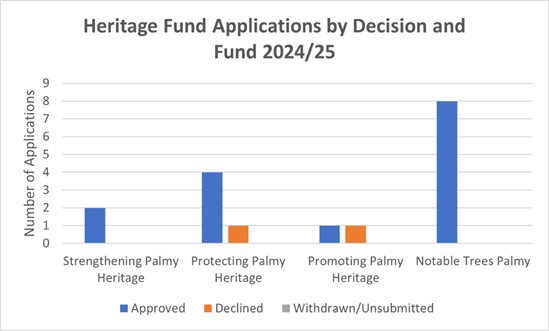
Graph 6
Three-year trend: The key Annual Plan
Performance Measure is an “Increase in investment in earthquake-prone
heritage buildings.” Three-year trends in Graph 7 below show that:
· Support for maintenance
and repairs on heritage buildings has dipped below the 5-year peak in
2021/22
· Notable tree maintenance
is consistent with the three-year average
· Investment in
earthquake-prone buildings is higher than in previous years. This is due to
strategic development opportunities in the city centre.
· Promoting Palmy Heritage
received a couple of larger-value applications compared to previous
years.
· An emerging trend of
applicants for earthquake strengthening and repair work are failing to deliver
work within the funding period, placing pressure on subsequent financial years
for reapplications. Officers will monitor and define clearer funding conditions
to ensure unmet funding allocations don’t disadvantage other prospective
applicants.
Graph
7
Future of the fund:
We forecast heritage funding applications next year to
include:
· one heritage
interpretation project,
· a feasibility study for an
earthquake-prone heritage building,
· repair work on a listed
cottage, and seismic assessments for three earthquake-prone buildings that were
not delivered in time last financial year.
These projects will place up to $75,000 of pressure (100%) on the
Earthquake-Prone Heritage Building Fund and up to $20,000 of pressure (40%) on
the Natural and Cultural Heritage Incentive Fund.
4.11 Palmerston North Youth Council Scholarships Fund
Purpose: To celebrate
contributions made by young people in our city through active participation and
leadership in their given field, to inspire young people to take up growth
opportunities and enable access to these opportunities.
Administering the fund
also provides a development opportunity for the Youth Council who learn about
financial transparency and sound decision-making. Funding categories include
sports, arts, academic excellence, and community contribution. Applicants must
be aged 12-24 and live, work or learn within Palmerston North City.
Budget 2024/2025: $8,500
Allocation process:
Once a year, allocation decisions are made by a scholarships committee, which
consists of 4 to 7 Youth Councillors (who represent a range of schools, ages,
and interests). A Council officer oversees the process and supports young
people to make transparent and sound decisions. The
amount awarded to successful applications is typically between $250 (minimum)
and $1,150 (maximum).
2024/2025 Year: Applications were open
for three weeks, with 29 applications submitted and a total of $61,855.20
requested. There were 11 successful applications, across arts, sports,
community and academic aspirations. A total of $21,080.20 was requested by
the successful applicants and the total fund of $8,500 was allocated. $1900 was
awarded to academic endeavours, $2,650 to young people pursuing artistic
endeavours, $250 towards community endeavours and $2,800 towards sports
aspirations.
These included support for
young people in Palmerston North to represent New Zealand and perform on a
world stage in a range of disciplines such as:
· Competing
in the World Junior Squash Championships in Egypt;
· Participating
in the European Youth Orienteering Championships in the Czech Republic,
· Representing
New Zealand in Speed Skating at the Asian Games in South Korea;
· Qualifying
for the International U13 Boys Softball team at the New South Wales State
Championships in Australia; and
· Participating
in the world Hip Hop Championships in Arizona, USA.
The fund also supported
young people to equitably access and participate in opportunities presented to
them, for example:
· attending
the New Zealand Institute of International Affairs national conference;
· attending
regional and national competitions in VEX robotics;
· attending
National Youth Orchestra opportunities and events;
· and
representing the Manawatu region in U16 Girls Basketball, and other regional
and local sporting opportunities.
Future of the fund:
This fund will
continue to be used to celebrate and support the aspirations of young people of
our city.
4.12 Palmerston North Youth Council Initiatives Fund
Purpose: To
support youth-led community initiatives, including a project, activity, or
event, that contribute to:
· increasing the
number of young people, aged 12-24 years, to positively engage in sports, the
arts, community endeavours or academia; and
· achieving Goals 2, 3
and/or 4 of Palmerston North City Council’s strategic direction
Administrating
this fund also provides a development opportunity for the Youth Council who
learn about financial transparency and sound decision-making.
Funding categories include
sports, arts, academic excellence, and community contribution. Applicants must
be aged 12-24 and live, work or learn within Palmerston North City.
Budget 2024/2025: $8,500
Allocation process:
Once a year, allocation decisions are made by a scholarships committee, which
consists of 4 to 7 Youth Councillors (who represent a range of schools, ages,
and interests). A council officer oversees the process and supports the young
people to make transparent and sound decisions. The
amount awarded to successful applications is between $500 and $2,000.
2024/2025 Year: Applications were open
for three weeks, with 3 applications totalling $6000 submitted. There was one
eligible application, which was awarded a total of $2000 to contribute toward a
youth-led community sporting initiative.
This successful initiative is a youth-led community
sporting event called Play for Change, supported by Best Care Whakapai Hauora.
The event will bring together Māori and Pasifika young people and is
focussed on removing barriers to accessibility to promote physical activity,
community bonding and positive youth engagement.
Future of the fund: This fund will continue to be used to celebrate and support
the aspirations of young people of our city. The coming year will include a
greater focus on marketing, outreach and building a greater awareness of the
fund.
4.13 Resource Recovery Fund
Purpose: To support initiatives
that reduce the amount of waste going to landfill. Local small businesses and
not-for profits are invited to apply for projects that align with the
fund’s key support priorities: waste diversion, education programs,
community events, trials and pilot programs and research and development. The
fund is supported by goals in the Waste Management and Minimisation Plan 2024,
and successful applications align with this guiding document.
Budget 2024/2025: $40,000
Allocation process:
The resource recovery fund is open for one month a year. Applications are
assessed by two council officers, an assessor and a peer reviewer.
2024/2025
Year: The fourth round of the resource recovery fund saw a total of
$28,290.40 allocated from a requested $80,990.40. Three out of the seven
applicants were successful:
· Precycle - received
$9,000 to support a further trial of the events dishwashing trailer.
Commissioned by Council, the trailer is intended to provide a resource at
events where reusable cutlery and crockery can be washed, removing the need for
single use items. Precycle, who already support events by providing staff to
assist people with sorting their waste, have piloted the trailer and will
undertake further trials to determine operational and environmental
feasibility.
· Butterfly Compassion
Society - awarded $7,790 to support their winter wellness programme. This
group supports vulnerable members of the community by supplying donated
clothing and blankets upon request. As well as diverting textiles from
landfill, items are also upcycled to make things such as draft stoppers and
sensory toys, while non usable fabric is sold as rags.
· Organic Packaging Supplies
- a local business who make egg trays from recycled paper, received $11,500
from the resource recovery fund to enable them to install additional equipment
in their process line which will remove impurities and contamination, making
the operation more efficient.
Officers
note that despite a similar level of marketing, including a media release, key
stakeholder newsletters, radio interviews, newspaper advertising, as well as
social media, applications which meet the criteria of the fund were fewer this
year than in previous years.
Future of
the fund: Goal 2.1 of the 2024 Waste Management and Minimisation Plan
specifies provision of the Resource Recovery Fund. This is funded through
Councils allocation of the Ministry for the Environments waste levy. A focus
moving forward will be increasing accessibility and understanding of the fund,
with a range of approaches being considered, including extending the fund
opening period, hosting drop-in information sessions, adjusting the time of
year that the fund is open, and involving a wider range of partners to support
promotion, such as CEDA and the Chamber of Commerce.
4.14 Active Communities Fund
Purpose: To
remove financial barriers to enable Palmerston North residents to be more
active, more often.
Budget 2024/2025:
$11,742 per year, plus $1,908 unspent funds carried over from previous
financial years.
Allocation
process: Adminstered via Sport Manawatū. Residents apply to the fund
via an application form, which is assessed by a panel composed of Sport
Manawatū, Replay Sport, Best Care Whakapai Hauora and an independent panel
member from the community.
2024/2025 Year:
44 applications were received to the Active Communities Fund, of which 28 were
approved. In total, 37 Palmerston North residents were supported, with $13,172
distributed to help reduce financial barriers to participation in sport and
active recreation.
This year, Sport
Manawatū strengthened their collaboration with both the Green Prescription
(GRx) team and the Lido Aquatic Centre team to enhance support for families
facing barriers to participation. The GRx team works directly with whānau
experiencing significant financial hardship and poor health outcomes linked to
physical inactivity. While GRx does not have the resources to financially support
access to sport or recreation, the Active Communities Fund has been able to
bridge this gap. The GRx team has played a vital role in guiding families
through the application process, and maintaining engagement throughout the
year. In addition, the Lido team has contributed by offering community rates to
Active Communities Fund recipients, helping reduce the cost of access and
enabling more consistent participation by families.
These partnerships have
significantly extended the reach and impact of the fund, ensuring support
reaches those who need it most. More importantly, they have empowered families
to take meaningful steps toward improved health, increased confidence, and
sustained involvement in active recreation.
One challenge this year
has been some negative feedback received regarding individuals or families
unable to access financial support through the Fund to participate in regional
or national representative sport. Each year, Sport Manawatū receives more
than 30 enquiries of this nature. The Active Communities Fund is not intended
to cover representative-level costs, and currently, there are limited local
funding sources dedicated to this purpose. Youth Council Scholarships can
support young people striving for excellence in sport, however that fund is
also under pressure.
Due to the purpose of the
Active Communities Fund, to support inactive people rather than those already
engaged in sport or physical activity, athletes and their whānau are left
to rely on personal fundraising, sponsorships, or family contributions. For
those experiencing financial hardship, this can create a significant barrier to
ongoing participation and advancement in sport at higher levels.
Future of
the fund: The Active Communities Fund will continue to be administered
via Sport Manawatū in 2025/2026. Sport Manawatū will contribute to
the upcoming review of the Support and Funding Policy, where challenges raised
above regarding the scope can be considered.
5. Summary
5.1 Council has a good range of fund types, catering for a wide variety
of community needs and aspirations, at different levels. This report has
demonstrated the significant role grant funding plays in the city, with over $3
million dollars allocated annually to support communities to achieve their
aspirations.
5.2 An increasingly constrained funding environment has continued to
drive up numbers and amounts being requested from Council’s funding.
While this demonstrates the challenges being faced by organisations and
individuals seeking funding, and creates some additional load and complexity
for staff in their assessment decisions, the increase in engagement in
Council’s funding programmes also provides a positive indication of the
accessibility and relevance of the grant schemes on offer, and is reflective of
the vast amount of work put in by staff from across the organisation in
ensuring these investments, and therefore outcomes, are maximised within our
community.
5.3 This is further reflected in the evaluation which has occurred
across funding programmes, which continues to demonstrate a high level of user
satisfaction with our practices and processes.
5.4 While there are opportunities for improvement identified within some
programmes which will be considered within the upcoming Support and Funding
Policy review, overall, Council’s funding remains an effective way to
meet the needs within our community.
6. Next steps
6.1 Officers will continue to
work to ensure all funding programmes remain as accessible, effective and
impactful as possible. Any changes from the upcoming Support and Funding Policy
review will be implemented as required.
6.2 The next
annual report for the 2025/2026 financial year will be provided in the third
quarter of 2026.
7. Compliance
and administration
|
Does the Committee have
delegated authority to decide?
|
Yes
|
|
Are the decisions significant?
|
No
|
|
If they are significant do they
affect land or a body of water?
|
No
|
|
Can this decision only be made
through a 10 Year Plan?
|
No
|
|
Does this decision require
consultation through the Special Consultative procedure?
|
No
|
|
Is there funding in the current
Annual Plan for these objectives?
|
Yes
|
|
Are the recommendations
inconsistent with any of Council’s policies or plans?
|
No
|
|
The recommendations
contribute to: Whāinga 1: He tāone auaha, he tāone
tiputipu
Goal 1: An innovative
and growing city
Whāinga 2: He
tāone whakaihiihi, tapatapahi ana
Goal
2: A creative and exciting city
Whāinga 3: He
hapori tūhonohono, he hapori haumaru
Goal 3: A connected
and safe community
Whāinga 4: He
tāone toitū, he tāone manawaroa
Goal 4: A sustainable
and resilient city
|
|
The recommendations contribute to this
plan:
2.
Mahere whakawhanake ohaoha
2. Economic Development
Plan
The objective is: Attract and
support major events and activities
4.
Mahere taonga tuku iho
4. Heritage Plan
The objective is: Promote,
protect, celebrate, and share knowledge of local history
5.
Mahere toi
5. Arts Plan
The objective is: Support
community arts initiatives and organisations; Provide, fund, and support city
and community events
6.
Mahere rēhia
6. Recreation and Play
Plan
The objective is: Support and
fund for-purpose organisations and community partners, and Provide and
promote opportunities for play
7.
Mahere tautāwhi hapori
7. Community Support Plan
The objective is: Support
for-purpose organisations and communities of interest, and deliver programmes
to promote community wellbeing
9. Mahere haumaru hapori, hauora hapori
9. Community
Safety and Health Plan
The objective is: Co-ordinate
and support community safety and harm reduction initiatives
10.
Mahere āhuarangi hurihuri, toitūtanga
10. Climate Change and
Sustainability Plan
The objective is: Encourage and
promote sustainable best-practices in Council activities and the wider
community
11. Mahere mō te kanorau koiora me Te Awa o Manawatū
11. Biodiversity and the
Manawatū River Plan
The objective is: Support and
fund for-purpose organisations and local communities working to help achieve
nature conservation outcomes
12.
Mahere taumanu para
12. Resource Recovery Plan
The objective is: Provide
support for-purpose organisations and local communities to recover, reuse,
repurpose or regenerate products
15.
Mahere whare
15. Housing Plan
The objective is: Provide social
housing and support community-led housing initiatives
|
|
Contribution to strategic
direction and to social, economic, environmental and cultural well-being
|
Providing funding to
community helps Council deliver its strategic objectives in a broad range of
areas.
|
|
|
|
Attachments
Nil
Memorandum
TO: Community
Committee
MEETING DATE: 13
August 2025
TITLE: City
Library Annual Report 2024-2025
Presented By: Linda
Moore, Manager City, Library and Shannon Simpson Business and Technical Support
APPROVED BY: Danelle
Whakatihi, General Manager Customer & Community
RECOMMENDATION TO Community Committee
1. That the
Committee receive the report titled ‘City Library Annual Report
2024-2025’ (Attachment 1) presented to the Community Committee on
13 August 2025.
1. ISSUE
1.1 At
the Community Committee on 24 May 2023, the Committee resolved a notice of
motion:
“That the Community Committee receive its work
schedule dated May 2023 including an annual report on Library Services”
1.2 The
attached report titled “City Library Annual Report 2024-2025”
details the wide range of library services and programmes provided by the City
Library and gives examples of the positive impacts these services have for
Palmerston North.
1.3 This
memorandum highlights key elements from the annual report and provides an
update from Property on library facilities.
1.4 The
report is attached as Attachment 1
2. BACKGROUND
2.1 The
City Library is made up of the Central Library; the four community libraries in
Awapuni, Ashhurst, Highbury (Te Pātikitiki) and Roslyn; the Mobile Library
and Blueprint.
2.2 The
historic and significant milestone of providing library services to the city
for 150 years will be reached in 2026-27.
2.3 The
City Library will celebrate 30 years of being in the Central Library building
in May 2026. The original C M Ross building will be 100 years old in 2027/28.
The City Library has played a vital role in neighbourhoods
for many years. Significant milestones for each of these locations will be
reached in both 2027 and 2028. In 2027 the Mobile Library will celebrate 60
years of service and the Awapuni Library will celebrate 40 years of providing
library services to the Awapuni community. In 2028 the Roslyn Library will
celebrate 75 years of providing library services to the Roslyn community; the
Ashhurst Library will celebrate 35 years of providing library services to the
Ashhurst community; and the Te Pātikitiki Library will celebrate 20 years
of providing library services to the Highbury community.
3. DELIVERing
on Council’s goals
3.1 Council
has four strategic goals for achieving the city vision: Small city benefits,
big city ambitions. The work of the City Library sits primarily under
Whāinga Goal Three: He hapori tuhonohono, he hapori haumaru A connected
and safe community and Whāinga Goal Two: He tāone whakaihiihi,
tapatapahi ana A creative and exciting city.
3.2 It
is important to note that City Library activities and services also deliver to
aspects of plans under Goal 1 and Goal 4.
4. THE
CITY LIBRARY PLAN
4.1 The
City Library plan states, “we want our libraries to provide opportunities
for connection and learning. To achieve this purpose we will provide
collections, services and programmes through all City Library locations and
collect and protect community stories through the city archives”
4.2 The
City Library kaupapa Te Ara Whānui o Te Ao translates as inspiring people
to explore the pathways of the world. We deliver on the City Library Plan
through our kaupapa and the six pouwhenua, or pillars, below:
READ:
Literacy for all, reading for pleasure
CONNECT:
People are connected with knowledge, ideas and each other
CREATE:
Creative learning, learning for life
REMEMBER:
Valuing the past to inform the future
PROSPER:
Supporting the aspirations of the community
RESILIENCE:
Sustainable and resilient
4.3 Our
goal is to ensure that the City Library makes a difference community-wide under
each of these six pou (see Appendix One of the attached report for details).
4.4 The
City Library delivers a wide range of services and lifelong learning programmes
under each of the pou.
5. CONNECT:
People are connected to knowledge, ideas and each other.
5.1 We
achieve this through providing library collections, programmes, and services
that reflect community needs and interests, feature community voices, and
create meaningful experiences. Examples of this include:
5.2 Play: We actively contribute to the delivery
of the Recreation and Play Mahere Rēhia Plan through the Pop Up Open Play
kits, Sensory Play kits, the Library Walls Alive project, the Play
Libraries project, the George St Reef community art project and the Puanga
Passport to Play digital edition.
5.3 Outreach
Connections: We continually review how services and programmes can be more inclusive, tailored to suit specific needs and taken to where people are.
Initiatives have included those for adult literacy
including digital literacy; and a wide range of programmes for the
neurodiverse, rainbow, health and disability sectors of the community.
5.4 We have shared
reading programmes at the Central Library, Brightwater Home, Willard
Home, the Marion Kennedy Centre, Cook St Nursing Care Centre, Arohanui Hospice
and Aroha Lifecare.
5.5 We
established a new initiative for the region by starting a library service for
patients in the Star 2 Ward of Palmerston North Hospital. Initially library
staff and volunteers provided a fortnightly reading service to help support
recovery and combat social isolation. Recently, this has expanded to providing
a variety of other resources and content.
5.6 The
Mobile Library now visits Te Au rere a te Tonga, the Youth Justice facility
near Kelvin Grove on a regular basis to deliver library services to rangatahi
who may otherwise not have access to library resources, content and programmes.
5.7 Home
Service: This year 114 people were supported to receive long-term
deliveries of library materials through Home Service. For
those who prefer or can only listen to books, the demand for Victor Readers and
audiobooks remained high. We recently purchased three new Victor Readers and
currently have seventeen out on loan within our community.
5.8 Club
Sandwich: Club Sandwich is a platform for clubs to describe who they are and
what they do and an easy way for people to discover clubs and join 24/7. This
year we improved usability, navigation, reporting and accessibility. We also
migrated the site to a web platform to make Club Sandwich more agile, flexible
and responsive. This comes with the added benefit of enabling cost-effective,
iterative improvements over time.
5.9 Te
Reo Māori: The City Library supports te Reo Māori me ōna tikanga
– the language and its cultural practices, in a variety of ways. This
support includes Kōrero kawhe, the Manu hāpai waiata group, Te
pūtake (a fortnighly delivery of te reo Māori books to kura) and
programmes throughout Mahuru Māori - Te Wiki o te Reo. This year we also
streamed Te Matatini live at the Central Library.
5.10 Language
Weeks: The City Library celebrates and acknowledges many language weeks,
connecting our diverse community with library programmes and the community
languages collection. People are invited to share their culture through
exhibitions, displays, talks and panel discussions.
5.11 Language
Expo: Now in its second year, the Language Expo is a partnership with the
Manawatū Multicultural Council. Groups involved in the expo this year were
from the following communities: Chinese, Spanish, Māori, Japanese,
Sanskrit, Ukrainian, Bahasa Indonesia, Portuguese, Farsi/Persian, Euskera (Basque), Filipino, Irish and French.
5.12 Community
festivals, commemorations and exhibitions: The City Library supports
and/or participates in many festivals
and commemorations, displays
and art exhibitions. Some examples include Pasifika Fusion, Lunar New Year, the
How2 Art Exhibition “The world I want to live in” and
“Native by Nature: Mana driven visionz for a Niu world
view” by artist Tilomai So'otaga Jennifer Tonumaipe'a Farrell-Taylor.
6. PROSPER: Supporting the aspirations of the
community
6.1 We
achieve this by supporting individuals to grow their skills, often through
partnerships that contribute to collective impact while helping to grow a
strong and sustainable voluntary and community sector. Examples of these
partnerships include:
6.2 Massey University Te Kunenga ki Pūrehuroa: Off the Page: Now in its 21st year, The Off the
Page series brings the very best local, national, and internationally published
writers, scientists, economists, poets, journalists, and thinkers together with
audiences to explore ideas, share stories and have conversations. The programme
includes discussion panels, readings, and creative writing workshops.
6.3 Massey University Te Kunenga ki Pūrehuroa: Latin America and Spain
Film Festival (LASFF): Now in its 23rd year, LASFF is a long-standing
collaboration with the Latin American and Spanish Embassies, Massey University
Te Kunenga ki Pūrehuroa’s School of Humanities and the City Library.
Throughout the years, LASFF has showcased films with diverse themes, with the
aim of helping the New Zealand audience understand and get closer to Latin
American and Spanish cultures. Each of the eight participating embassies -
Argentina, Brazil, Chile, Colombia, Cuba, Mexico, Peru, and Spain - present a
film from their respective countries. We have enjoyed a special relationship
with several embassies (Cuba, Brazil and Argentina) over the years, with visits
by the Ambassadors for the screening of their featured films.
6.4 Massey
University Te Kunenga ki Pūrehuroa: Children’s University: This partnership provides
exciting opportunities for young ākonga to explore learning experiences
outside of the classroom. As a Learning Destination, a variety of
pathways are available at library locations and include STEM-based programmes
including Lib Lab and coding; self-guided sewing and 3D design/print activities
at Blueprint; and Manawatū Heritage activity sheets.
6.5 Palmerston
North Intermediate Normal School (PNINS) and the Manawatū Multicultural
Council (MMC): Celebrating 25 years in 2025, First Voice is a celebration of
writing by PNINS students from non-English speaking backgrounds.
6.6 This
is our second year partnering with Digital Futures Aotearoa to hold RAD
(Recycle-A-Device) workshops and a RAD club – the only one of its kind in
the Manawatū. RAD is a charitable initiative that works to address key
digital gaps in an innovative holistic programme that gives back to the
community. In the past sixteen months over 95 laptops have been refurbished and
more than 60 rangatahi have been taught tech skills and about the benefits of
diverting devices from landfills and reducing eWaste. Unfortunately, a
nationwide shortage of laptops suitable for refurbishment means that demand far
exceeds supply. We are working with Digital Futures Aotearoa and Environment
Network Manawatū to increase the availability of suitable laptops and have
contacted large employers in the Manawatū to see if we can source a more
consistent stream of used devices to be diverted to RAD.
6.7 Manawatū
People’s Radio (MPR): The City Library enjoys a wonderful relationship
with MPR and over the past twelve months they have brought their equipment to
the library to a multitude of library programmes, recording them for both
broadcast and archiving. This means that the recordings are of excellent quality
for any future listening or research and are being archived on both MPR’s
website and Manawatū Heritage. The team at MPR are always looking for new
ways to collaborate, and they have really expanded our outreach and capability
to produce community-centred programmes
7. READ:
Literacy for all, reading for pleasure
7.1 We
achieve this through providing library collections, programmes and services
(including outreach services) that support children, young people and their
families in learning and educational success, career readiness and in life.
Examples of this include:
7.2 Library Collections: We curate multi-format
collections that support the recreational and learning needs of the many readers of all ages and stages who use the City Library. There are a range of formats
in our collections to suit a variety of reading styles and needs including
standard or large print, CD or MP3, eBooks and audiobooks on the Libby and
Borrow Box apps and books in a wide range of languages including Te Reo Māori.
These collections will increasingly become
digital. More of our spending
has moved to purchasing access
to online subscriptions and
databases, eBooks, streaming media and downloadable content. We offer a wide
variety of streaming services, apps and eResources that are available
24/7.
7.3 He
Taonga te Pūmahara Memory Matters collection: We connected with Alzheimers
New Zealand to work towards completing the Dementia Friendly Recognition
Programme. The entire team has completed Dementia Friend training and new team
members will complete this training within three months of starting work at the
City Library.
Our dementia friendly collection, He Taonga te
Pūmahara Memory Matters, is for people with
dementia and memory loss, as well as their whānau and care partners.
Currently in New Zealand there are 70,000 people with a diagnosis of dementia.
This number is expected to increase to 170,000 by 2050.
Memory Matters was developed in
consultation with groups across New Zealand, as well as local organisations
like Alzheimer’s Society Manawatū and the Marion Kennedy
Centre. We now hold more than 250 items in this
collection. Along with books, the collection includes games, puzzles, jigsaws,
activity boards, tactile fidget widgets and some simple music players –
preloaded with hundreds of songs and themed to suit the listener e.g.
classical, popular hits through the decades, and NZ music.
7.4 The
Romantasy collection: This year, we introduced a new Romantasy feature
collection - an exciting addition reflecting both current literary trends and
evolving reader interests. For those unfamiliar with the term,
romantasy refers to books that blend fantasy and romance in equal measure,
featuring richly imagined worlds alongside compelling emotional narratives. The
genre has seen a dramatic rise in popularity, particularly among young adult
and new adult readers - driven by social media platforms like BookTok, and a
consistent presence on many bestseller lists. Adding
a romantasy collection helps us to remain a relevant and dynamic part of the
reading community. It reflects our ongoing commitment to offering diverse,
engaging, and contemporary materials that inspire a lifelong love of reading
across all age groups.
7.5 Children’s
Reading Programmes: Our
children’s reading programmes responded to changing whānau and
individual reader needs.
We provide multiple ways to participate. Tamariki can complete the programme via in-person (kanohi ki te kanohi)
book chats in
English or languages other than English
(including NZ Sign Language) and/or through online activities on our Beanstack
reading platform. The immersive Te Ao Māori approach of our Te Reo
Māori programme incorporates Te Ao Māori with waiata, kōrero,
whanaungatanga, and pānui pukapuka i roto i te reo Māori. This year
our children’s reading programmes enabled 1776 children to participate in
reading and literacy programmes.
8. CREATE:
Creative learning, learning for life
8.1 We
achieve this by being a primary point of social access to information, lifelong
learning, and creative expression through the innovative use of technology and
digital resources. Examples of this include:
8.2 Technology rich learning: We deliver
technology rich learning, providing access to a wide range of digital resources and tools for our
community. Programmes and activities are designed to support
skill development in Science, Technology, Art, Maths, Innovation and
Entrepreneurship (STEAM-IE). Examples include LibLab; ITS Digital Sessions; and
Hangouts at the Whare – at the North Street Housing
Centre.
8.3 Virtual Reality (VR): We deliver regular VR sessions
with Big Brothers Big Sisters Manawatū. We have also taken the VR kits to
IPU, UCOL, Highbury Whānau Centre, schools and retirement villages, using
the opportunity to discuss technology, digital services and library
programming.
8.4 Life
Experiences with Virtual Reality (VR): This year we built on our partnerships
with the Marion Kennedy Centre and Arohanui Hospice in a novel way, using
Virtual Reality (VR). VR is starting to be used around the world in health
settings for education, pain management, and therapy. Together we are using VR to enhance quality of life by providing one-of-a-kind
experiences for those living with dementia mate wareware or in end-of-life
care.
8.5 Blueprint:
Technology continues to drive many new business and work opportunities and Blueprint offers
access to tools,
resources, and support
for the community to invent,
prototype, and bring their ideas to life. Examples
of projects in Blueprint this year include clothing upcycled for the Hīkoi mō te Tiriti; decorative
scotia moulding for a house restoration; bird coasters for a school fundraiser;
flexible 3D printed horseshoe prototypes for a farrier; nectar feeders for
native birds and a display stand for dog skeletons at the Massey Vet school.
9. REMEMBER:
Valuing the past to inform the future
9.1 We
achieve this through connecting the community with mana whenua and the
bicultural foundations of the city; diverse local culture; history through
heritage and archival collections (both physical and digital); and local
history and heritage programmes.
9.2 Archival
and Heritage collections: The collections held in the Ian Matheson City Archive
(IMCA) are a significant part of both our local heritage and the national documentary
heritage of New Zealand. These collections have an important place alongside
the natural, built and cultural heritage which reflects our Palmerston North
identity.
The Community Archives remain in an offsite facility
after discovering a leak in their former storage area in February
2023. This impacts the amount of staff time available for processing
collections as workstreams now need to allocate time for record retrieval as
requests for their use come through from students, schools, historians and
researchers.
Further changes were made to the current archive space in
the Central Library to better utilise the space by relaying the collections for
better space efficiencies and effectiveness.
9.3 Manawatū
Heritage: We continued to increase the capacity of Manawatū
Heritage for our collections. Now with 46,200 items online the reach of
Manawatū Heritage is growing nationally and internationally.
To support more accurate searching of
Manawatū Heritage, we created a new resource type -
plans can now be searched for and browsed separately. It is now much easier for
visitors to the site to explore 268 digitised plans, which include historic
architectural, engineering and land sales plans.
9.4 Back
Issues: We have coordinated the ‘Back Issues’ series, a
weekly history feature with strong visual images for the Manawatū Standard
for the past four years and articles are uploaded to Manawatū
Heritage.
9.5 Genealogy:
Family history and finding out about our ancestors is a key part of understanding
our own migration stories. Making genealogy databases such as Ancestry and
MyHistory available in our library spaces, running family history programmes
and working with genealogical groups helps us to provide this service.
9.6 Family History Month: In August 2024, we ran the inaugural Family
History Month, with the aim of it becoming a fixture in our heritage programmes
calendar. Based on the month-long international celebration of Family
History, we tailored our programme to Aotearoa New Zealand. In partnership with
the Palmerston North Branch of the New Zealand Society of Genealogists (NZSG),
we held a variety of activities across the Central and community libraries.
Activities included: Genealogy help-desk sessions, family history movie screenings,
and “Treasures with Tania” with Dr Tania Kopytko (sharing the
stories of family keepsakes). There were also presentations on DNA as a
genealogical research tool, and researchers shared their personal genealogical
research stories.
9.7 Oral
Histories: As new migrants come to Palmerston North it is important that
their stories are collected and become part of our city’s history. Oral
histories are an excellent way of recording these stories and we work with
volunteers and other groups to co-ordinate, record and make these stories
available.
9.8 Local
History Week and Heritage Month: For the third year, Local History Week was
held in March and led into Heritage Month. We aim to be family-friendly, with many activities scheduled on weekends and outside of classroom hours. The
diverse programme, delivered alongside Rangitāne o Manawatū and heritage sector partners across the city, was both well
attended and well received by the community with 94 activities, 3,026 attendees, and 7 displays
across 17 partner groups and organisations.
9.9 The Manawatū Guardian collection: The
City Library is now kaitiaki of the print copies of every edition of the
Manawatū Guardian from July 1972 to December 2024. Many of the newspapers
in the volumes are on microfiche but having them in paper format increases
their accessibility and browsability for both leisure readers and researchers.
The collection allowed us to fill large gaps in our microfilmed editions of the
Guardian between 1985 and 2004. These editions were sent away earlier this year
to be digitised and will be available to view soon.
9.10 Papers Past: We are
collaborating with the National Library of New Zealand to digitise the Manawatū Standard newspaper from 1946
through 1975. The National Library will contribute 30% of costs and digitised
fulltext content will be uploaded to the Papers Past website. Currently
Manawatū newspapers on Papers Past date from 1877 to 1945, so this is an
enormous boost for our community - whether students, genealogists, casual browsers
or researchers.
10. RESILIENCE: Sustainable and
resilient
10.1 An important characteristic of a resilient
community is social connectedness and having the skills and knowledge to be
sustainable. We support these skills through a number of initiatives including
the Palmy Crop swap, kai resilience and sustainability workshops
delivered by Environment Network Manawatū (ENM).
11. Performance
Indicators
11.1 The City
Library captures a wide range of performance metrics which are compared to the
previous year’s data to measure any changes. The majority of indicators
are holding steady or show an increase and we have an action plan to address
those that are not (see p5 of the City Library Report).
12. Emerging
LIbrary trends
12.1 Emerging
global library trends relevant to the work of the City Library include:
12.2 An
increasingly uncertain world intensifies challenges and complicates the
delivery of services as libraries are seen more frequently in a crisis response
role providing dry, warm (or cool) spaces, electricity and internet connections
for those who are displaced or struggle to have these at home.
12.3 Societies
are becoming increasingly more diverse, and at an increasing pace, making
delivering universal services and achieving equity more complicated.
12.4 Libraries
are increasingly seen as safe spaces for all regardless of age, stage, ability,
mobility, ethnicity, education, political or religious views, or life
philosophy.
12.5 The
digital divide is increasing and getting more serious, even as connectivity
improves. Access to current and critical information is more often than not in
a digital form available on a digital device. For those without either
connectivity or digital device, having access to current and relevant
information in a timely manner is extremely challenging and can have
significant consequences.
12.6 Artificial
Intelligence (AI) poses both opportunities and
challenges for public libraries. AI has the potential to make
workstreams more responsive and efficient, but
it also poses ethical, quality, transparency and copyright challenges for
libraries and the wider creative sector. Libraries are seeing increasing
amounts of AI generated content in library material marketplaces and Content
Development and/or Collection policies are needing to be updated to manage this
form of rapidly evolving content.
13. CHALlenges
13.1 We are
facing a number of challenges:
13.2 Long-Term
Sustainability: Ensuring the City Library has the financial resources to
support its current work and to meet the future growth of the city.
13.3 State of
facilities: The current state of City Library facilities at two locations is impacting
daily operations and services to our public. It is also having an ongoing
impact on staff wellbeing.
13.4 Storage
issues for physical archives: Proper archival storage is needed for
long-term preservation and efficient access and management of the city’s
archives. Current archive facilities, conditions, locations and service
arrangements do not meet best practice archival standards.
13.5 Retirements,
retaining knowledge and training new staff: The City Library is facing a
generational shift requiring succession planning as members of a long-serving
and highly skilled workforce head into retirement. This year in 2025 we will
farewell four long-serving team members with over 100 years of library
experience between them. We are working hard to grow and develop our current
workforce to gain the experience and skills required to help ease this
transition.
13.6 New skill
areas: Today’s modern public library requires a range of knowledge and
skills - the experience and knowledge of the professional librarian, digital
and technology expertise, teaching skills, and knowledge and experience of
community engagement. These diverse skills are now joined by leadership and
business management skills, logistics expertise and project management
experience. New skill areas constantly arise and there is a need for continuous
learning and upskilling to ensure we support community access to library
services and ongoing innovation.
13.7 Navigating
increasing societal change: Our team needs to be people focused and have
both the training and soft skills required to navigate an increasingly diverse
range of social and societal challenges.
13.8 Digital
content divide: The digital divide is increasing for those that do not have
access to, or can afford, either Wi-Fi or a device on which to read. For content
that is read online and not downloadable, we will need to continue, and
potentially increase, our provision of both fast and reliable internet access
and Wi-Fi and internet-connected devices in all our library spaces.
14. opportunities
14.1 We are
focusing on the following areas of opportunity:
14.2 Workforce
Capacity and Development: We are continuing to track
emerging trends across the future work of libraries and use that information to
determine the training staff need. This
includes the recruitment of skilled and experienced people for new workstreams
where additional support is required.
14.3 Equitable
access and inclusion: We are continuing to ensure that our resourcing
model and library services are designed to eliminate barriers to access,
providing public and staff opportunities for growth, and developing and
supporting equitable access to the collections, programmes and services we
offer.
14.4 Digital
help sessions: We will be working to increase our digital help session
offerings over the next twelve months, increasing both our capacity and
capabilities within the team to deliver this service. We are also exploring
options for partnerships and self-directed tools that can help job seekers
demonstrate their digital learning.
14.5 Data and
Metrics: We are continuing to improve our data systems to better collect
data and use statistics so we can make informed decisions about what the City
Library should or should not do.
14.6 Promotion
and marketing: Strategically promoting library resources, programmes and
services to increase awareness and use of our libraries; and to support the
role and value of the City Library network to our community.
14.7 Improving
sustainability and resilience: As a resource sharing public good,
libraries have a long history of sustainability. We are continuing our journey
of being deliberate and intentional with the impact
of our consumption and the
role we play in supporting social resiliency.
15. Facilities
15.1 A current
overview of the City Library
facilities is as below:
15.2 Central
Library
15.3 The
current renewals and maintenance strategy for the Central Library building has
meant that only essential Health
and Safety or compliance work has been undertaken on the
building between 2013 -2021.
15.4 Since 2021,
through the 2021-31 LTP, there was an increase in both the renewals and
maintenance budgets for the facility. However, significant assets are at end of life and/or are failing – escalators, lifts (both public and staff) and the building management system (BMS).
15.5 The ambient
temperature of the Central Library often
exceeds 30 degrees in the
summer months, with winter temperatures often below 16 degrees.
15.6 The
archive space is under
significant on-going pressure with leaks,
fluctuating temperature and humidity control, and an end-of-life
chiller.
15.7 Whilst not
considered a dangerous building, the building was identified as being earthquake
prone in 2018. The seismic strengthening solution for the Central Library also
provides the opportunity to consider how the building functions, position it
for the future, and replace failing assets throughout the building.
15.8 The seismic solution
for the Central Library,
currently sitting in Years 6 and 7 of the 2024-34 LTP provides an opportunity to maximise space, flexibility, sustainability and efficiency.
This may include space provision for other council areas and further physical
collections e.g. the Ian Matheson City Archive.
15.9 There is
also an opportunity to strengthen the City Library network
to meet the future needs and aspirations of our community
while rejuvenating neighbourhoods and the city centre.
15.10 Leading into and
during this project (Years 4-7) we will need
to find temporary homes for the Central
Library, Blueprint and the Ian Matheson City Archive.
Once direction has been given as to the future of the Central Library building,
a detailed plan will be essential to manage logistics, keep our taonga
safe and define ways we can continue to provide library services for our community across
a number of years as the project is delivered.
15.11 Community Libraries
15.12 This year there were
persistent leaks at Te Pātikitiki, which impacted the CCTV cameras, lighting and also damaged walls and
ceilings. The level of water ingress also significantly increased humidity
levels, with the potential to damage collections. The building has recently been re-roofed, and this
new roof, alongside other scheduled building work, will stop water ingress.
Looking forwards, we need to closely examine the overall condition of this
building before undertaking any planned development of this library.
15.13 The Awapuni Library
had temperature, humidity and air quality issues this winter, with temperatures
often not rising above 12 degrees. A new heat pump is being installed to
resolve this issue and dehumidifiers are being used to lower humidity levels.
16. NEXT
STEPS
16.1 That the
next annual report on library services delivered by the City Library be
provided for information at the end of 2025/2026.
16. Compliance
and administration
|
Does the Committee have
delegated authority to decide?
|
Yes
|
|
Are the decisions significant?
|
No
|
|
If they are significant do they
affect land or a body of water?
|
No
|
|
Can this decision only be made
through a 10 Year Plan?
|
No
|
|
Does this decision require
consultation through the Special Consultative procedure?
|
No
|
|
Is there funding in the current
Annual Plan for these objectives?
|
Yes
|
|
Are the recommendations
inconsistent with any of Council’s policies or plans?
|
No
|
|
The recommendations
contribute to: Whāinga 3: He hapori tūhonohono, he hapori haumaru
Goal 3: A connected
and safe community
|
|
The recommendations contribute to this
plan:
8.
Mahere Whare Puna Mātauranga
8. City Library Plan
The action is:
Provide city libraries that
connect, curate and provide access to knowledge, ideas and works of the
imagination that are primarily focused on meeting the needs of communities
with the greatest needs and changing needs of communities.
Provide library programmes that
support the development of literacy in all forms.
|
|
Contribution to strategic
direction and to social, economic, environmental and cultural well-being
|
By providing library
facilities, services, activities and programmes that nurtures literacy,
lifelong learning and access to knowledge. Fostering vibrant community
interactions and enhancing community wellbeing through social connectedness
and community cohesion
|
|
|
|
Attachments
|
1.
|
City Library Annual Report 2024-2025 (Attachment 1) ⇩ 
|
|
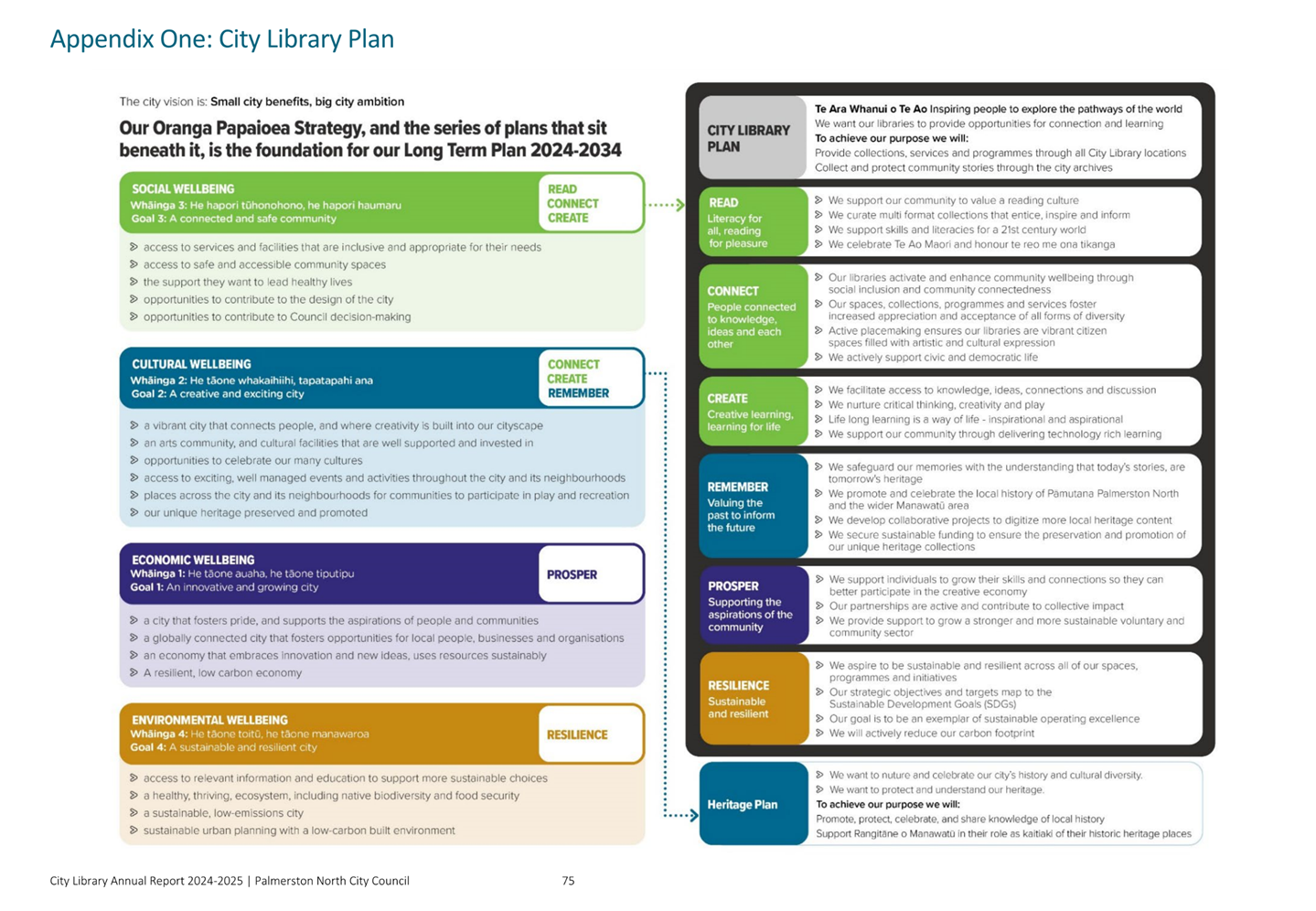
Committee Work Schedule
TO: Community
Committee
MEETING DATE: 13
August 2025
TITLE: Committee
Work Schedule - August 2025
RECOMMENDATION TO Community Committee
1. That the
Community Committee receive its Work Schedule dated August 2025.
committee
work schedule – MaY 2025
|
|
Estimated Report Date
|
Subject
|
General Manager Responsible
|
Current Position
|
Date of Instruction
&
Clause number
|
|
1
|
13 Aug 2025
|
Disability Reference Group
– Annual Presentation
|
Customer & Community
|
|
Invitation to present
4 Nov 2020
Clause 41-20
|
|
2
|
13 Aug 2025
|
Pasifika Reference Group
– Annual Presentation
|
Customer & Community
|
|
Terms of Reference
|
|
3
|
13 Aug 2025
|
Seniors Reference Group –
Annual Presentation
|
Customer & Community
|
|
Terms of Reference
|
|
4
|
13 Aug 2025
|
Social Housing Update - Work
Programme 1: Delivery Model for Property.
|
General Manager Infrastructure
|
Move to Community Committee
Work Schedule
|
1 May 2024 Clause 66-24
|
|
5
|
13 Aug 2025
|
Annual report on Library
Services
|
Customer & Community
|
|
24 May 2023
Clause 22-23
|
|
6
|
13 Aug 2025
|
Annual Report Community Funding
Allocation 2024/2025
|
Customer & Community
|
|
Rec 1c of the Community Grants & Events Funding Review
- May 2021
|
|
7
|
13 Aug 2025
2026
|
Roslyn Community Hub Feasibility progress
|
Customer & Community / Infrastructure
|
Delayed due to late release of
data.
|
|
|
8
|
18 March 2026
|
Progress report on social housing development at
Summerhays St
|
Strategic Planning / Infrastructure
|
Social Housing and property review agreed in December 2024
|
Council
1 May 2024
Clause 66-24
|
|
9
|
18 March 2026
|
Options to deliver social housing within the current
Revenue and Finance Policy limit
|
Strategic Planning / Infrastructure
|
Property revenue generation review agreed in December 2024
|
20 March 2024
Clause 10-24
|
|
10
|
18 March 2026
|
Welcoming Communities – Annual Report
|
General Manager Customer & Community
|
|
4 November 2020 Clause 43-20
|
|
11
|
18 March 2026
|
Annual Sector Lead Report: Housing Advice Centre
|
General Manager Customer & Community
|
|
Terms of Reference
|
|
12
|
18 March 2026
|
Annual Sector Lead Report: Manawatū
Multicultural Centre
|
General Manager Customer & Community
|
|
Terms of Reference
|
|
13
|
18 March 2026
|
Annual Sector Lead Report: Te Pū Harakeke –
Community Collective Manawatū
|
General Manager Customer & Community
|
|
Terms of Reference
|
|
14
|
18 March 2026
|
Annual Sector Lead Report: Te Tihī o Ruahine
Whānau Ora Alliance
|
General Manager Customer & Community
|
|
Terms of Reference
|